

Intro
This is a pattern I keep seeing after talking with many different engineers and engineering leaders across companies.
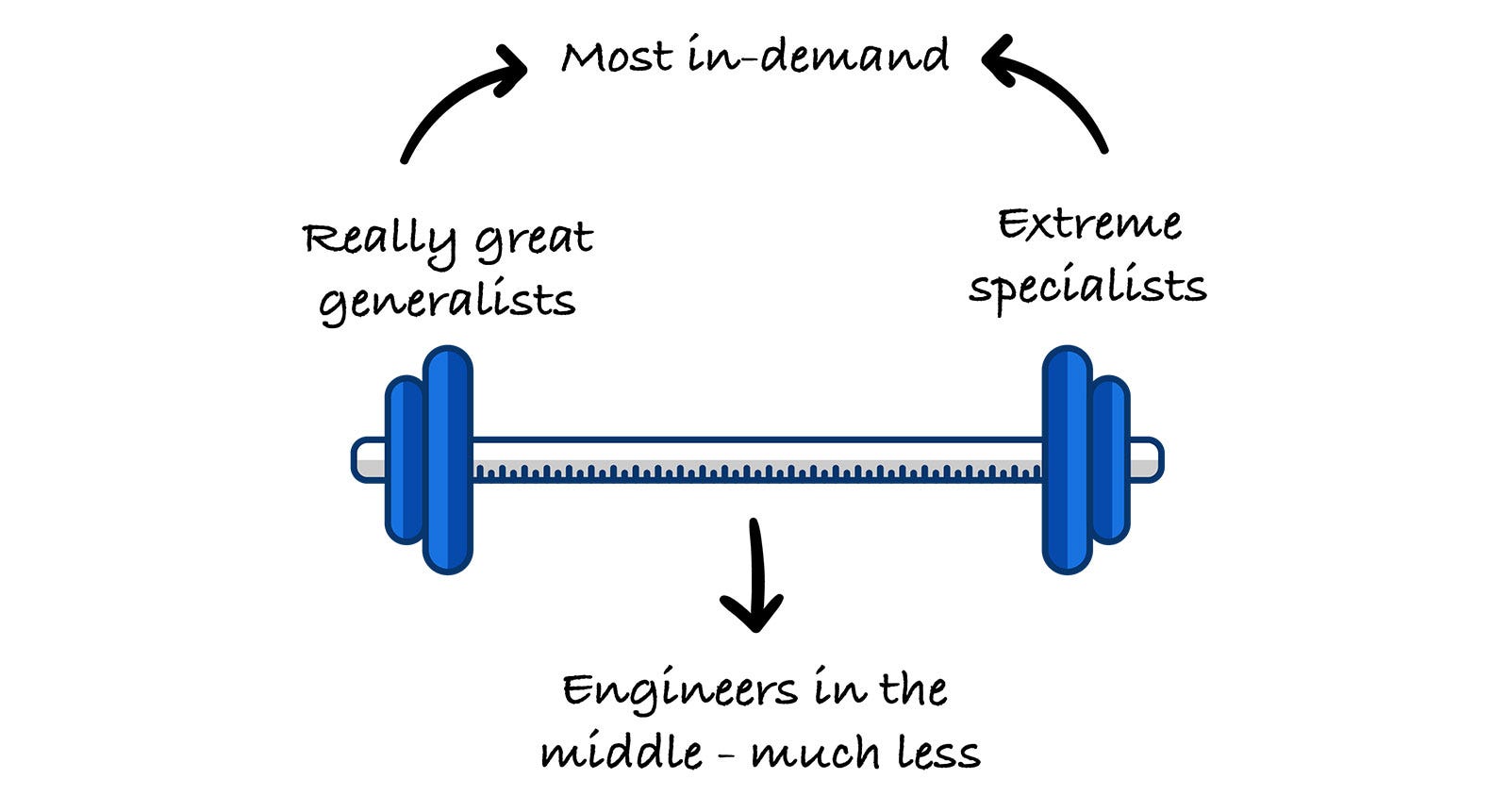
The most in-demand engineers at this time tend to fall into two groups:
Great generalists who can build and ship end-to-end
Extreme specialists with rare, hard-to-replace expertise in a specific technology or domain
In this article, I’ll explain why, and help you figure out where you fit (if you don’t know yet).
This is an article for paid subscribers, and here is the full index:
- Companies in San Francisco are Mostly Looking for 2 Types of Engineers
- The Role of Engineers is Changing
- In Bigger Companies, the Change is Much Slower
🔒 Should You Become a Great Generalist or Extreme Specialist?
🔒 Skills that Make a Great Generalist or Extreme Specialist
🔒 With Specialists, the Focus is a lot More on a Deep Understanding of a Relevant Topic
🔒 My Recommendation on Which Path to Take
🔒 Last Words
Let’s start!
Companies in San Francisco are Mostly Looking for 2 Types of Engineers
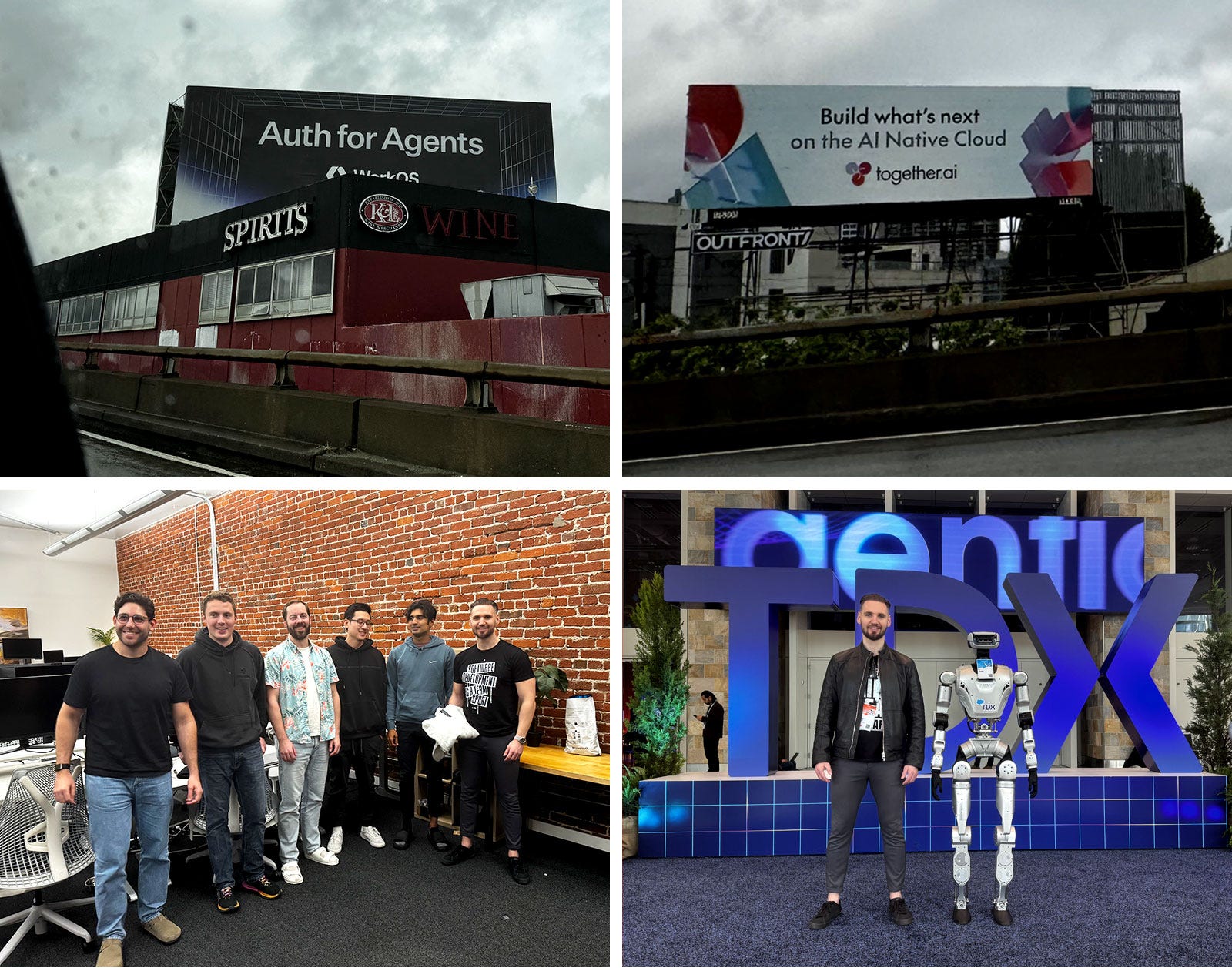
I am in SF till the end of this week, talking with different companies and people, while also attending the Salesforce TDX conference. I’ll be here until Friday, but I’ll be back in May as well.
Will be sharing more insights on some of the conversations I am having in future articles. If you’re a company that wants to chat in May, let me know, and we’ll set up some time then.
Interestingly, everywhere I go here in SF, the conversation seems to revolve around AI, agents, MCP, vibe coding, AI adoption, etc. AI is the main theme here, you can see it on the streets, in cafes, on screens, etc.
And also one of the core topics is how engineering is changing overall, and what are the most important skills for engineers to thrive in the AI era.
What I am hearing a lot is product-minded engineers becoming the norm and their role expanding to own features end-to-end, while also expected to be talking with the users. Such engineers can be labeled as really great generalists.
At the same time, there’s a need for a special kind of engineers (extreme specialists), who are really good at a certain topic, that may be AI-related, specific tech, or just pure experience and battle scars within a certain field.
Those are the exact two “sides of the barbell” that we are talking about in today’s article. Becoming a great generalist or extreme specialist, that’s what companies are looking for.
Let’s get more into that next.
The Role of Engineers is Changing
Especially in smaller companies (startups) and mid-size companies, that’s where the biggest change is.
I see the ratio between PMs and Engineers continuing to increase. There is no surprise if there are even 0 PMs in the company, like for example, I recently talked to Vrushank Vyas, GTM at PortKey, and he mentioned that in the company (PortKey), there are around 24 engineers, with 0 product managers.
At the same time, I am seeing many companies constantly looking for engineers, so it definitely feels like there has been an increase in engineering roles available. Just not any engineers, it’s a majority of great generalists, and a minority of extreme specialists. Those are two of the most desired types.
That’s exactly what Sulman Choudhry, Head of Engineering, ChatGPT, OpenAI, has mentioned, in our recent conversation, as a strong hiring criteria for them.
On one side, they hire extreme generalists. These are engineers who can work across many areas: mobile, frontend, backend, and more. They might not specialize in just one domain, but they can do enough across all of them to build and ship products.
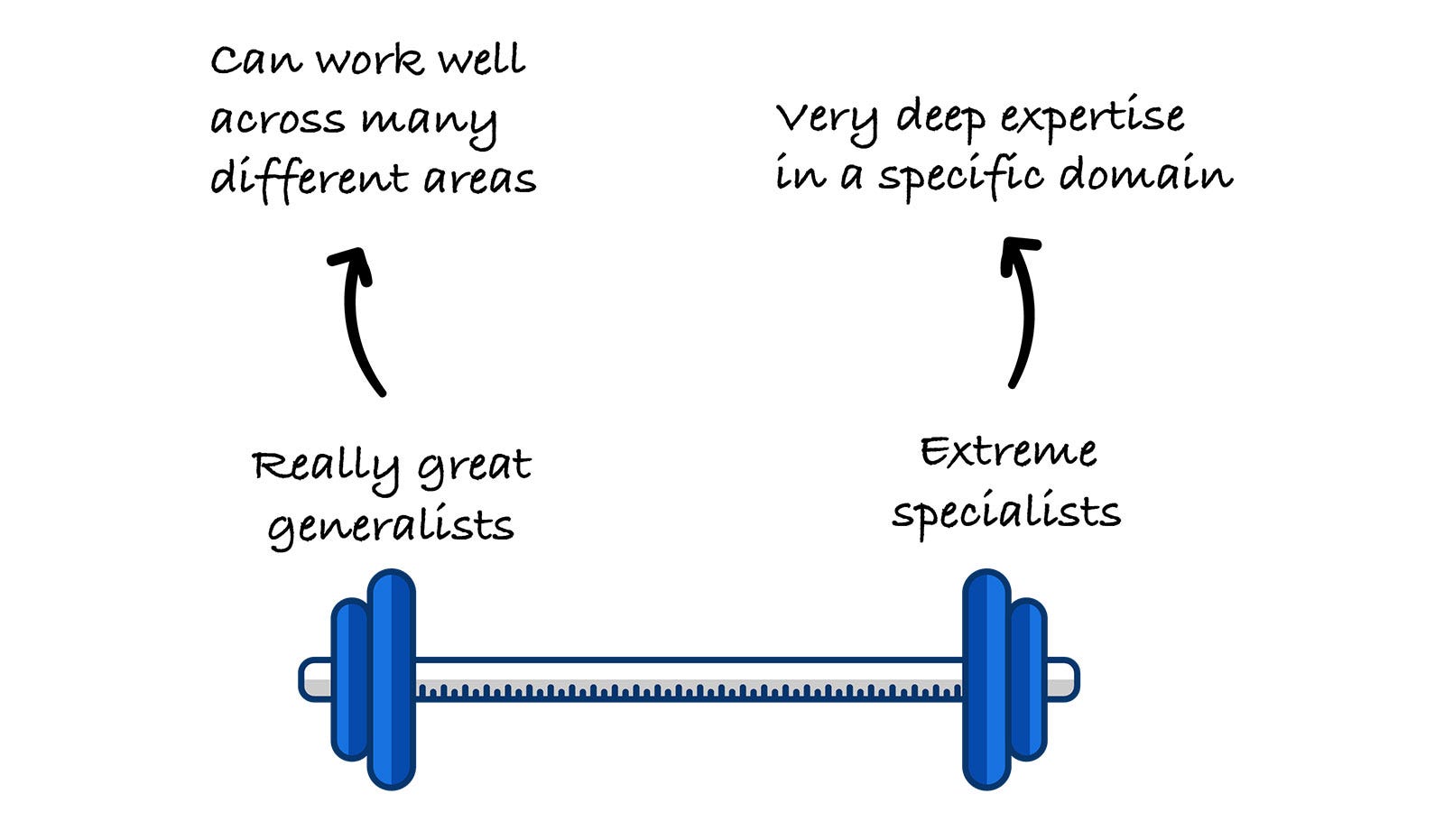
On the other side, they hire extreme specialists. These are people with very deep expertise in a specific domain and often many years of experience.
For example, one of their specialists in real-time communication is the person who wrote the WebRTC standard, while many of the engineers around him are extreme generalists.
This mix works really well for them. The specialists bring deep expertise, while the generalists move quickly across problems, and together they create a strong culture of mentorship and learning.
In Bigger Companies, the Change is Much Slower
The way I see it in bigger companies, it takes a lot more time to really make a change, but eventually, my prediction is that all the engineering roles in all the companies will go in this direction: great generalists and extreme specialists.
People in between will have much less opportunities, because that doesn’t provide as much value, since the value you can contribute is limited. You don’t have “superpowers” to either take on a broad spectrum of challenges, or you don’t have a specific, deep understanding of a particular topic.
Now that we understand what I am seeing happening across different companies, let me share my recommendation on whether you should become a great generalist or an extreme specialist.
And yes, you should make a decision and go in a certain direction! If not, you’ll be stuck in the middle, and that’s where you’ll get the least amount of opportunities today and even less in the future.
But important to note as well is that you can also adjust your focus from one to another, it’s totally up to you, but let me share my recommendation for which might fit you best, next!