

Intro
It’s New Year’s Eve 🎉 today, and I wish you a great celebration and start to the upcoming year!
Today’s topic is a very important one. It’s especially highly relevant as we are in the holiday season and many of you are taking some paid time off from work (you definitely should if you are not).
And also very important to respect the Code Freeze if you have it as part of the agreement across the engineering org :)
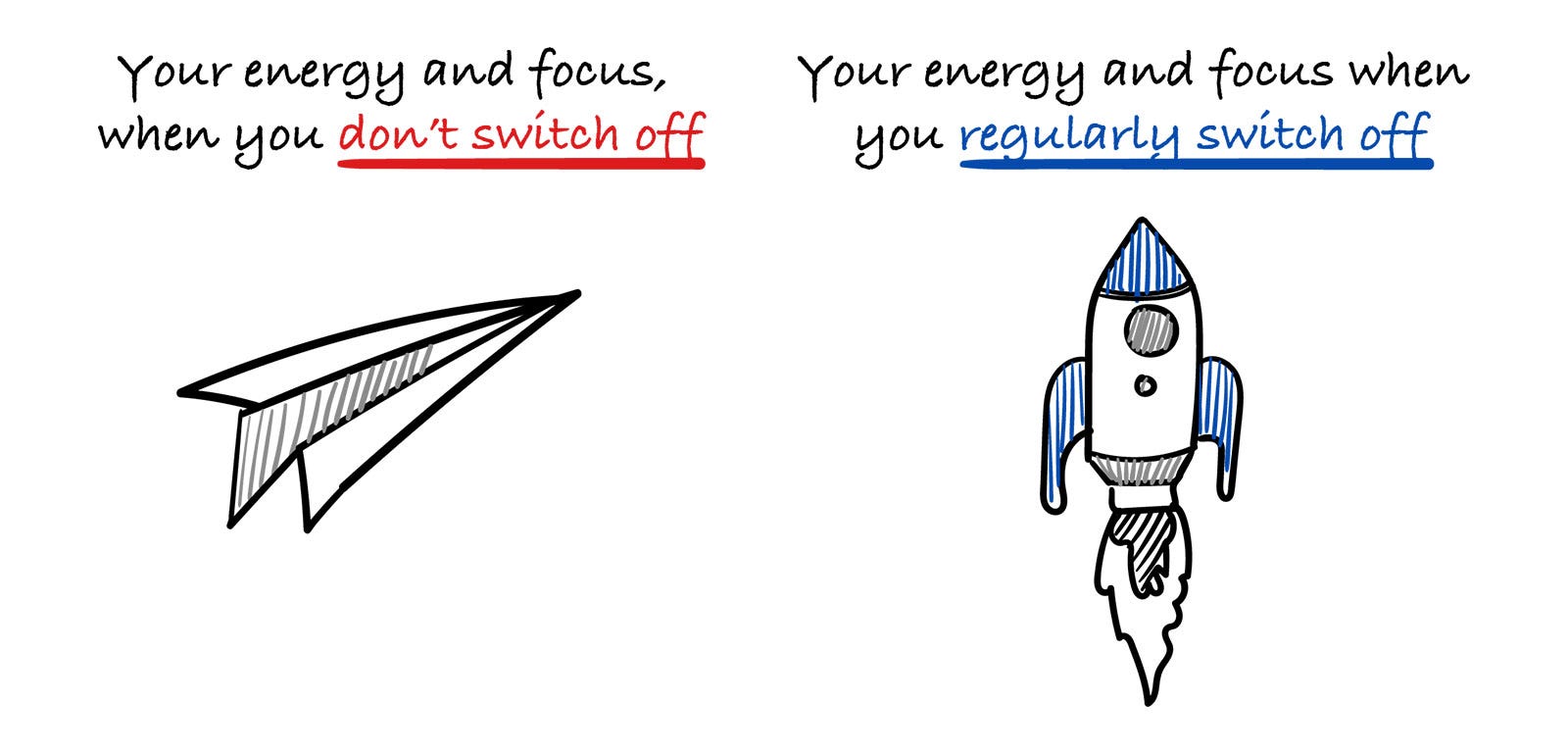
Here is why:

Hopefully, most of you are in the first category, who respect the Code Freeze and can relax and also switch off!
It’s really hard to do that if you are “firefighting” with rollbacks and figuring out what’s going on with the prod :)
This is a good segue into today’s topic. You can expect to read:
My experience with having a hard time switching off and learning the importance of it the hard way
Why it’s so important to switch off as an engineering leader
My top 3 tips for switching off, which you can already try out over the holidays!
This is an article for paid subscribers, and here is the full index:
- I Always Had Issues With Switching Off
- This is Why It’s SO Important to Switch Off as an Engineering Leader
- All the Benefits of Being Able to Switch Off as an Engineering Leader
🔒 My Top 3 Tips For Switching Off
🔒 Last words
Let’s start!
I Always Had Issues With Switching Off
I’ve always been the kind of person who just threw myself into the thing that excited me at that specific time and tirelessly researched it until I figured it out to a certain level.
That also later expanded into programming, as a self-taught engineer, learning days and nights and having a hard time to stop thinking about it.
And then also this expanded into my work in my full-time roles as an engineer and engineering leader + in my freelance projects as well.
In my roles as an engineer, not being able to completely “switch off” might have taken a bit of a toll on me, but it didn’t affect my colleagues and the people who worked with me as much.
I really saw how not being able to switch off can have an effect on others when I first became a Team Lead. Let’s get into that next.
This is Why It’s SO Important to Switch Off as an Engineering Leader
One of the mistakes that I made as a first-time Team Lead was that I was trying to do everything myself → be the best engineer who finishes the most tasks + the hardest ones as well, and also be the best manager at the same time.
Well, this took a big toll on me as I found it impossible to do that long-term, as I was being a manager during the week and doing tasks over the weekend.
At the same time, I remember having a 1:1 meeting with one of the engineers who reported to me at that time. They told me that they are close to burning out.
That was one of the wake-up calls for me, as I was also close to burning out by trying to do SO many things myself.
I figured it’s impossible for me to continue to work so many hours long-term and also one realization came to my mind as well:
As an engineering leader, you are setting an example.
If you work long hours, weekends, you always respond to Slack messages fast, even at unusual times, you send emails overnight, etc. → You are setting an example and expectations for your whole team.
The whole team feels like they need to do the same or else they might feel that they are not doing the work up to the expectations, which ultimately can lead people to burn out, while they are doing great work → all because of misaligned expectations.
That’s why it’s crucial to set a good example as an engineering leader, it’s not about you anymore, it’s about your team.
After that realization, I started to delegate a lot more and also trust people inside my team a lot more as well. Things started to look a lot better after that.
Now, let me share some additional points on the importance of switching off.
All the Benefits of Being Able to Switch Off as an Engineering Leader
When you switch off, you set an example for your team
We already mentioned how important it is to set a good example for your team. If you are always online, checking Slack, responding to emails, reviewing PRs, or creating tasks.
Everyone automatically feels like they need to do the same → that’s the unfortunate unspoken “rule” in many workplaces.
So, instead, you need to be a good example. And this is REALLY crucial. You need to respond to messages in appropriate hours. If you are responding to emails at unusual times, you should at least schedule them to be sent at an appropriate time.
And also, if you have paid time off, make sure to add the correct status on Slack, switch off notifications, and not respond to messages at that time (unless it’s really urgent).
As a full-time CTO, what I did was the following. In my paid time off → I made a conscious decision not respond to any messages, checking PRs, tasks, etc. And I let the team know to reach out to me via phone if something is urgent.
It happened only once that I was called when production broke, but in all other times, the team handled things themselves. Which is ultimately what you want as an engineering leader → to build a self-functioning team, where you are not a bottleneck.
You can read more about how I did a 2-week vacation test as a full-time CTO in order to find out if I am sharing enough knowledge with others or if I am a bottleneck here:

You are able to do good work long-term if you switch off regularly
It’s really important to keep in mind that we are all doing things for the long run. Our careers are marathons and not sprints → The key is being able to do good work long-term.
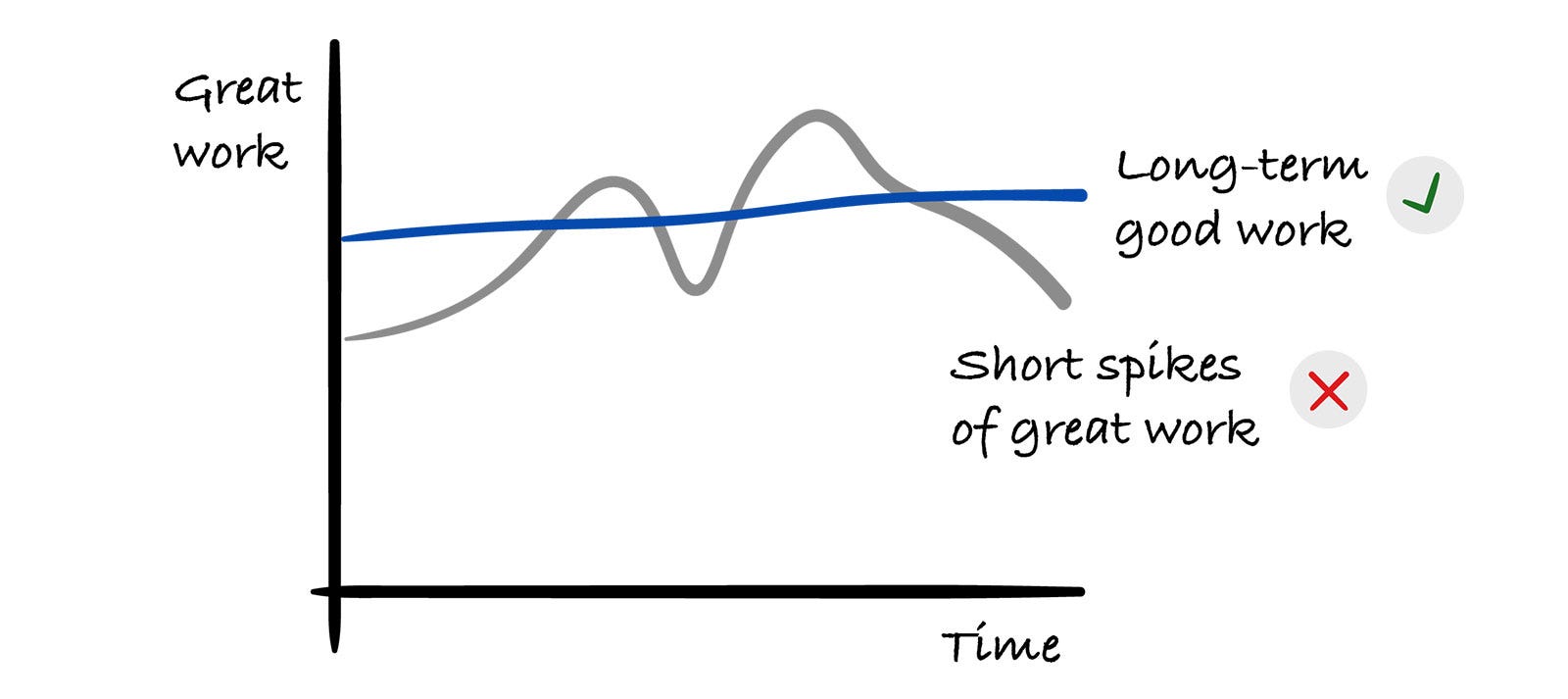
Especially as an engineering leader, you find yourself taking on many different responsibilities, and you are normally involved in many different projects.
It’s really important that when you are not working, you are able to recharge and stop thinking about work. That ensures that when you get back to it, you get back refreshed.
I personally have a hard time really switching off, but I know how great it feels when I do, and how refreshed I feel. I’ll share some of the tips that work for me later in the article!
It’s hard to grow in your career if all you have is work
This is one of the very important things to keep in mind:
Neglecting your life for the exchange of work will not help your career long-term.
Just working 24/7 while neglecting the other parts of your life, will eventually lead to stagnation over the years.
There is just so much work you can do with “pure power” and brute force. In order to grow to lead roles and also grow to higher-level lead roles (Director+, Principal, etc.), you need a lot more than just working all the time.
You need influence, good communication, building good relationships, and also, very importantly → people need to look up to you. You need to be a great multiplier.
And that’s where people who are just working 24/7 have a hard time. Because they don’t develop the skills where they can create impact outside of their individual contribution, and they don’t create a life outside of work.
This is the exact picture I am talking about.

That works fine when you are younger, and you are starting your career, but if you have career aspirations to grow to Staff+, Architect, or EM+ roles → you need to improve all the aspects of your life and your skills, not just focus on getting better at specific programming languages and frameworks.
You need to become a person that others look up to.
Now, let’s go to a very important part of the article next, I’ll be sharing my tips and advice on how to actually switch off!