


This newsletter is sponsored by Redis.
The Models Are Ready. Your Agents’ Context Isn’t.
AI models are now good enough for the enterprise, yet few teams see repeatable, production-level success with agents.
Redis CEO Rowan Trollope says the problem is context. Even agents that deliver value often run on over-stuffed prompts, redundant LLM calls, and brittle custom integrations that cost more in tokens and time than they return.

In his post, Rowan breaks down:
What agents are missing when they fall short in production.
The four principles behind agents that survive the real world.
How Paradigm uses Redis as the memory and orchestration layer for its agents.
Before you scale your next agent, read why agents are software and how Redis Iris gives them the right context, fast, so they work in production from day one.
Thanks to Redis for sponsoring this newsletter. Let’s get back to today’s thought!
Intro
My book The Multiplier Mindset published by O’Reilly has recently been released, and has also been a #1 Bestseller (or close to) on Amazon for the past weeks.

In the part 2 of the book, I feature 8 case studies of successful multipliers (tech leads, engineering managers, staff engineers, and architects), looking at:
How they multiply others
What makes them successful
How they use AI
Their advice to engineers and engineering leaders to thrive in the AI era
Today, I am sharing the case study of Prasad Rao, a Big Tech Principal Solutions Architect, which is included in the book. Prasad is also a fellow newsletter author writing the Big Tech Careers newsletter.
This is an article for paid subscribers, and here is the full index:
- What Prasad Rao Does?
- How Rao Succeeds in His Role
- Understand people’s contributions
- Distinguish between exceptional ICs and multipliers
- How He Multiplies Others
- Knowledge multiplication behaviors: Making expertise scalable by enabling others
🔒 Confidence multiplication behaviors: Empowering others
🔒 Outcome multiplication behaviors: Making the organization move faster
🔒 The Multiplier Mindset
🔒 Last words
Let’s start!
What Prasad Rao Does?
In his role as a principal solutions architect, Prasad Rao helps customers migrate their workloads onto the company’s platforms and build modern, scalable architectures.
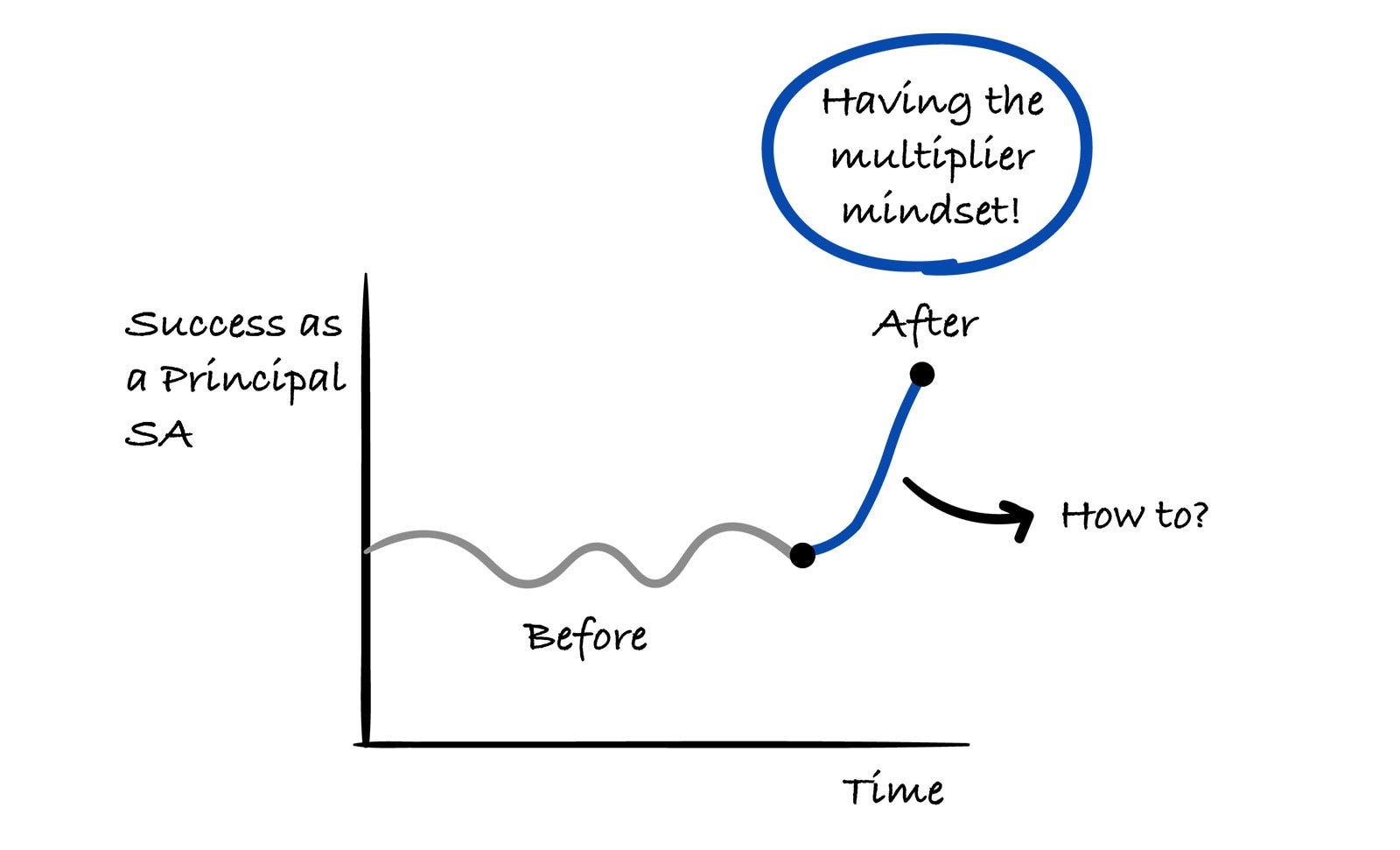
Rao started more than six years ago as a senior solutions architect and found that leveling up to principal made a big difference in the scope of his role and the impact he could have on the organization.
How Rao Succeeds in His Role?
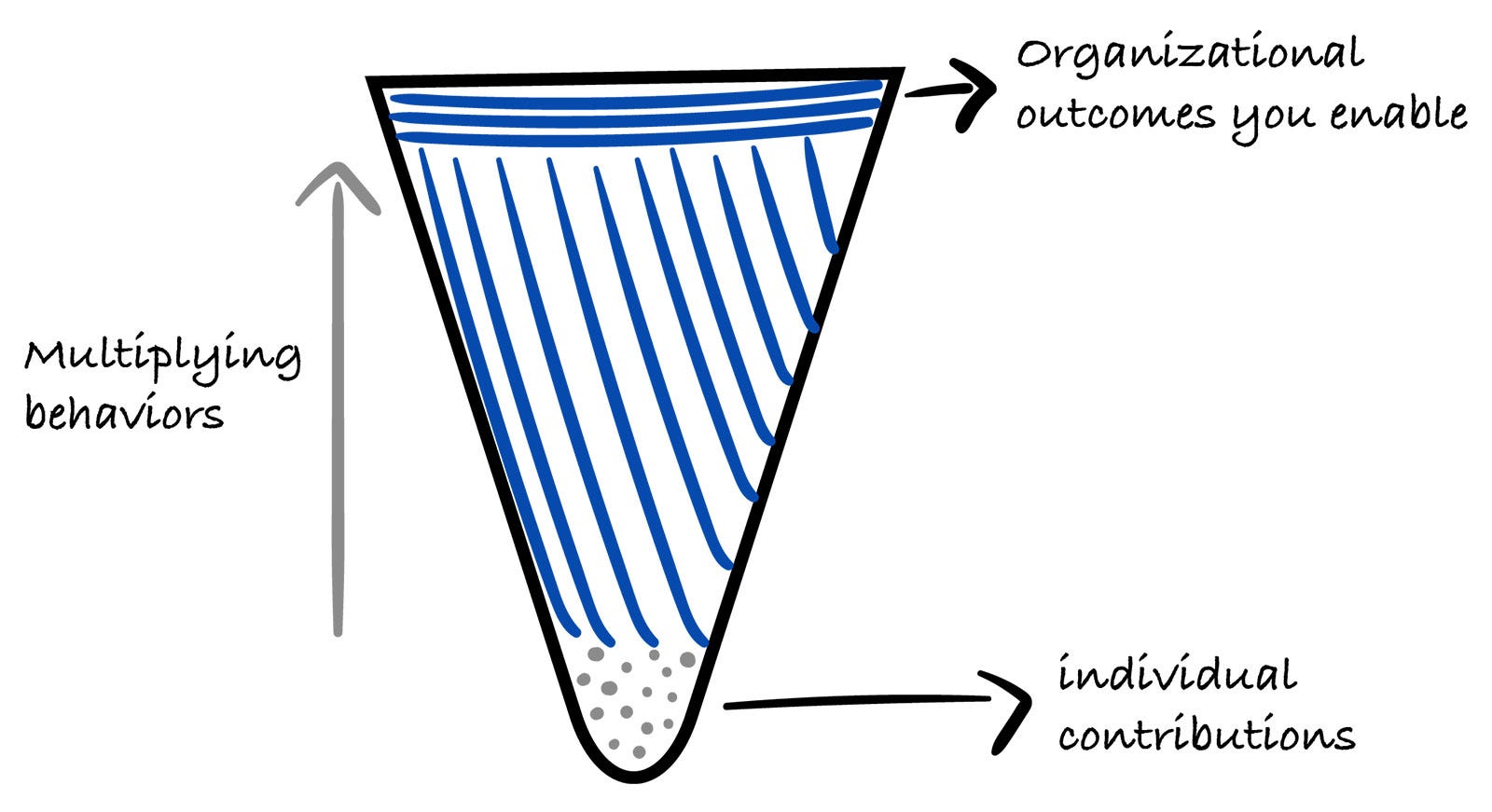
“Imagine your career as a giant funnel, with impact flowing outward through it,” Rao told me:
At the bottom are your individual technical contributions. The architectures you create. The systems you design. The code you write.
At the top are the organizational outcomes you enable. The projects that succeed because you unblocked them. The people who grew because you mentored them. The decisions that resulted in a big impact because of your influence.
In between are behaviors that multiply your impact.
Understand people’s contributions
Rao says that he recently sat on a panel to review a case for promotion to the role of principal solutions architect.
In these panels, he explains, “The manager presents the case. The panel asks questions. And the outcome often hinges not on what the candidate did but on whether someone in that room understood it deeply enough to champion it convincingly. I have made it a deliberate practice to be that person.”
Distinguish between exceptional ICs and multipliers
The architect in this case had helped five of the region’s largest customers grow their accounts to over $100 million in revenue each by influencing C-level executives, partnering with line-of-business owners, and enabling technical teams on the platform.
They were deeply technical, unblocking every challenge customers faced in adopting the platform and winning in highly competitive situations against strong rivals. The impact was backed by glowing testimonials from C-level executives.
By any measure, the candidate’s customer impact was unprecedented. Yet their promotion was shot down. Here is the gist of what was said in the room:
Did the candidate have to be present in every one of these five accounts for every critical conversation? Do we have an example of a customer who succeeded without the candidate being in the room, where someone else took the lead because the candidate had mentored them?
Is there a playbook or framework the candidate created that others in the company are using to replicate this success at scale?
Has any reference architecture or technical pattern the candidate created been adopted by a team in another region, somewhere they had no direct involvement
Growing five accounts to $100+ million each is exceptional. But a principal
should be influencing 50 accounts, directly or indirectly. What is the path
from 5 to 50?
You get the point.
Operating at the principal level means multiplying your impact, and while the candidate had made exceptional personal contributions, there was insufficient evidence that they had multiplied their impact across the organization and should therefore be promoted to principal.
How He Multiplies Others
Rao is adamant that growth in general, and the multiplier mindset in particular, is not about what you say or think, but it’s about what you do, and how you behave.
He sees behaviors as the primary tool for growth: “At their most basic, they are ways of showing up that take your input (technical expertise, context, judgment) and amplify it across multiple people and projects.”
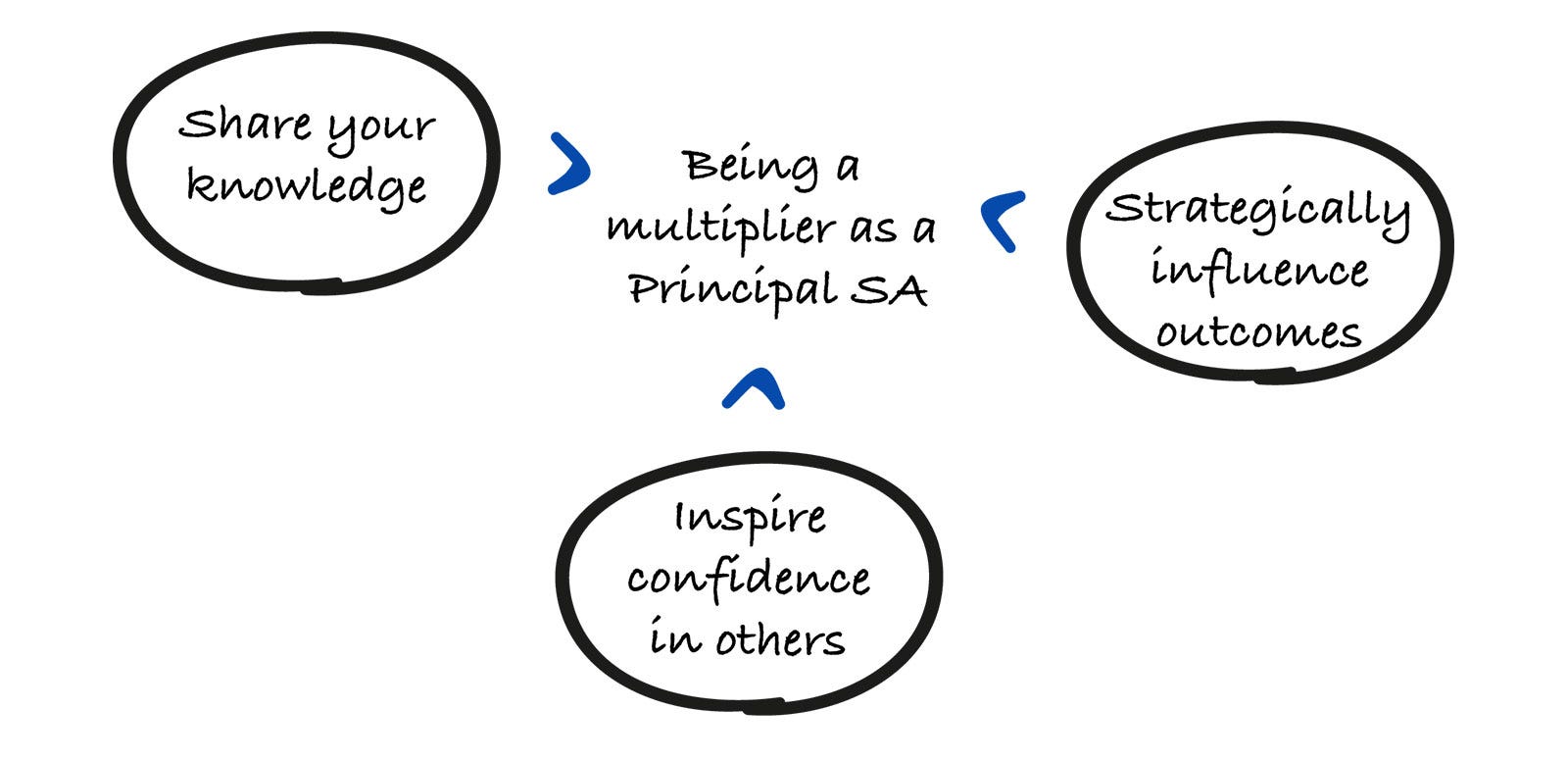
Based on Rao there are three specific types of behaviors that multiply an architect’s impact:
Knowledge multiplication behaviors
Enabling behaviors like teaching, documenting, and explaining.
Confidence multiplication behaviors
Empowering behaviors like unblocking, encouraging, and championing.
Outcome multiplication behaviors
Strategic behaviors like connecting, aligning, and deciding.
He recommends having examples of all three of these in your brag list and tagging them as knowledge, confidence, or outcome multiplication behaviors. Rao shared the following details about each type.
Knowledge multiplication behaviors: Making expertise scalable by enabling others
The first instinct of a highly technical person is to be the one with the answers. Someone asks a question? You answer it. A customer hits a wall? You unblock it. A problem surfaces? You solve it. This feels productive, but it doesn’t scale well.
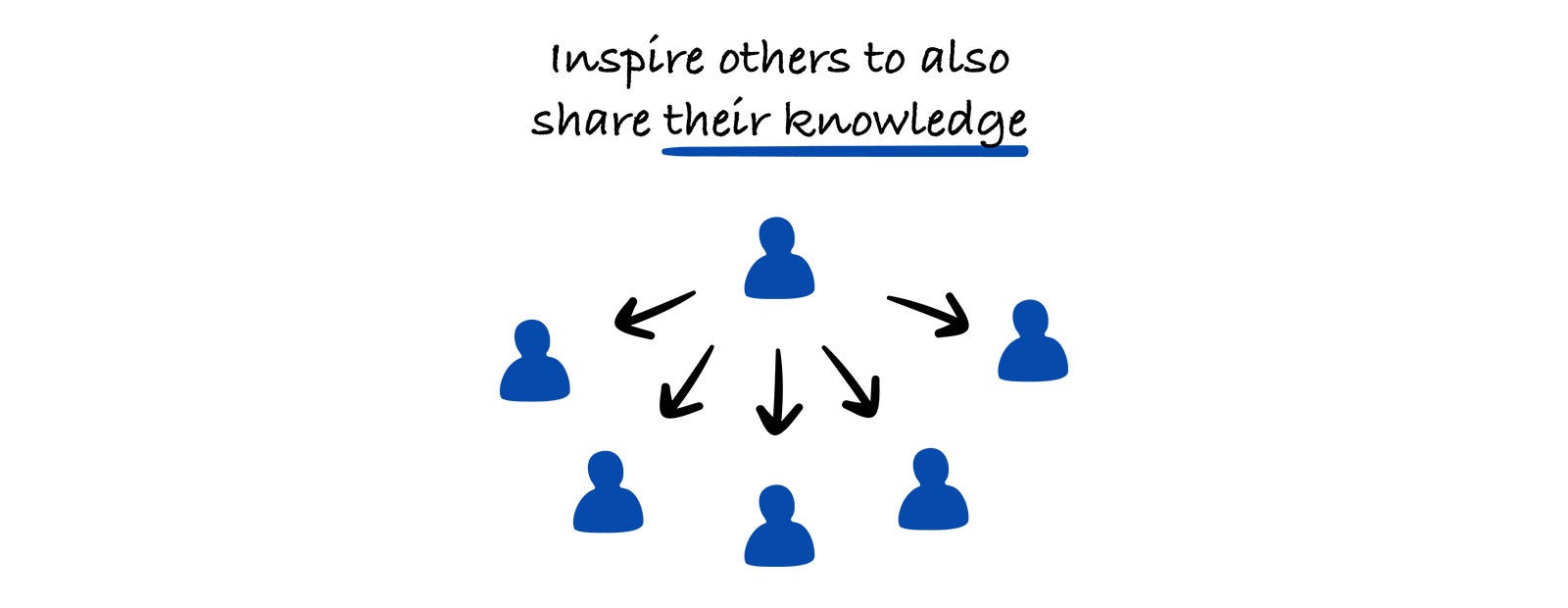
Knowledge multiplication flips the script: instead of being the only source of answers, you become the system that produces other sources of answers.
You share, teach, document, and explain at scale so that your expertise gets multiplied through others and travels further than it ever could have if you were the only source of answers.
Knowledge multiplication has two levels.
The first level is helping multiple customers at the same time by improving one piece of content, talk, or reference architecture that reaches a large audience.
The second, more powerful level is enabling multiple people to do that for you.
Rao provides an example:
When I joined the company, my instinct was to be the one creating. I wrote articles on our official company blog. I built reference architectures and whitepapers. I took the stage at industry conferences.
In my mind, these were scaling activities because I was influencing more than one customer at a time. I had reached level one. But I was missing the point entirely. I was still the bottleneck. Everything ran through me.
The shift came when I stopped asking “What can I create?” and started asking “What can I create that others can build on?” I built a dedicated subchannel within our official company blog, focused specifically on migrating and modernizing workloads onto our platform.
It gave customers a single destination for everything related to the topic, and it gave technical professionals across the company a platform to publish and share their own knowledge.
Then, the highest-impact articles from the channel were picked up, translated, and published in official regional blog channels viewed by customers around the world.
That was when I truly understood the compounding nature of knowledge multiplication: the impact of my work had grown far beyond anything I could have created or predicted on my own.
The same principle applied to conference speaking. Instead of just taking the stage myself, I started reviewing sessions and helping shape entire conference tracks.
The knowledge shared across 10 sessions from 10 different speakers reaches further and lands deeper than any single talk ever could.
Sometimes, though, what someone needs is someone who believes in them.