

This newsletter is sponsored by Unblocked.
A Pile of MCP Connectors Is Not a Context Engine
Your team connected Slack, Jira and GitHub over MCP, and engineers still spend their time steering agents to the right answer.

This article looks at why: connectors fetch from one tool at a time, so every agent stitches the pieces together itself, trusts the first doc that looks right, and adds a search to your token bill each time.
Read what changes when a context engine sits on top of your connectors: the same coding task finished 83% faster at 48% lower cost.
Thanks to Unblocked for sponsoring this newsletter. Let’s get back to today’s thought!
Intro
My book The Multiplier Mindset published by O’Reilly has recently been released, and has also been a #1 Bestseller (or close to) on Amazon for the past 3 weeks.

In the part 2 of the book, I feature 8 case studies of successful multipliers (tech leads, engineering managers, staff engineers, and architects), looking at:
How they multiply others
What makes them successful
How they use AI
Their advice to engineers and engineering leaders to thrive in the AI era
Today, I am sharing the case study of Tarik Guney, Principal Software Engineering Manager at Microsoft, which is included in the book.
Let’s start!
What Tarik Guney Does?
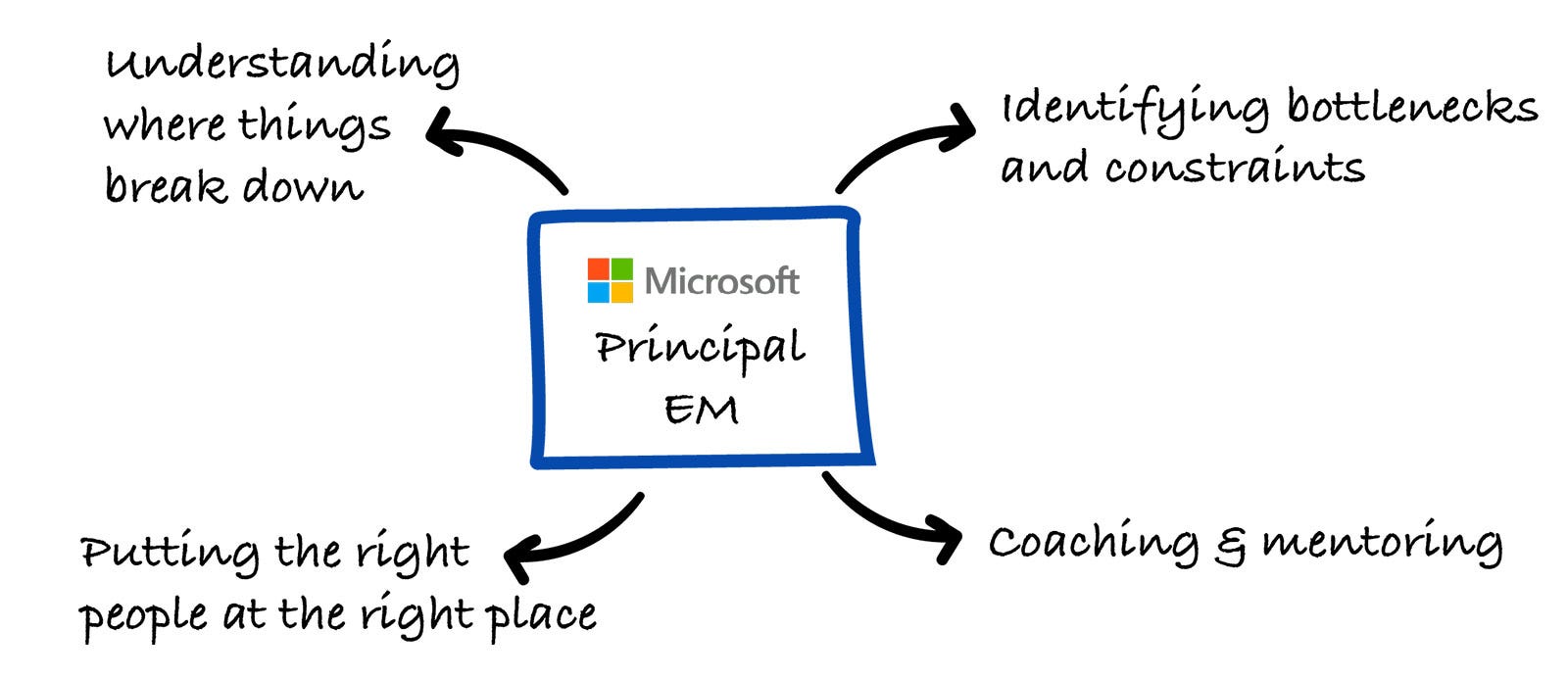
Tarik Guney is an engineering leader at Microsoft Teams. His team owns several services that are critical to Teams’ health and reliability.
He has worked at many companies, led teams of different sizes, and managed managers, and this experience has shown him the importance of systems thinking.
Much of his work is about understanding where things typically break down and identifying bottlenecks and constraints within the system.
Guney notes that these “often stem from miscommunication, lack of communication, or delayed communication” and tend to show up as delays and missing or distorted feedback (from both people and tools).
Guney’s job also involves putting the right technical guidance in place directly or by “bringing in the appropriate domain experts or making sure the team has explored the solution at the right level of depth.” The goal, he explains, is “to catch preventable mistakes early, before they escalate into issues that are difficult to manage.”
As an EM, he supports his team through one-on-one coaching as well as by making sure they receive the visibility and credit they deserve. He strives to create clarity around the team’s objectives and make sure they’re aligned with the rest of the organization, while leaving room for engineers to experiment.
How Guney Succeeds in His Role
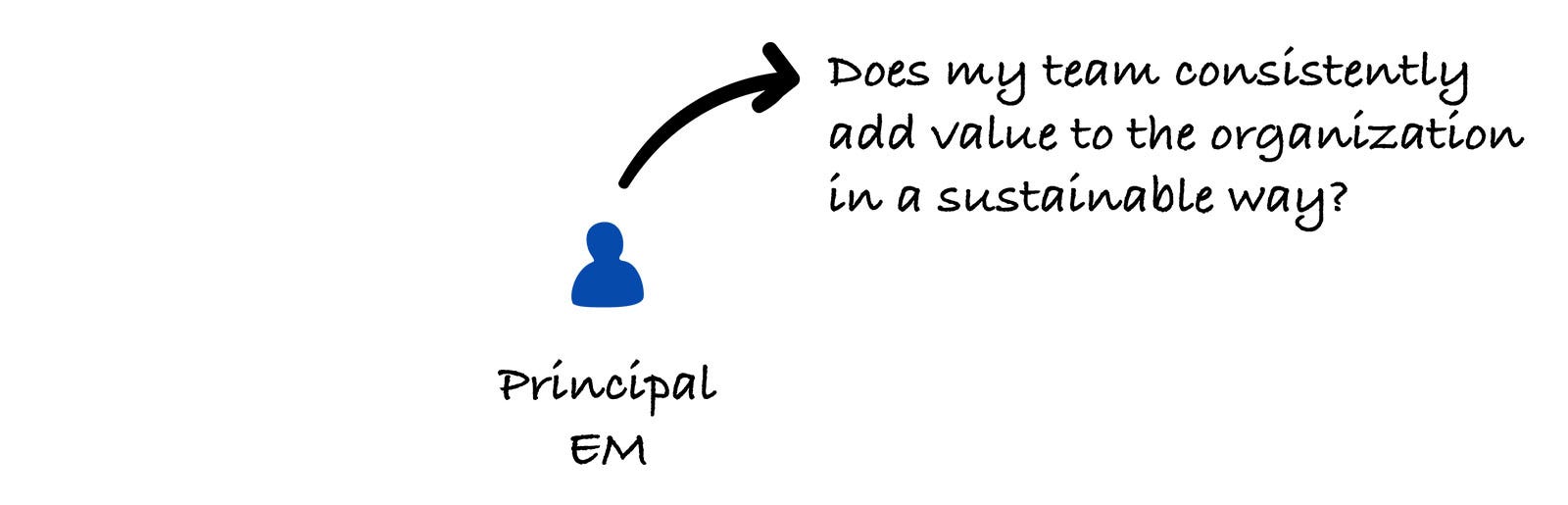
Guney says his success comes down to a simple question: is his team consistently adding value to the organization in a sustainable way, without creating setbacks elsewhere? Work that does not lead to meaningful value is, in practice, busywork.
To eliminate busywork, Guney focuses on both leading and lagging indicators.
“Lagging indicators reflect outcomes,” he explains. “They show up as system reliability, delivery predictability, and the overall impact of what they build. Leading indicators are where I spend most of my attention.”
This allows the team to actively shape developer productivity, process efficiency, and their own professional growth, as well as identifying and removing bottlenecks. Bottlenecks aren’t just technical, says Guney:
They often come from inefficient tooling, unclear processes, or misaligned assumptions that form our culture. I try to ensure that improvements in these leading indicators translate into better outcomes over time.
When they do not, it is usually a signal that we are optimizing the wrong thing or missing an important constraint.
Over time, he says, focusing on bottlenecks builds your intuition about where AI is genuinely useful and where it isn’t. That intuition becomes more valuable than chasing every new capability.
How He Multiplies Others
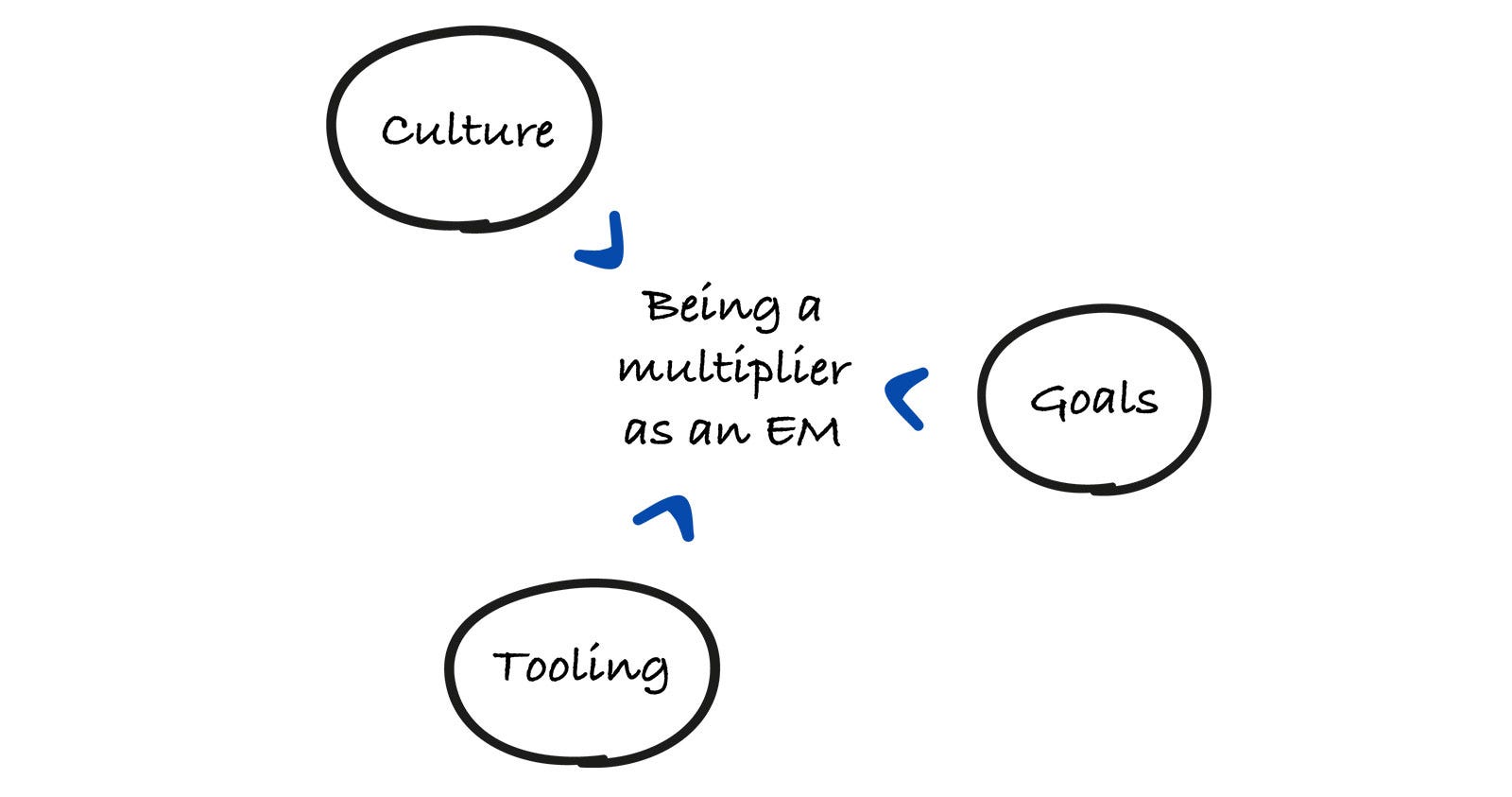
Guney interprets “multiplying others” to mean increasing each team member’s throughput without increasing their working hours or stress levels, which is “essential for sustained results.”
He breaks this problem into culture, goals, and tooling:
Culture
A good engineering culture, he says, should have “clear communication, trust, and psychological safety.”
Goals
Setting the right goals is key to managing bottlenecks.
Tooling
Efficient tooling reduces manual work and frees up engineers’ cognitive capacity for the right problems.
Guney notes that, in his experience, most improvements tend to be isolated within one of these three categories. For example, better development tools can improve coding speed, but it won’t necessarily improve communication or alignment.
Similarly, while process changes may improve coordination, they don’t reduce cognitive load, quite the opposite.
In practice, trying to solve every problem with a new process makes things more complex. It increases the cognitive load required to remember and follow each set of steps, while also limiting individuals’ creativity.
In turn, that limits productivity gains, keeping them incremental and localized.
How He Leverages AI
Guney finds AI very helpful for looking at the recurring shortcomings in everyday work. These can show up as a lack of coordination, cognitive shortcomings, physical limitations, and time constraints.
He likes to remind himself that the whole of a system eventually moves at the speed of its slowest parts. This mental model helps him focus on the right problems.
Consider physical limitations. Many of us engineers type around 80 to 100 words per minute. We can only sit and focus for a limited number of hours, and our attention degrades over time.
Cognitive limitations are similar. We can only think deeply for so long, hold a limited amount of information in working memory, and communicate a limited number of complex ideas clearly under time pressure.
In meetings, we forget or misremember details and operate with different contexts and communication styles.
As a tool, AI extends our physical and cognitive capabilities, much like writing extends human beings’ ability to think, remember, and coordinate. AI even extends those capabilities further.
Guney uses AI as a practical layer on top of his existing workflows, rather than as a separate system. In practice, through his use of AI, he has seen the changes and benefits in his own work and across his teams in all of the following areas:
Code generation and iteration speed
These have increased significantly, and the effective output per unit of time is higher.
Access to useful information
People can access useful information faster, even when starting with limited context.
Coordination of group efforts
AI-generated meeting notes and summaries help coordinate everyone and reduce context loss between meetings, improving everyone’s clarity on decisions, action items, and next steps.
Tailoring communications to different audiences
Using AI helps him adapt his communication style to different stakeholders and check his tone and clarity, to reduce miscommunication.
Reconstructing context
AI helps him do this quickly, so he can contribute to long threads or ongoing discussions without slowing down the conversation.
Creating initial drafts
He uses AI to write first drafts of documents, plans, and proposals, and then refine them.
Exploring solution spaces and alternative approaches
He uses AI to do this before narrowing down options with the team.
Automating routine tasks
He uses his AI tools and setup to draft pull requests, review code, check pipelines, and send updates.
Improving trust, psychological safety, and team cohesion
When communication is clearer and context is built faster, everyone’s responses become more relevant and timely, which improves trust, psychological safety, and overall team cohesion.
You have likely noticed a consistent pattern here: Guney and his team use AI to reduce cognitive load associated with repetitive or mechanical steps and free them up to focus on framing problems, making decisions, and aligning teams and stakeholders.
“AI does not replace judgment,” he says. “It increases the speed and quality of how that judgment is applied.”
His Advice For Engineering Managers
Guney argues that “AI has been one of the easiest technological shifts to adopt,” compared to the new programming languages, platforms, tools, and frameworks that emerge constantly.
Most of those require significant effort to learn before they become useful, but with AI, the feedback loop is fast.
In many cases, you can see value immediately by applying it to your daily work. It also aligns well with how we already think and communicate, which lowers the barrier to entry.
That said, “it is still easy to overcomplicate” your AI use. He recommends starting small and staying practical. Use AI to solve real problems you’re facing today.
Integrate it into your existing workflows instead of creating entirely new ones. And don’t focus on tools, focus on the outcomes you want.
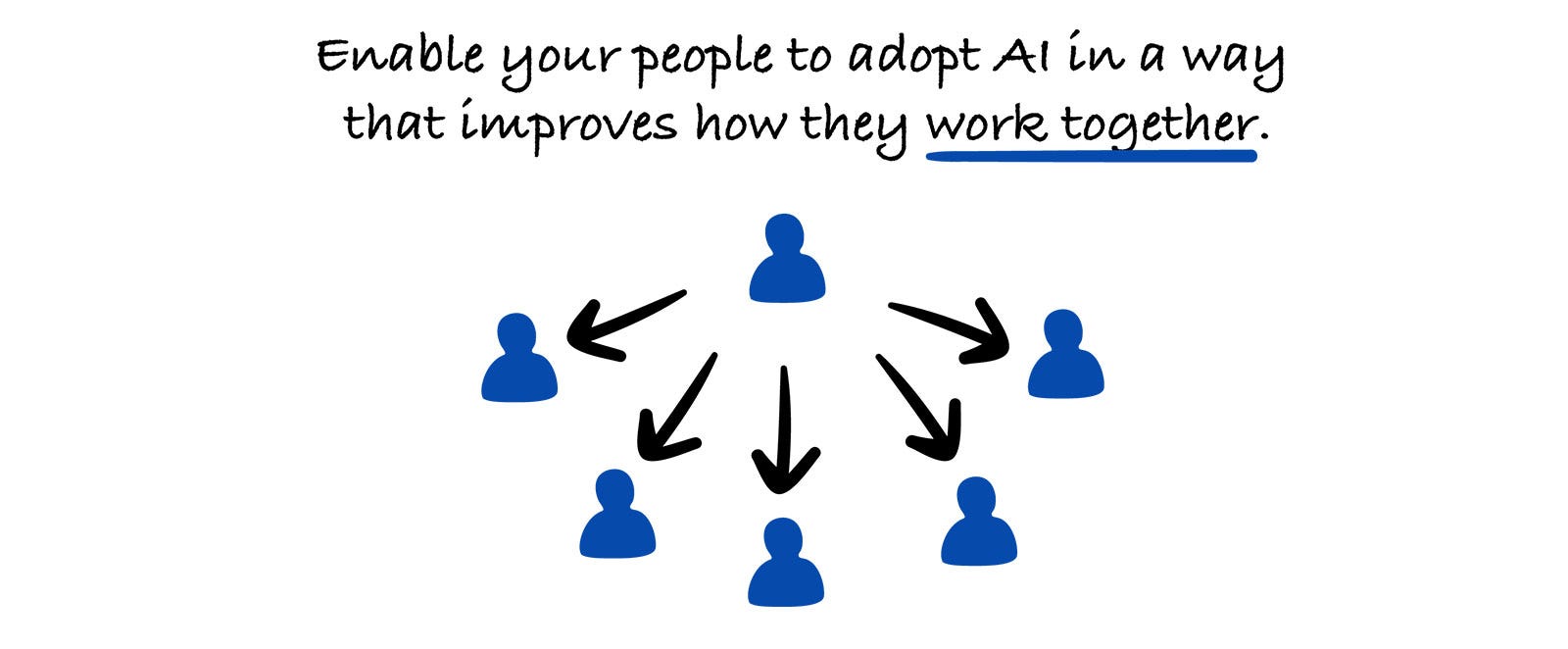
For leaders, Guney says, the real opportunity lies in “enabling teams to adopt AI in a way that improves how they work together, not just how fast they work individually.
The goal is not to use AI everywhere, but to use it where it meaningfully improves clarity, speed, and quality.”
Last words
Special thanks the Tarik for sharing all these insights with us! If you haven’t yet, make sure to check out the book The Multiplier Mindset, where you can find more case studies similar to this one.
Liked this article? Make sure to 💙 click the like button.
Feedback or addition? Make sure to 💬 comment.
Know someone that would find this helpful? Make sure to 🔁 share this post.
Whenever you are ready, here is how I can help you further
Interested in sponsoring this newsletter? Check the sponsorship options here.
Check out my book “The Multiplier Mindset”, here.
Take a look at the cool swag in the Engineering Leadership Store here.
Want to work with me? You can see all the options here.
Get in touch
You can find me on LinkedIn, X, YouTube, Bluesky, Instagram or Threads.
If you wish to make a request on particular topic you would like to read, you can send me an email to info@gregorojstersek.com.
This newsletter is funded by paid subscriptions from readers like yourself.
If you aren’t already, consider becoming a paid subscriber to receive the full experience!
You are more than welcome to find whatever interests you here and try it out in your particular case. Let me know how it went! Topics are normally about all things engineering related, leadership, management, developing scalable products, building teams etc.