

This newsletter is sponsored by Tiden.
Give your coding agent the why first
When one agent writes the code and then derives the tests and docs from it, all three agree by construction and a wrong change gets ratified. Tiden keeps a record outside that loop: specs for what your product does, decision records for why.

Before it codes, the agent gets the specs and past decisions its change could break.
Session close blocks while linked tests on touched specs are missing or failing.
Spec updates land on an intent branch linked to your PR, for a person to review.
Thanks to Tiden for sponsoring this newsletter. Let’s get back to today’s thought!
Intro
The term “Software Factory” has been gaining a lot of traction this year. As AI-assisted engineering has become the standard way of building software, many companies are rethinking how they build software.
But how does building a Software Factory actually looks like? And how much of the software development can we actually automate? Those are all questions that many are asking themselves.
The interesting part is that with coding becoming less of a bottleneck, a new bottleneck has shown to increasingly been the case for most organizations.
In the past few weeks, I’ve spoken with a lot of different engineers and engineering leaders on this topic, and many have also shared resources with me.
Today, I am sharing the insights from these conversations and from the shared resources.
This is an article for paid subscribers, and here is the full index:
- What exactly is a Software Factory?
- We’ve been building Software Factories now for ages
- How Stripe Builds a Software Factory
🔒 How OpenAI Builds Software Factories
🔒 1. In-house data agent
🔒 2. Using Codex as a Software Factory
🔒 How Spotify Builds a Software Factory
🔒 Last words
Let’s start!
What exactly is a Software Factory?
This year, the term “Software Factory” has been appearing quite regularly online, in my discussions with various engineers and engineering leaders, and of course in different talks at conferences.
One of the issues with it is that it may mean a totally different thing for a certain person or a company. You’ll see what I mean when I share different examples of how Stripe, OpenAI, and Spotify build Software Factories.
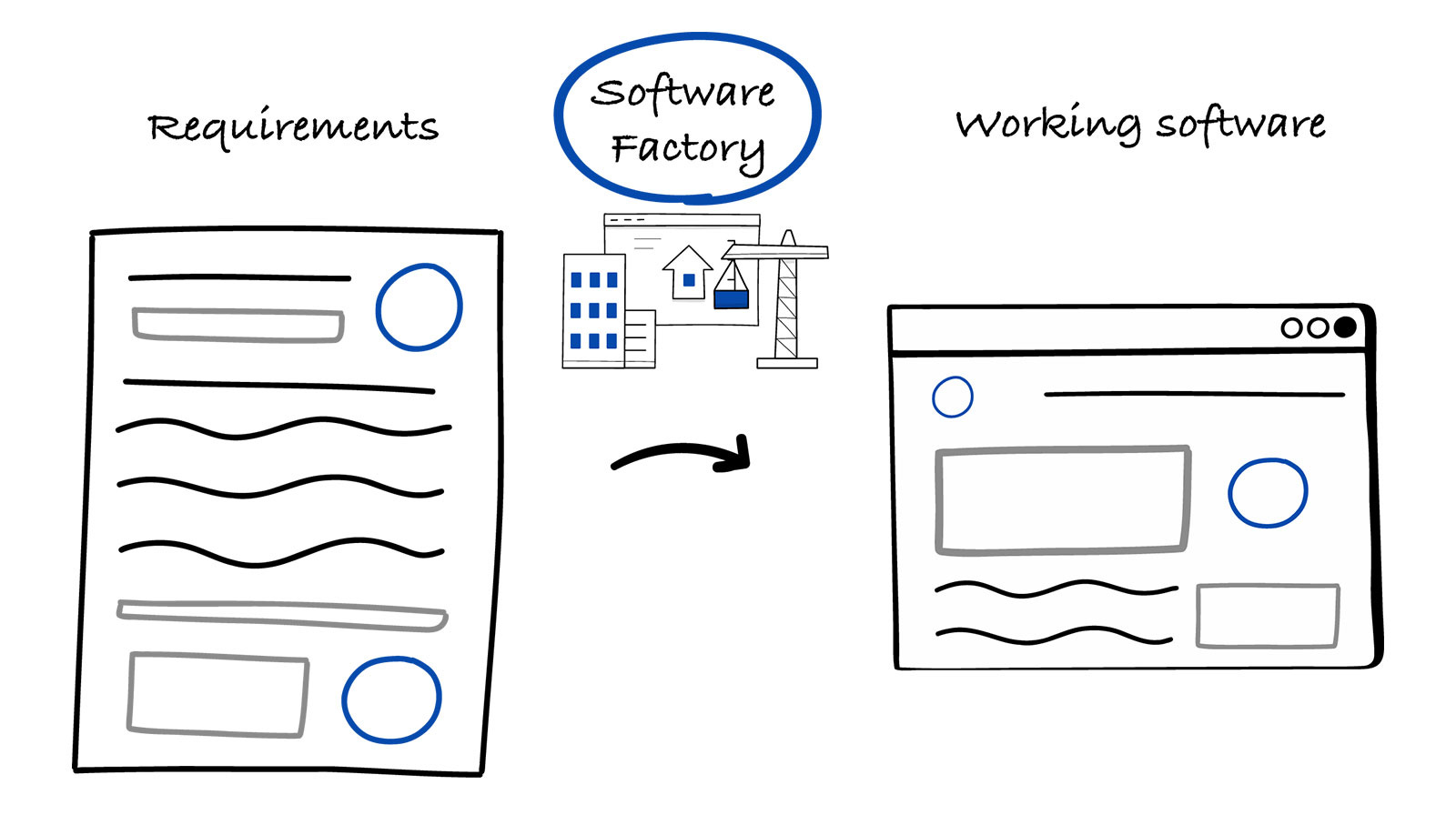
The core idea behind a Software Factory is that you have a set of requirements for a certain project → You put it in a certain system or a process → You get the results, e.g., software.
We’ve been building Software Factories now for ages
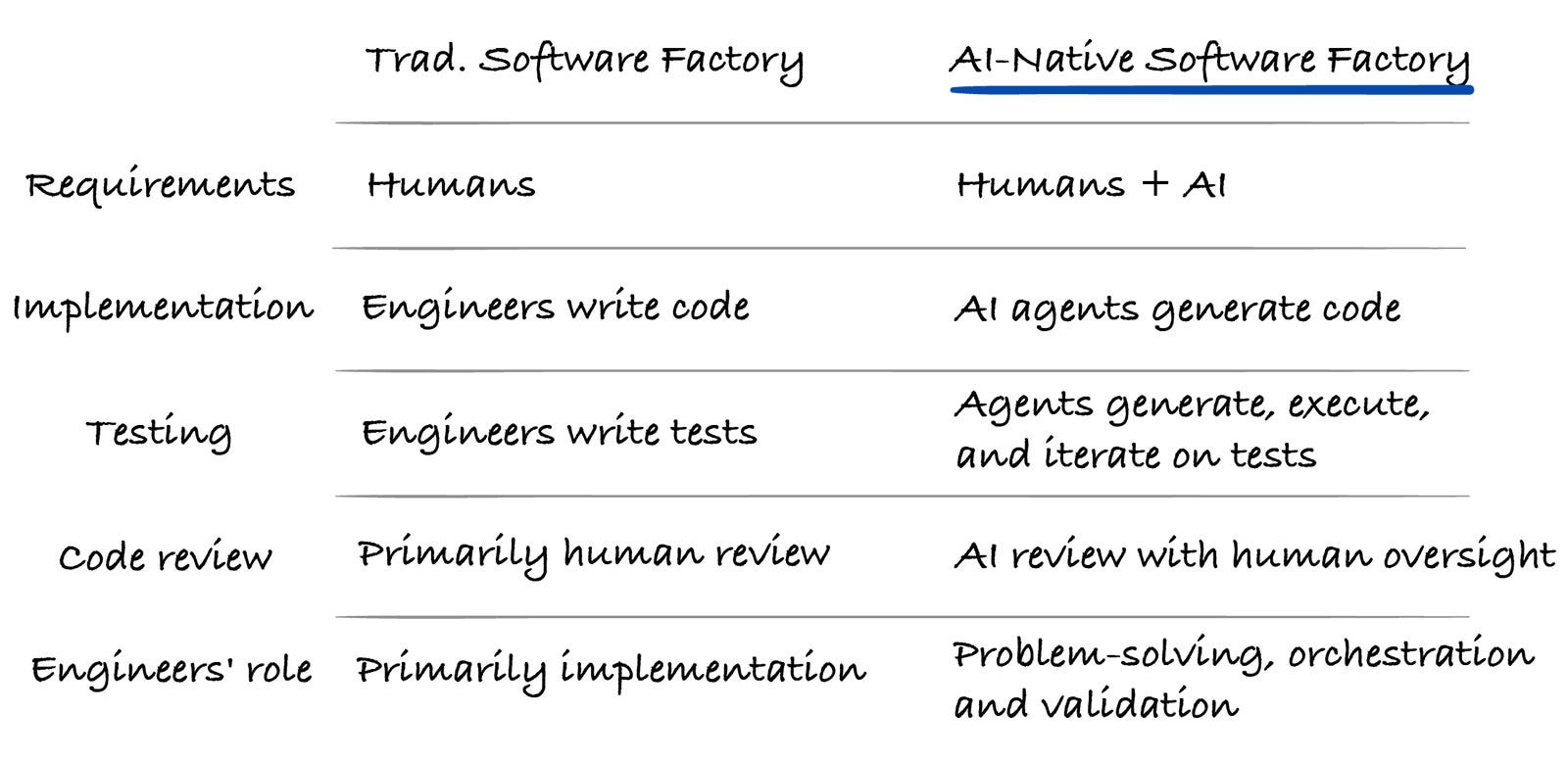
The difference between 5-10 years ago and today is just that more work is automated via agents, and engineers’ work is a lot more connected with problem-solving, orchestration, and validation.
Here is the comparison:
Take, for example, a 2-week sprint that we are all used to.
We have certain commitments that we agreed upon to deliver at the end, and then the process from gathering requirements to fulfilling these requirements could be called a Software Factory, but I don’t like to view it this way, because it diminishes the work of every individual to be more or less a number in the “factory”.
But you get the point. These days, the term is being thrown around so loosely because a lot of the work is augmented through AI, and the goal of many companies is to automate the work as much as possible. And we’ll go through specific examples next.
How Stripe Builds a Software Factory
Stripe has built their own coding agents called Minions. Their purpose and goal is to “one-shot” tasks and open a PR completely autonomously. But the important part here is that they still mandate a human review.
Here is how Minions work:
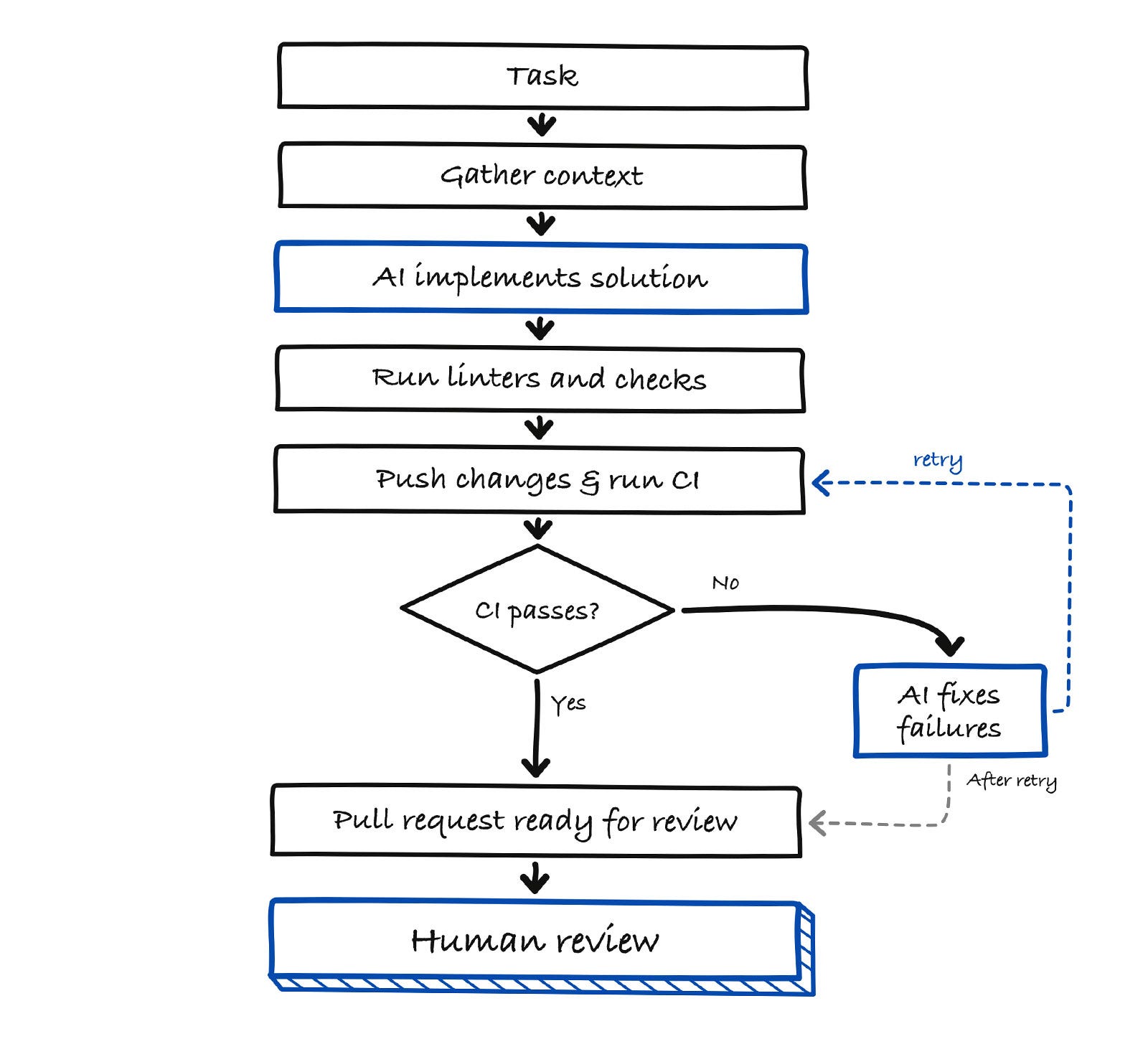
So, the software factory is autonomous all the way to PR creation. All the code is AI-generated while it’s being reviewed by an engineer to validate whether it actually does the right thing.
Minions can be invoked in various spaces, with the popular being directly from Slack. This is how it looks like in practice:
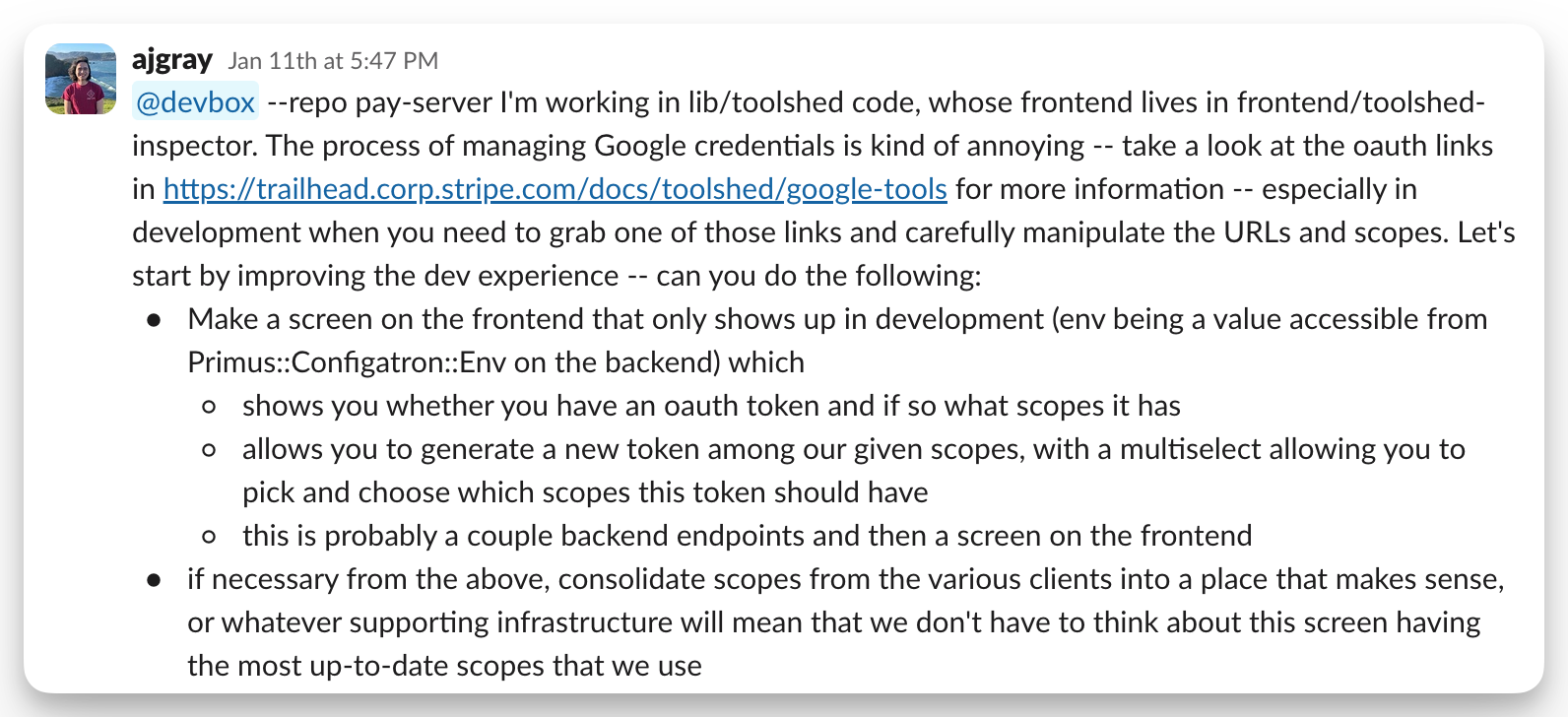
Based on Alistair Gray, Software Engineer at Stripe, minions can also be invoked from inside other internal applications at Stripe. Our internal docs platform, feature flag platform, and internal ticketing UI all integrate with minions.
For example, when our CI systems detect flaky tests, we create automated tickets that prompt users to fix the problem with a minion.

And then you can see the work of “your minion” and the actions + decisions being made in the web interface, as seen here:
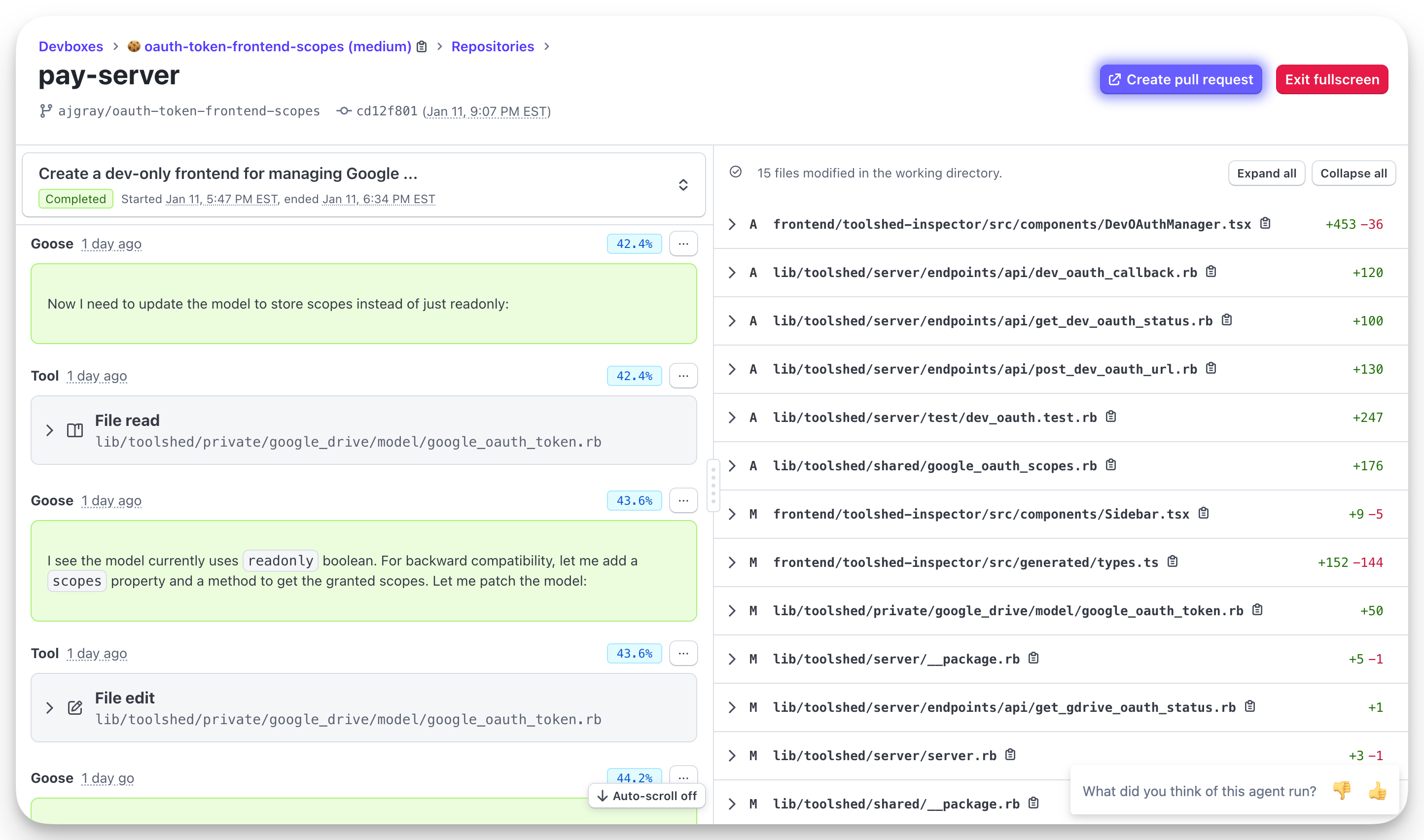
As of February 2026, Stripe was merging over 1000 PRs every week, entirely generated by Minions. These PRs have 100% AI-generated code, but are reviewed by humans.
More info about how Minions work can be found in these 2 articles: