


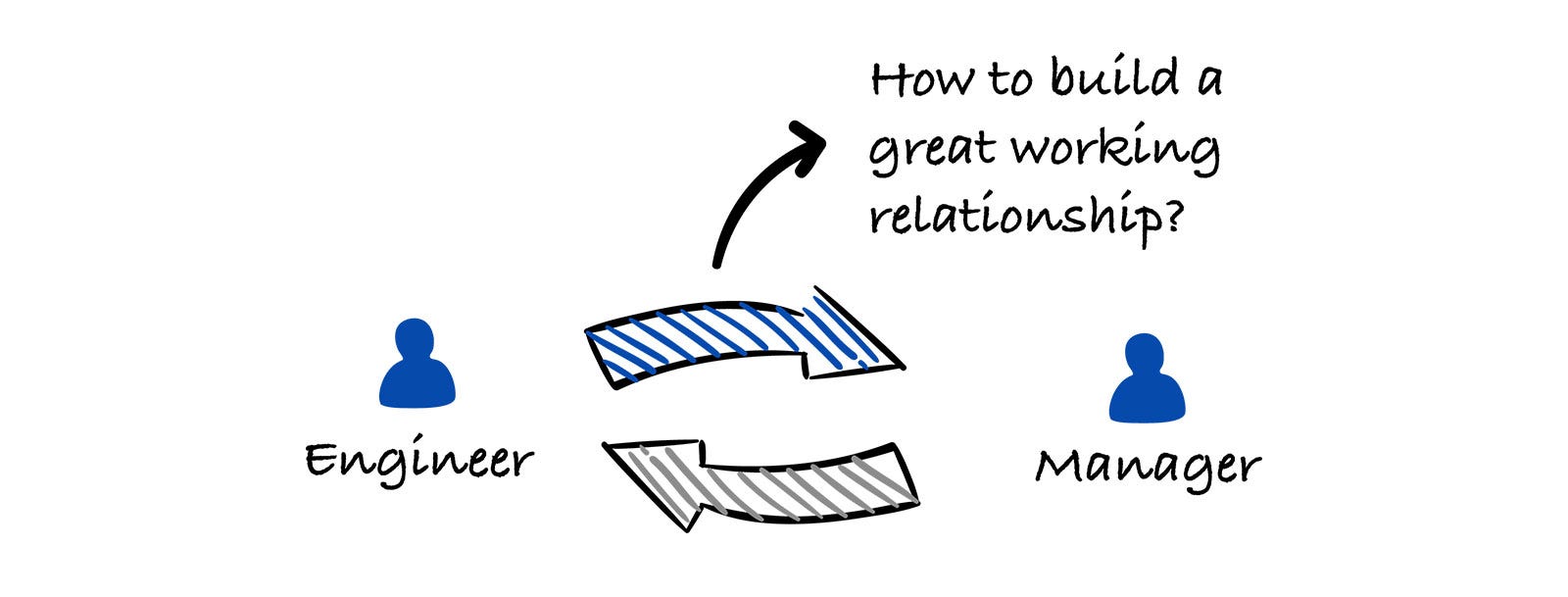
Intro
I like to say that relationships are the #1 most important thing at work, and putting in the effort to build a good one with your manager is going to help you a lot, and it can really make your day-to-day work so much better. Beyond that, strong relationships with your manager often lead to more opportunities.
Building a good working relationship with your manager is one of the best investments you can make. You want to put your best foot forward in building as good working relationship as possible. Being proactive here is key.
You show your value by proactively finding out what’s most pressing problem for your manager, the team, and the overall organization, and putting genuine effort into making things better.
That’s how you show that you are not just focusing on your own tasks, but you are actively partnering with your manager to make things better.
To help you build a successful relationship with your manager as an engineer, I am happy to bring in Shehab Abdel-Salam, Senior Software Engineer at Proofpoint and also an author of The Proactive Engineer newsletter.
He’ll be sharing from the perspective of an engineer, and I’ll be sharing from the manager’s perspective.
This is an article for paid subscribers, and here is the full index:
- Your Manager is the Most Important Colleague in Your Career
- Investing in Your Manager Relationship
- Managers Track Projects, Engineers Communicate Their Impact
- Signals for Building Trust
- Tips for Working With Difficult Managers
🔒 Focus on Building a Partnership With Your Manager
🔒 This has helped me to grow from Team Lead to Engineering Manager
🔒 Providing Value to the Organization and Showing Growth and Potential
🔒 5-Step Plan to Build a Great Partnership With Your Manager
🔒 Last words
Let’s start with Shehab’s insights first.
Your Manager is the Most Important Colleague in Your Career
Managers have the most direct impact on your career growth and promotions. Technical skills matter, but your growth ultimately results from building trust and finding opportunities with your manager. This is a mindset that not all engineers follow.
Some engineers tend to hyper-focus on their technical skills and believe they’ll eventually get promoted because of their work, even if they’re not on the same page with their managers.
This is a huge mistake.
Finding an engineering sponsor who trusts your capabilities often starts with having the manager rooting for you. Them being an engineering sponsor means that they’re willing to risk their reputation by adding you to leadership meetings, new product scope, customer calls, and more.
Investing in Your Manager Relationship
Just like buying shares in the stock market as a long-term investment, this is an investment you make in your relationship with your manager. Being an active investor means you’re focused on consistently delivering high-quality results, which is one of the key metrics your manager cares about.
Another metric is strong communication, which means proactively discussing problems along with potential solutions, sharing new ideas, and raising challenges or initiatives with your manager. Ticking off these boxes is a strong signal of a great software engineer.
Your manager naturally schedules a 1:1 meeting with you for regular catch-ups. If they haven’t, ask kindly to do so.
Your manager might have topics to discuss with you. If not, make sure to prepare an agenda beforehand. It’s your responsibility to communicate the areas where you need your manager’s involvement. This could be unblocking ongoing work or supporting your engineering growth.
Managers Track Projects, Engineers Communicate Their Impact
An early career mistake I made was thinking that my manager knew all the work I was doing and the initiatives I was taking.
I once worked on a product feature that took us four months to ship. It was a highly rewarding project that required infrastructure knowledge that upskilled me as an engineer, yet I assumed my manager understood impact simply just because they were on the same Slack channel.
Rookie mistake!
This project required me to:
Manage multiple stakeholders, like product and design, during feature development.
Step in to resolve a few separate production incidents while working on the project.
Mentor a junior engineer by pairing up with him to unblock project tickets.
Introduce new tooling for monitoring Kubernetes clusters and a playbook for inspecting errored deployments.
What my manager understandably saw: the project was delivered on time, without knowing about the four highlights above.
What I later understood in my career is that managers have limited time and bandwidth. They cannot track what all their direct reports are doing.
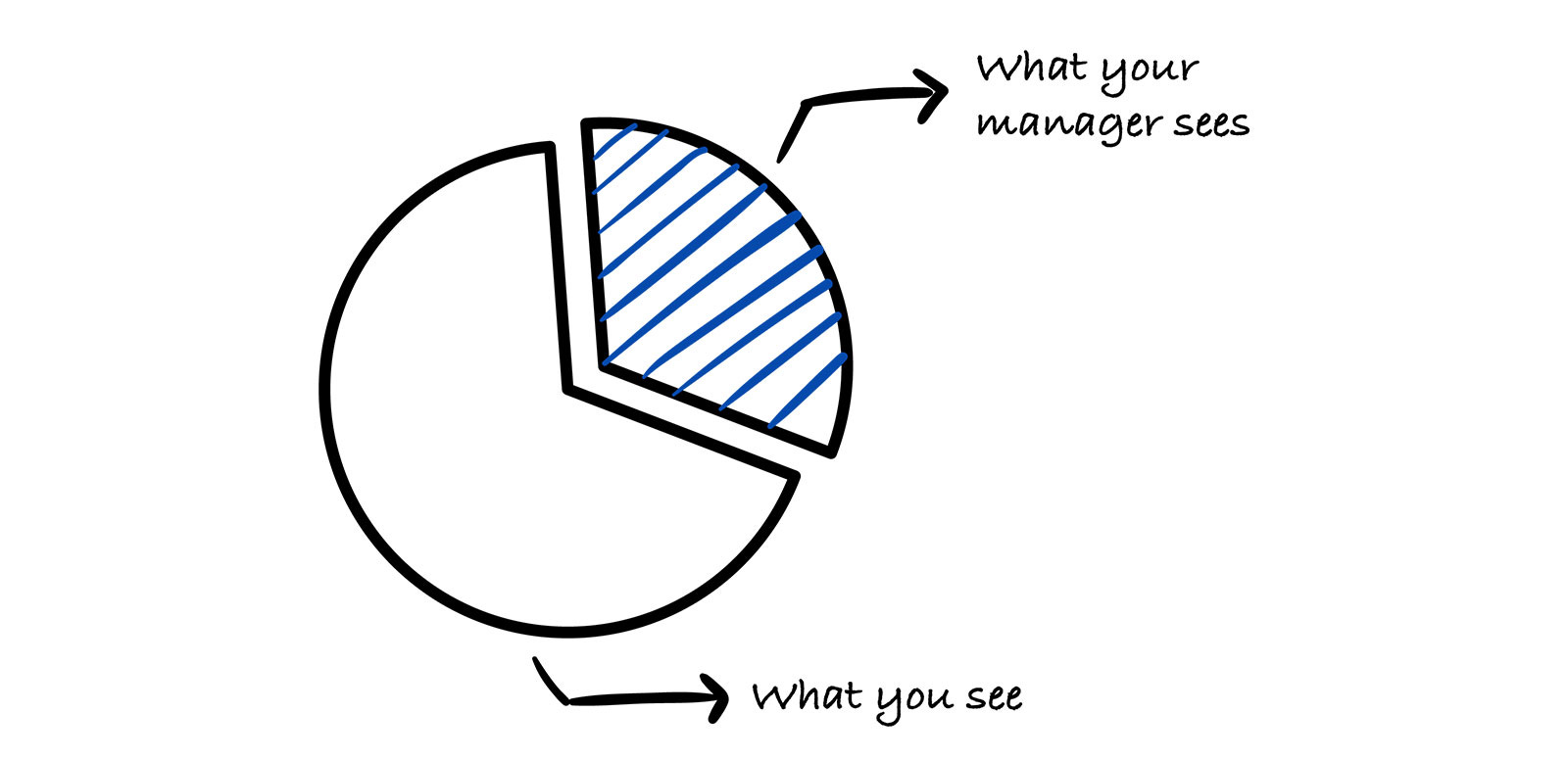
They trust that they can get the information from the direct reports themselves or their peers, especially when collecting feedback. It’s up to you to communicate (and document) your contribution and impact to your manager.
Keep your communication concise and evidence-based. Your manager doesn’t need a day-by-day breakdown of everything you do. Focus on the highlights and back up your impact with evidence when possible.
So, whenever you’re working on a project, your manager is focused on the project outcomes. It’s up to you to communicate your impact.
Signals for Building Trust
A great conversation with your manager can start by asking three questions. Make sure you also have answers to them in case they ask you back:
1. What keeps you up at night?
This is a good starting point to understand the challenges your manager is facing. This gives you insights into the themes they’re thinking about and helps you identify if you can help with some of them.
This could be ongoing work that you get some visibility into, or some future work that you can think about asynchronously and discuss whether it’s something you can get involved in.
If not, it’s still a valuable insight to know about the business from both an IC level and managerial level.
2. What are you looking forward to?
This gives both you and your manager an opportunity to think about the things you want to achieve or work on in the future.
It could be delivering a business-critical project, working on a new product feature, onboarding new engineer, acquiring new customers, etc.
This could be 3-6 months of aspirations that you share with your manager so you can work out a development plan together to support you. Their aspirations could overlap with yours. Having a shared goal of growth is a positive sign of a strong IC-manager relationship.
3. How can I help you?
My favorite question by far.
Part of my philosophy of operating as a proactive engineer is figuring out the bottlenecks by asking individuals directly and showing that you’re here to help and are a great team player.
Managers love working with proactive engineers. They show high degrees of autonomy, are curious to identify challenges upstream or downstream, and can be relied on as capable engineers.
If you have a 1:1 meeting with your manager and don’t have an agenda, just asking these three questions will kick things off in the right direction.
Tips for Working With Difficult Managers
My approach to this would be the same as my approach to working with difficult engineers.
First, I understand the context in which they operate and make sure to approach this as a task conflict instead of a relationship conflict. For example, the manager might be facing pressure from the business on a critical project, so they might be asking you more questions about the project and want to understand the bottlenecks, if any.
❌ A bad assumption (personal conflict) an engineer might make: The manager is not happy with my performance and how I operate as an engineer. They are micromanaging me and do not trust my output.
✅ A good assumption (task conflict) would be: The manager is worried about the project deadline due to ongoing pressure from their managers, and they need to manage expectations with the executives on a weekly basis.
The deadline is stressful for engineers as well. I’ll approach this as a task conflict and focus on how to manage expectations with business leaders alongside my manager, and make sure my team and I are laser-focused on the project delivery.
An important thought I want to mention:
Debugging code you don’t know is easier than debugging people you don’t know.