

Intro
AI is changing how software is built at a pace most organizations aren’t prepared for, especially larger companies.
Smaller companies tend to adjust more quickly, but larger companies require more time to adopt new processes or implement significant changes.
One thing I am seeing across small to mid-size companies is that AI usage is a lot more common. That’s also where the term “AI-native teams” has come up.
In today’s article, we are going through all about what it actually means to build an AI-native engineering team.
Not teams that simply add AI tools on top of existing processes, but teams that rethink how work gets done from the ground up.
We’ll look at how the most effective teams operate today, which skills matter most, how leaders should adapt, and what practical changes make the biggest difference when building fast, high-impact engineering organizations in the age of AI.
To help us with this, I had the pleasure of speaking with Thibault Sottiaux, Head of Codex.
We talked all about AI-native engineering teams, his advice for engineering leaders building such teams, and also how the Codex team works, their process, and how they leverage AI to be successful in their work.

In today’s article, we are focusing on AI-native teams and on Sunday’s article there’ll be a deepdive on the OpenAI’s Codex team, how they work, their process and how they are leveraging AI, so make sure to not miss the Sunday’s edition as well!
This is an article for paid subscribers, and here is the full index:
- What does “AI-native” actually mean in practice for an engineering team?
- The most effective AI-native teams tend to be very small
- Most important skills for engineers in AI-native teams
- Ownership and accountability is crucial
- Meetings should be kept at the minimum
🔒 AI tools are the new onboarding buddy for such teams
🔒 When such teams can move so fast, it’s really important to build proper guardrails
🔒 Advice for engineering leaders building AI-native engineering teams
🔒 Last words
Let’s start!
What does “AI-native” actually mean in practice for an engineering team?
An AI-native team is, above all, nimble and adaptive. Models and tooling are evolving so quickly that teams must continuously reinvent how they work, almost weekly, in order to keep finding and eliminating productivity bottlenecks.
And being AI-native goes beyond simply using AI tools. It means continuously identifying and eliminating bottlenecks across the entire software engineering lifecycle.
That means questioning everything:
Planning, strategy
Prioritization of features, bugs
Code generation, code review
None of it is sacred, and everything can and should be continuously improved.
What AI-native teams do well is: identifying where work slows down and applying AI to remove those bottlenecks.
The most effective AI-native teams tend to be very small
Teams of 3 or 4 people, with strong collaboration, can move really fast, and in creative ways, which outperform much larger groups.
A good example is Sora, which went from the first line of code to public release in 28 days with 4 people. Similar to Atlas and the Codex app as well.
The Codex app team, for example, is remarkably small, fewer than 3 core contributors, yet it operates with a really high output and impact.
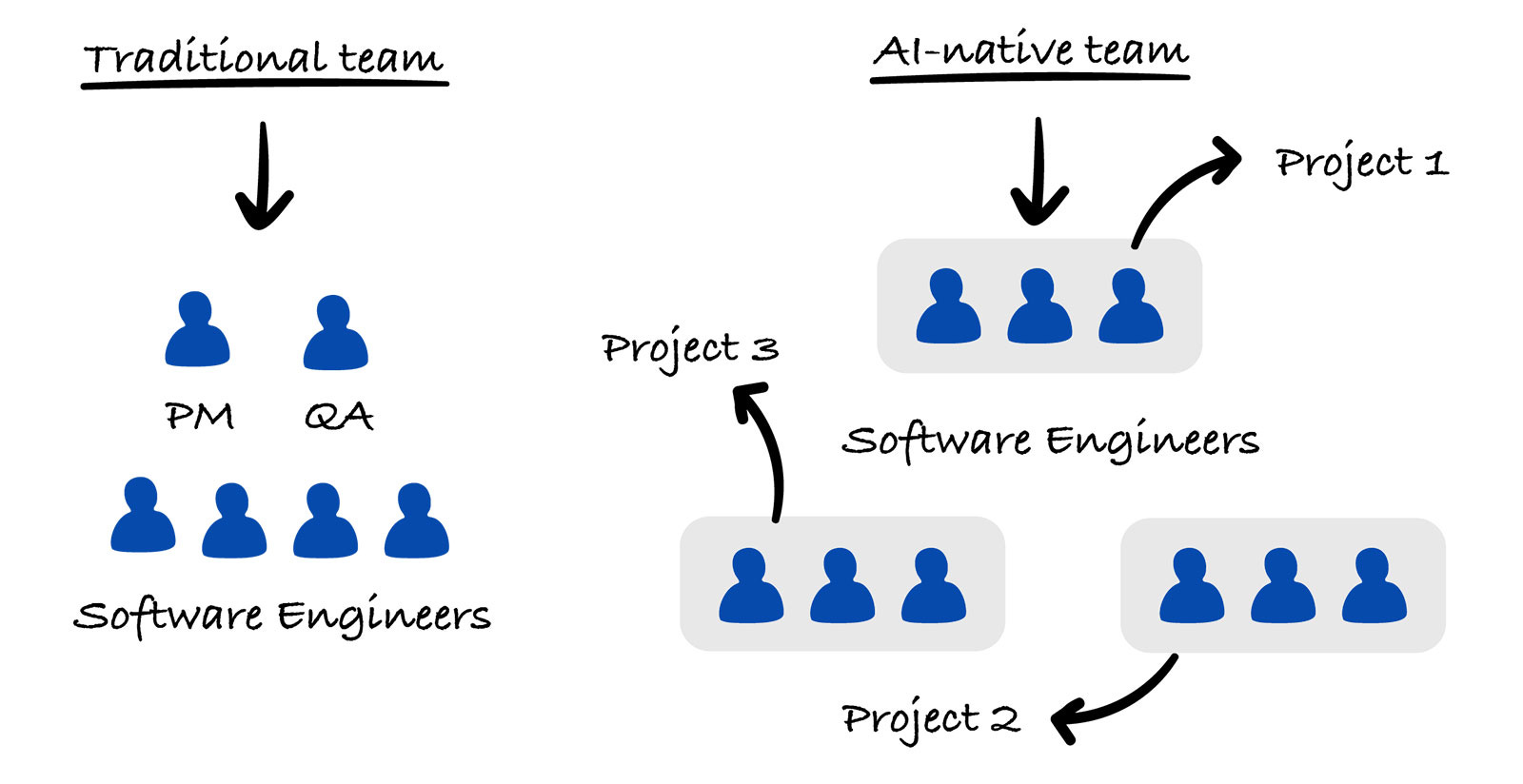
The full Codex team is around 40 people working on different projects, some including: Open-source coding agent, Codex IDE extensions, Codex app, and other projects.
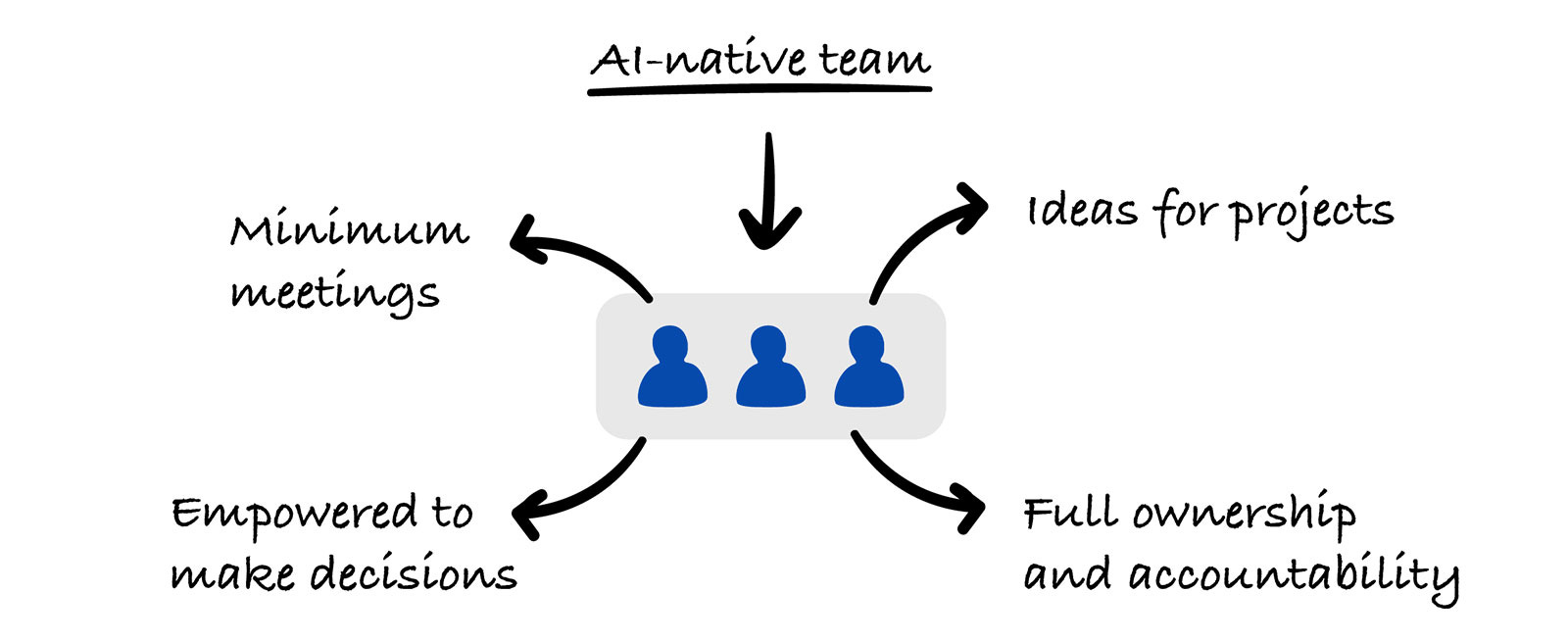
They run with a strong emphasis on empowerment and local decision-making. It’s closer to a modern version of Bell Labs.
Individuals are trusted to make decisions because the pace of change demands it.
Interestingly, the Codex team has 1 Product Manager for the whole team, 2 designers, and others on the team are engineers with various expertise.
An important thing for all the engineering leaders → you cannot become the bottleneck. It’s a must that you design the organization + adjust yourself as well, so that speed, autonomy, and experimentation are built in by default.
I’ll be sharing a lot more details on how the Codex team works, their process, and how they leverage AI to be successful in their work in the article that will go out on Sunday. Make sure not to miss it!
Most important skills for engineers in AI-native teams
Some of the most important skills haven’t really changed, AI has just made it more obvious. Critical thinking and strong technical fundamentals are still essential traits for engineers.
What’s becoming more important is adaptability.
Deeply optimizing a single setup or workflow over many years, like mastering one editor configuration, is no longer a real advantage. Engineers need to be willing to try new tools, adopt new workflows, and continuously adjust how they work.
Another skill that’s clearly rising in importance is empathy. Being able to understand users, ask the right questions, and decide which problems are actually worth solving matters more than ever.
When you combine adaptable workflows with strong user empathy, you get engineers who are dramatically more effective.
AI and tools like Codex are leveling the playing field. They give everyone on the team the ability to be highly productive. As a result, the real differentiator is no longer raw output, but who is solving the most meaningful problems.
Going forward, people skills and problem-solving abilities are what truly set engineers apart.
Ownership and accountability are crucial
Engineers are empowered to own the full projects from start to finish. They initiate the ideas of what would be great projects to work on, and then they take full ownership and accountability for finishing them successfully.
And also very importantly, continuously improving them!
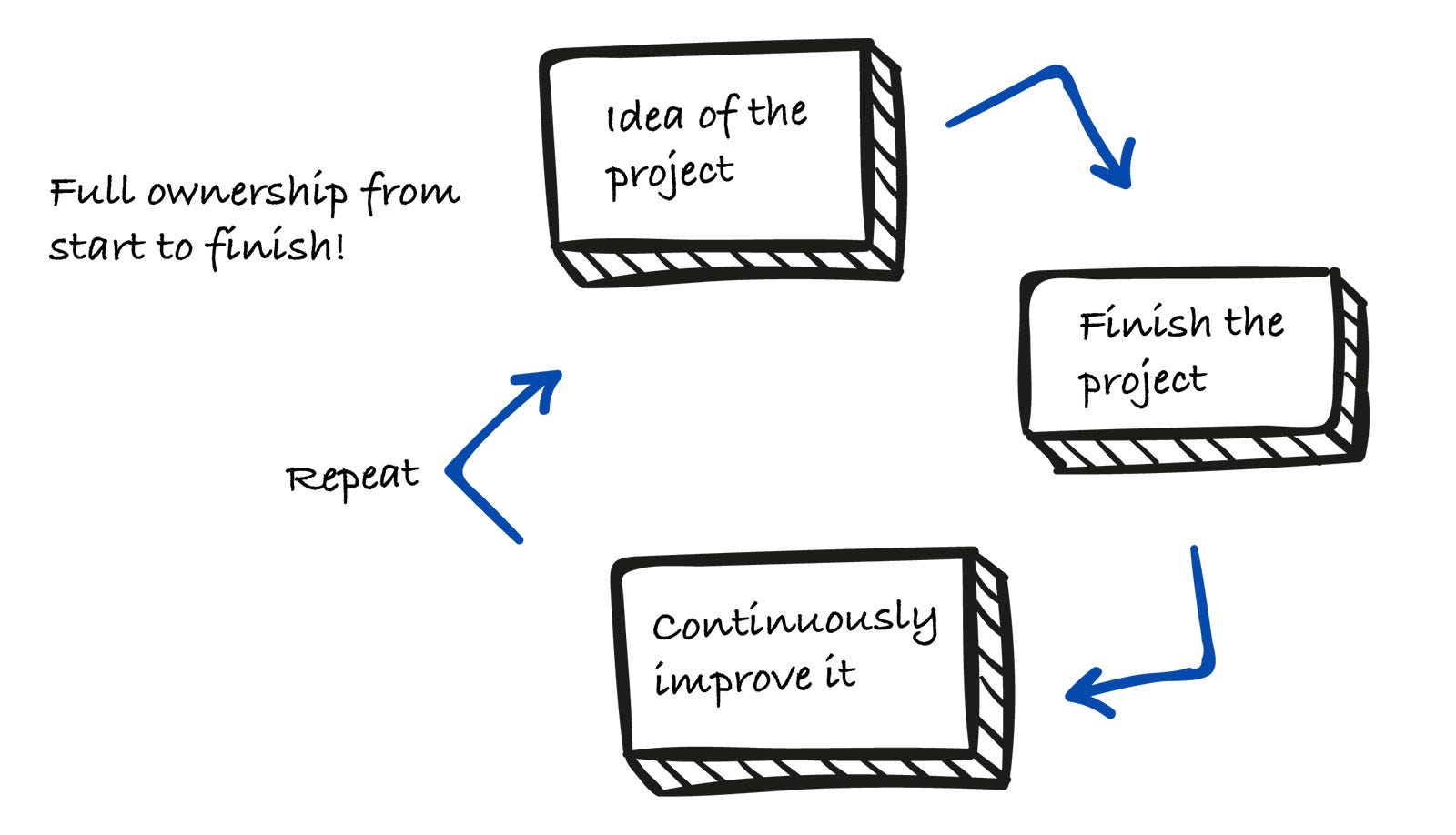
On the Codex team, they always have people work together on projects, as there’s a lot of exchange of ideas that way.
They found that people get much more excited to solve problems together, and it also helps when you have more ideas, and diversity of people who might know a certain field a bit better and share their knowledge across the team.
Meetings should be kept to a minimum
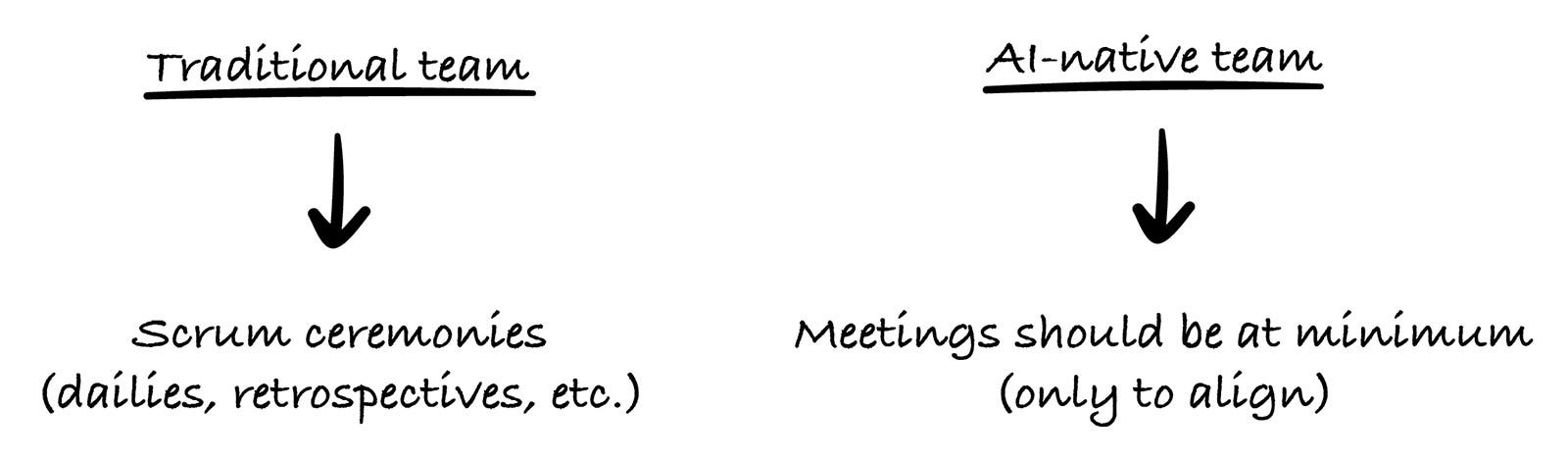
Meetings should be done more or less to align on things to ensure that people work together efficiently. In the Codex team, they like to utilize their office space to meet and align, and also work together on specific things.
No daily meetings, retrospectives, sprint planning, etc. Everything is optimized to ensure that people can get as much work done as possible → fewer interruptions, more focus time.
And the focus should be on the impact. As I always like to say:
When you trust your people and empower them, in many situations, you’ll be surprised by what kind of amazing things they’ll come up with.