

This newsletter is sponsored by DX.
Download the State of AI Impact in Engineering: Q3 Report
AI has sped up how fast code gets written, but not how fast it ships. DX’s Q3 report draws on data from 500+ organizations to show where delivery is slowing down and where AI spend is actually going.

What you’ll learn:
Why pull requests from teams generating 80%+ AI code wait more than twice as long for a first review
Where AI spend is going: it doubled in Q3, and 94% of tokens now go to re-reading context
Where engineering leaders should focus so individual time savings actually reach production
Thanks to DX for sponsoring this newsletter. Let’s get back to today’s thought!
Intro
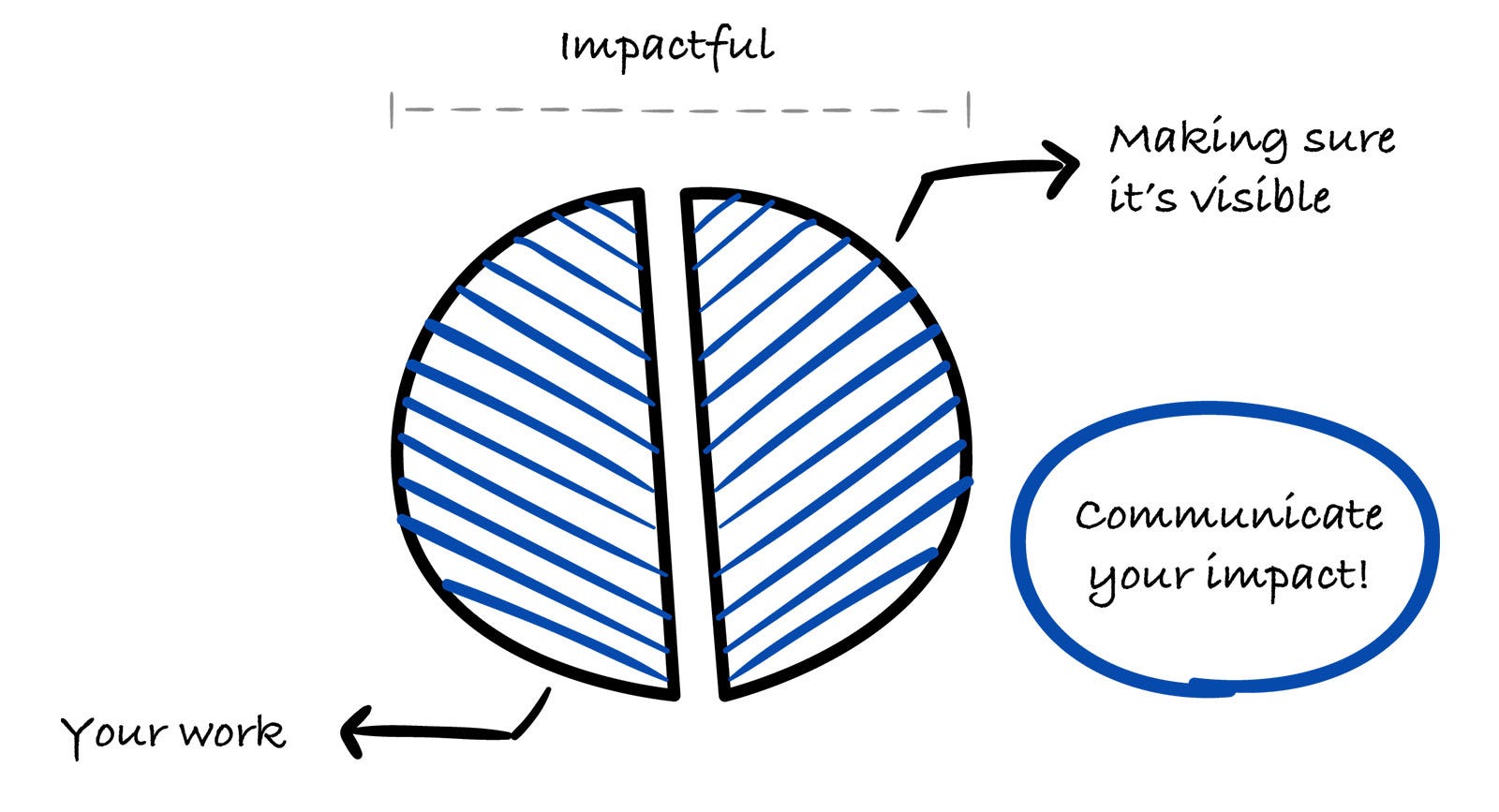
As you grow in your career, there comes a time when your impact is no longer determined only by the quality of your work.
The more senior you become, the more your success depends on your ability to communicate, influence decisions, build trust, and help others succeed.
A lot of engineers feel that great work speaks for itself. In fact it rarely does.
The engineers and leaders who create the greatest impact aren’t just great at getting things done; they know how to align people around a vision, communicate progress clearly, manage expectations, gain trust, and inspire others to do their best work.
In this article, we’ll go through all about why great work often goes unnoticed and what may be holding you back from being considered impactful.
I’ll also share 5 practical ways to help you share your wins, build credibility, and make sure the right people understand your value, without feeling like you’re bragging or selling.
This is an article for paid subscribers, and here is the full index:
- Your Work Doesn’t Speak For Itself
- Help Others See The Great Work You Do
- The Hidden Roadblocks to Good Communication
🔒 How to Communicate Your Impact (5 Methods)
🔒 Last words
Let’s start!
“The Multiplier Mindset” published by O’Reilly is now available!
This article is an adapted version of one of the chapters of my book called “The Multiplier Mindset”. The e-book (Kindle) is available for purchase. The print version is available for pre-order and will be released on October 31st!

Your Work Doesn’t Speak For Itself
I’ve seen countless engineers doing great work but afraid to come across as if they are “bragging” or “selling.” But then, when it’s time to announce the next promotion, they get overlooked. Or worse, they might be part of the next layoffs.
Great managers will notice this and give feedback and direction on what to do, but not everyone has a great manager. So it’s really important that you take ownership and find ways to not only do great work but also make sure that everyone knows about it.
If you find yourself saying things like “My work speaks for itself,” there’s a good chance you haven’t been communicating your impact well. And it’s time to make some adjustments.
What I like to say:
You can do the best work in the world, but if you don’t manage people’s expectations correctly, they won’t perceive it that way.
In most cases, everyone does not already know that you’re doing good work. You need to actively tell them so.
You may object, “But, Gregor, this sounds like I need to brag or sell myself, that just isn’t me! I just like to be in the fine details, coding and making technical decisions.”
Let me tell you a very important thing: we are all selling ourselves, all the time, both personally and professionally. But you don’t have to think of it as selling or bragging! I see it as being clear and ensuring that my work is perceived the right way.
Help Others See The Great Work You Do
In the best-case scenario, your manager will see perhaps 40% of all the work that you do on a daily basis. You need to let them know about the rest, including all the wins you achieve.
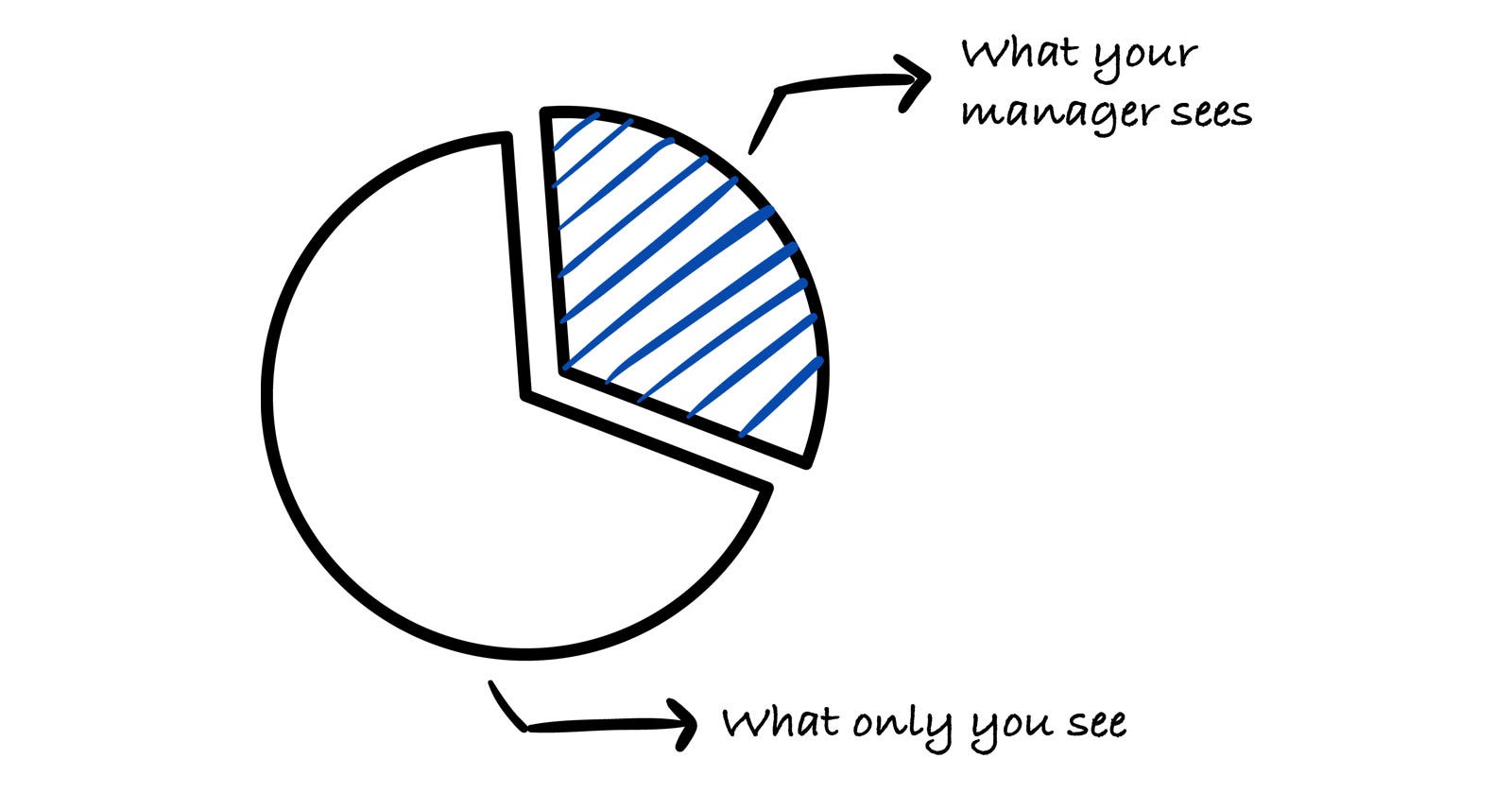
The only way to improve this situation is to take full accountability. Ask yourself, “What can I do to learn from this and make sure I improve my situation?”
Of course, there are managers who don’t do their jobs well and make their direct reports’ lives a lot harder. But you can’t control that.
It’s easy to blame others, especially your manager, for not seeing all your hard work, because that lets you off the hook and gives you permission to think there’s nothing you can do. I think that’s a totally wrong way to look at it.
There are many things that you can do to make sure that everyone around you (including your manager) understands what a great job you’re doing. Neglecting this puts you in a bad light.
Ask yourself the following questions:
How can I share my wins in a better way and make sure everyone understands them? (We’ll go through how to keep a brag list” in the last section).
How can I collaborate better with my manager and build a good working relationship?
Have I fully understood my manager’s feedback?
How can I improve my credibility, inside and outside the organization?
The Hidden Roadblocks to Good Communication
Now, let’s look at some other, less often discussed side effects of not actively communicating your impact:
Burnout
First, there’s burnout. I’ve found that hard work alone does not burn me out. What does burn me out is doing something for a long time that doesn’t fit my goals or my expectations for myself.
That’s why not knowing my next step after becoming a senior software engineer really demotivated me.
I believe the biggest reason people burn out is that they don’t see the necessary outcomes or receive the recognition they deserve.
When you put a lot of effort into something that you come to see as a total waste of time, that’s when you risk burning out.
Marginalization
I’ve also noticed that engineers I’ve worked with and managed who are from marginalized groups (particularly women, but often people from ethnic or religious minority groups, and others who often deal with prejudice) have had trouble communicating their impact.
They’ve been some of the best engineers I’ve worked with and crucial to the success of the projects, but in many cases, if I hadn’t been heavily involved, seen all the great work they were doing, and recognized them publicly for it, their work would have gone unnoticed.
Manager disinterest
When great work goes unnoticed, it’s often because the person’s manager isn’t very involved and the person doesn’t personally communicate their impact the right way.
You can’t control how involved your manager is; you can only control doing great work and that you are communicating the right way. We’ll go through how to do that, next.