

Engineering Leadership Live Event in San Francisco
Together with my friends from Augment Code, we are hosting a live event in San Francisco on May 26!
Engineering leaders are holding excitement and dread about AI at the same time. The job description is changing faster than anyone can rewrite it.
Engineering Leadership Live is an evening for that conversation.

Three speakers, a room full of peers, networking, and snacks after.
It’s a free-to-join event, but there is a limited number of spots available, so make sure to register for the event below while the spots are still available.
Looking forward to seeing you there! Let’s get back to this week’s thought.
Intro
As mentioned already in the article Become a Great Engineering Leader in 2026, the entry-level engineering leadership roles (Staff Engineer, Tech Lead, Team Lead, EM, Architect) are just getting closer together as time goes on.
And especially a common scenario that I am hearing frequently is a Tech Lead or a Senior+ Engineer also taking on managerial responsibilities of the team.
Today’s article is especially for these people. People who have recently taken the managerial responsibilities of the team, regardless of their title.
I am sharing all of my knowledge and experience on how to manage your time as a first-time lead. This was also one of the modules in the Senior Engineer to Lead: Grow and thrive in the role course, and now adapted as an article in this newsletter.
This is an article for paid subscribers, and here is the full index:
- Managing my time was one of the biggest struggles I had as a first-time team lead
- Prioritize ruthlessly
- Make sure to block focus time in your calendar
- Use a Pomodoro timer to avoid distractions
- Improve communication to save time for everyone
- Remove pointless meetings
🔒 Separate “maker time” and “manager time”
🔒 Group similar work together
🔒 Say “no” more often
🔒 Take time off
🔒 Bonus: Biggest lessons I learned
🔒 Last words
Let’s start!
Managing my time was one of the biggest struggles I had as a first-time team lead
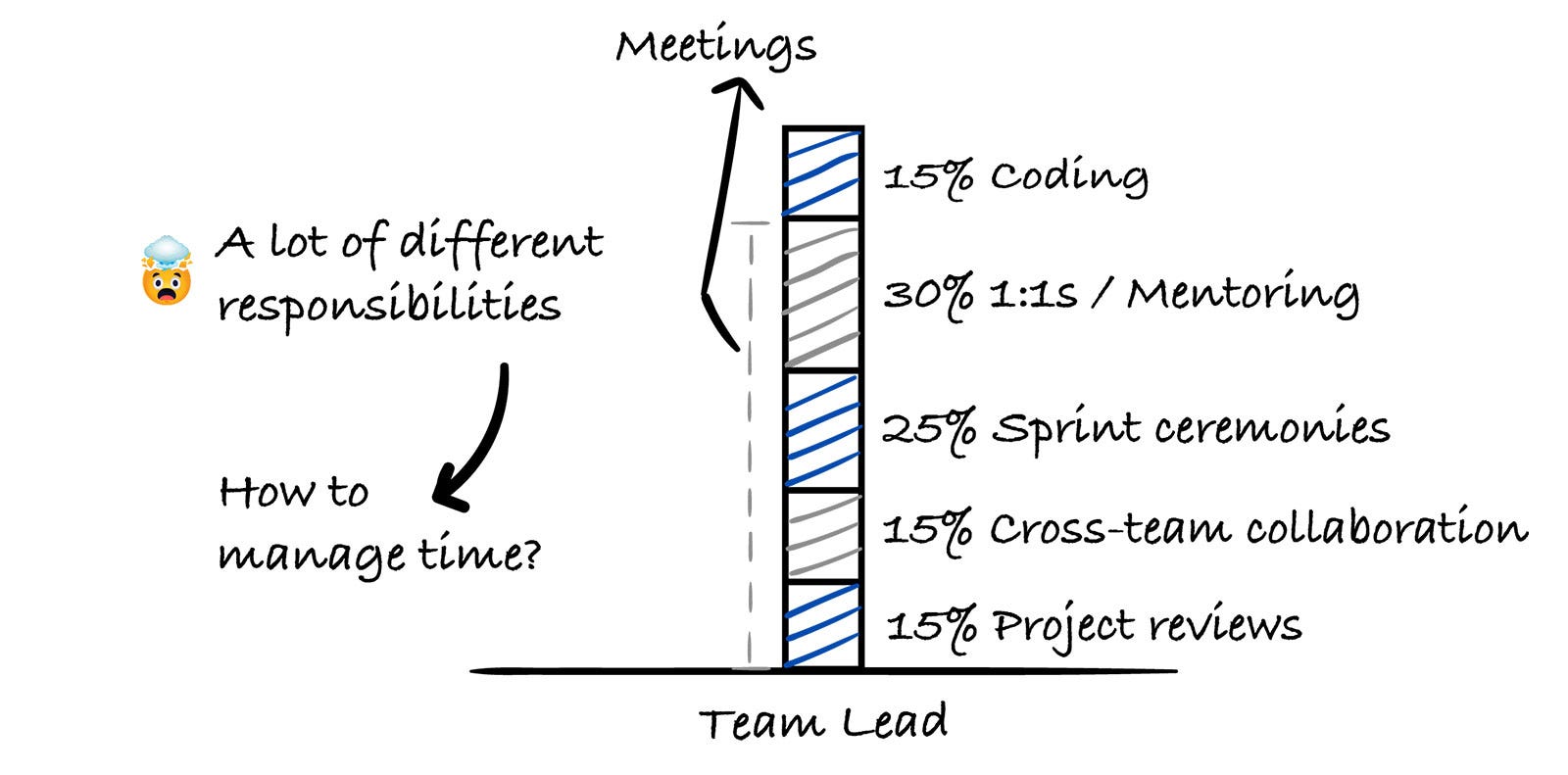
When you grow to a lead role, everyone wants your help, advice, or your involvement as well. I found myself saying yes to everything (which is NOT the way to go!). I’ve helped solve problems, joined discussions, supported everyone, and gotten involved in a lot of different initiatives.
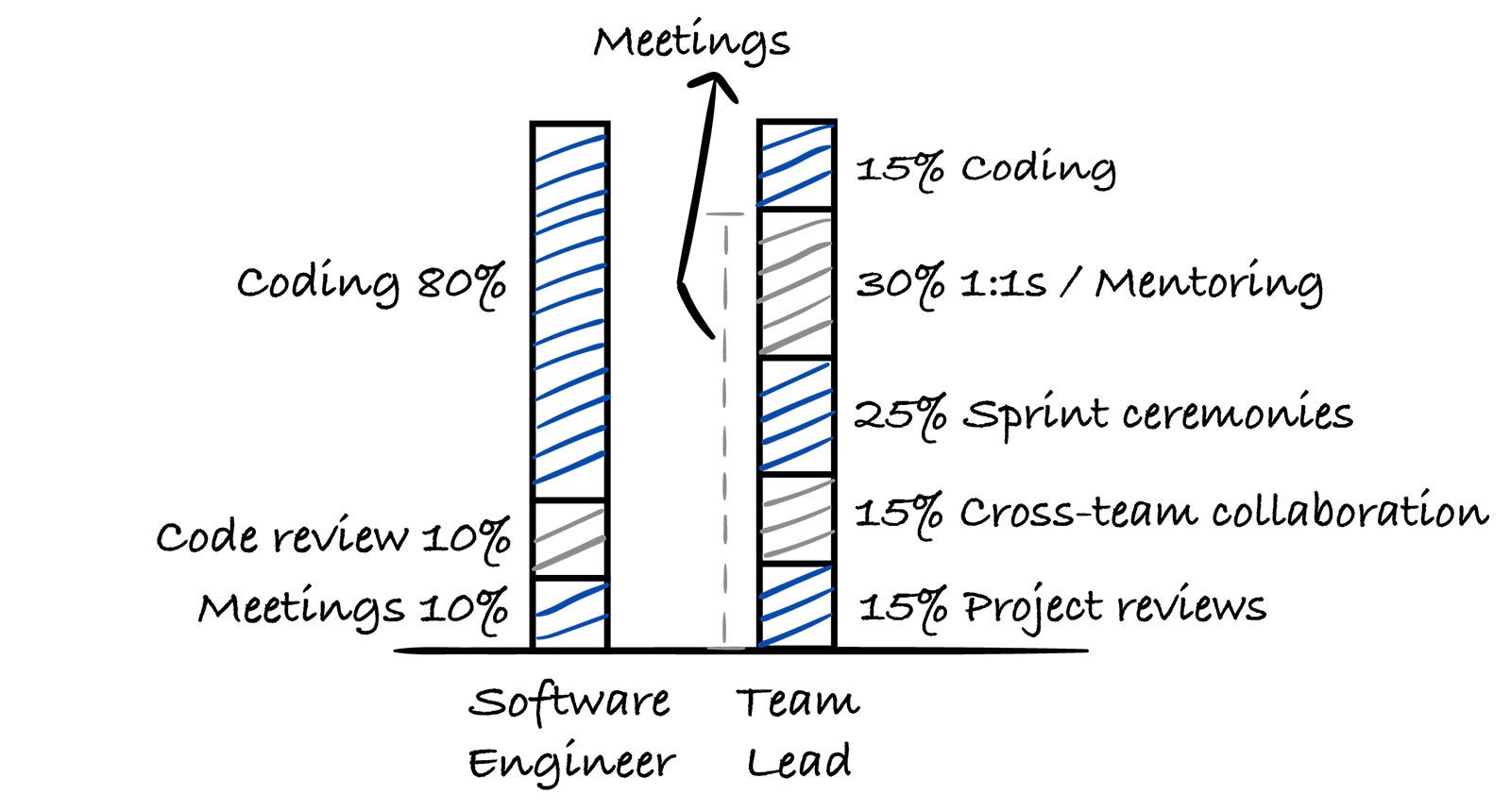
The result was 10–12+ hour workdays, working as a manager during the week, and working as an engineer during weekends. It wasn’t sustainable.
It’s really important to understand that if you don’t manage your time correctly, your team will struggle, important work won’t get done, and you will eventually burn out.
A big learning for me was the following:
The more senior you become, the more you succeed through others, not through your own output.
As a lead, don’t try to take on all the hardest tasks yourself. That turns you into a bottleneck. It’s much better to delegate, trust your team, and focus on enabling others to succeed.
Now, let me share some of the most important things you need to do in order to manage your time effectively.
Prioritize ruthlessly
You need clarity on what to work on, what to schedule, what to delegate, and what to ignore.
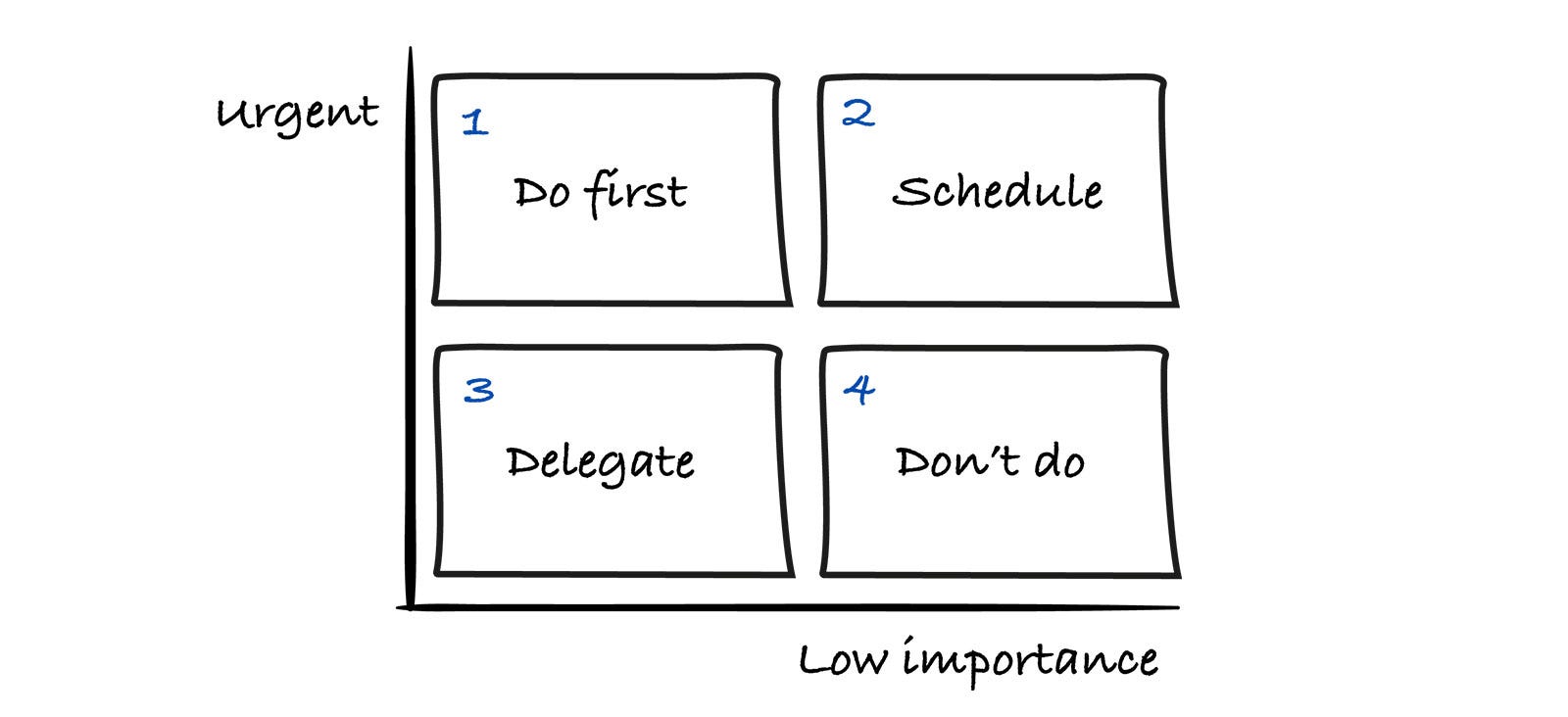
A useful framework is dividing tasks into four categories:
Do first: Important and urgent tasks.
Schedule: Important but not urgent tasks.
Delegate: Urgent but less important tasks.
Don’t do: Not urgent and not important tasks.
One of the worst things you can do is keep everything in your head, and even worse if you can’t decide on priority.
Indecision often creates so many more problems, in some cases, a lot more problems than making a wrong decision. Because then you know that the decision was wrong, and you can pivot to the right one.
So, make sure to make decisions quickly. Either do it, schedule it, delegate it, or remove it.
Make sure to block focus time in your calendar
Everyone needs time dedicated just to focusing, without being distracted. If you don’t protect focused work time, your calendar gets consumed by meetings and “someone else’s priorities”.
And you might think that you are productive, but at the end of the day, nothing really gets done, therefore, I highly recommend putting dedicated focus blocks into your calendar.
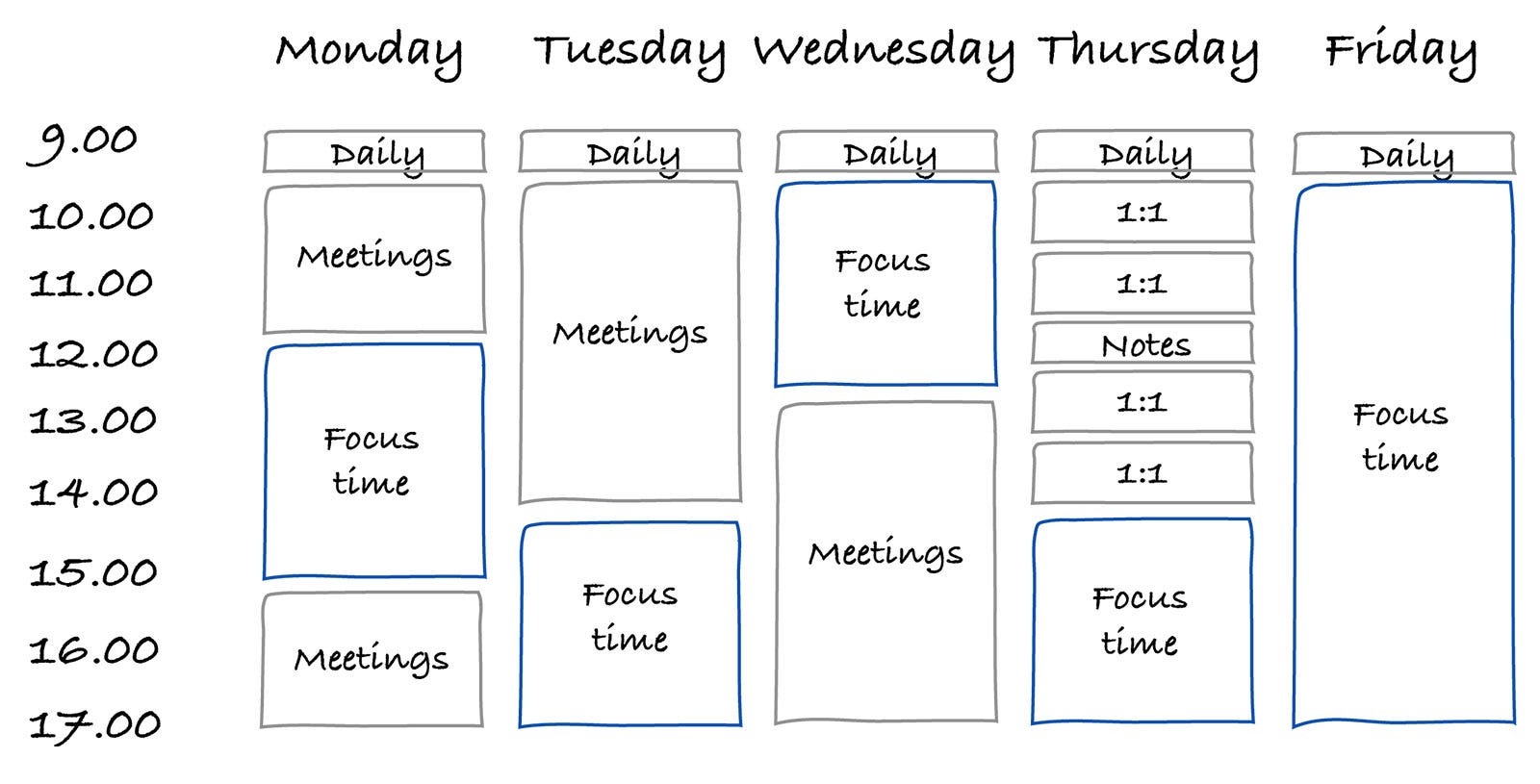
Examples:
2–3 hours daily,
half-days,
a full day once a week,
or several long blocks during the week.
Make sure that during the focus time, you disable any notifications, no meetings, no emails, no Slack messages, and other distractions.
Try to keep focused on what you are doing. This was one of the most impactful changes I made as a first-time lead, which has really helped me be able to do good work long-term.
A very important and underrated part is that it also creates healthy boundaries because people see you’re unavailable during those blocks.
Use a Pomodoro timer to avoid distractions
Additionally, if you have problems with focusing, the Pomodoro timer is the way to go. It always puts me in a state of focus because I intentionally avoid distractions, while the clock is telling me to focus.
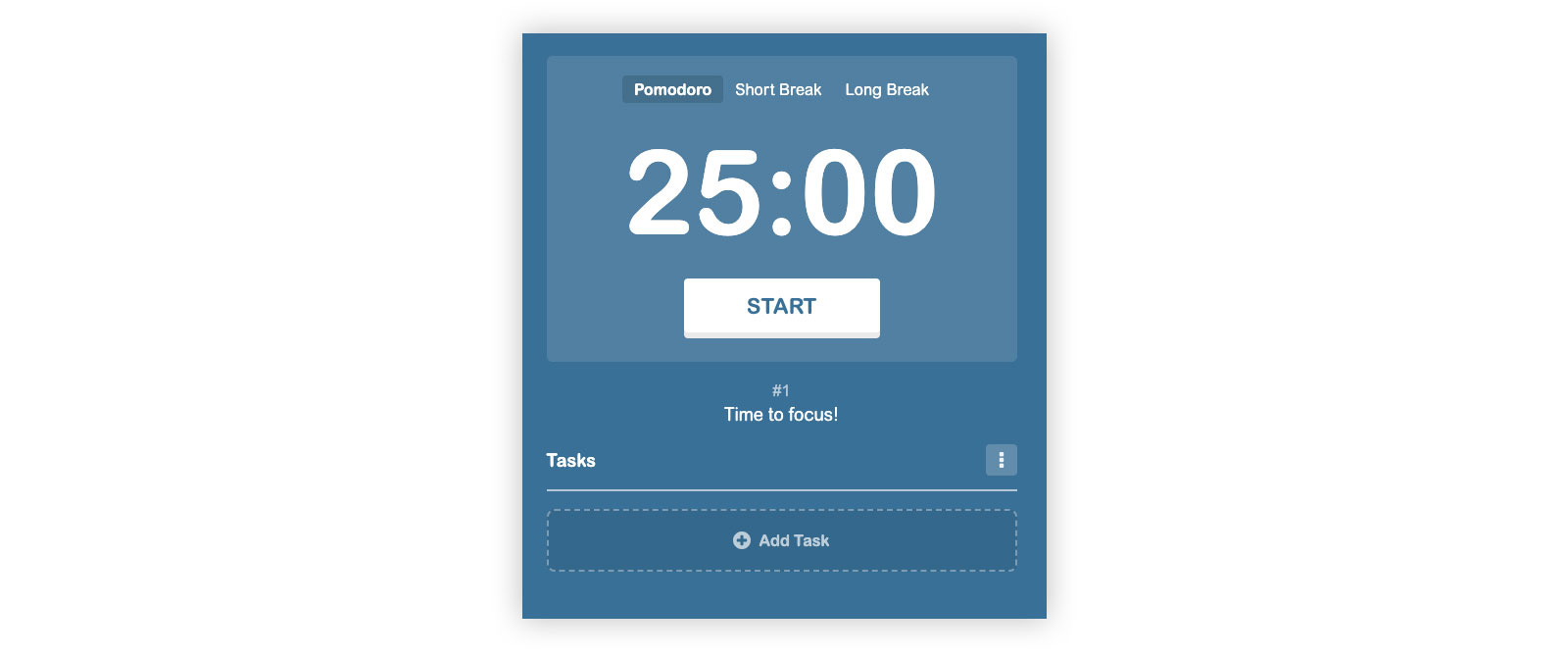
I typically go for 25 minutes of focused work and a 5-minute break. Sometimes I go for 50 minutes of focused work, and a 10-minute break. Depending on how focused I feel and the overall motivation. I put the timer on full screen on one monitor, and then do the work on a bigger screen.
This helps me to stay in the zone and reminds me that I need to focus. Whenever I feel like my mind wants to do something else, the timer reminds me it’s time to focus.
During the focus time, I don’t check Slack, I don’t check my phone, I don’t look at social media, etc. The focus should only be on one task, and to finish it. Pomodoro helps force you into deep work mode.
Improve communication to save time for everyone
A lot of wasted time comes from poor communication. I like to say that overcommunication is better than undercommunication.
I intentionally overcommunicate specific topics in order to ensure that things are really clear, especially in a remote environment, working with people from all over the world, across different time zones.
It’s a lot better to say things multiple times and ensure they are understood than to assume they are, and you assume wrong. Overcommunication is usually the right amount of communication.
Key habits that will help you with this are:
explain the “why” behind decisions,
set clear expectations,
avoid misunderstandings,
proactively communicate,
ask for feedback regularly.
And additionally, if you have something important for the whole team to focus on, say it in a meeting, and then also write it in the team’s Slack channel as well.
Remove pointless meetings
There’s nothing wrong with removing a meeting that is no longer useful. Not every meeting should exist.
The problem actually comes if there’s a meeting that is scheduled in a weekly cadence, and nobody feels comfortable removing it. While there’s no actual outcome from the meeting.
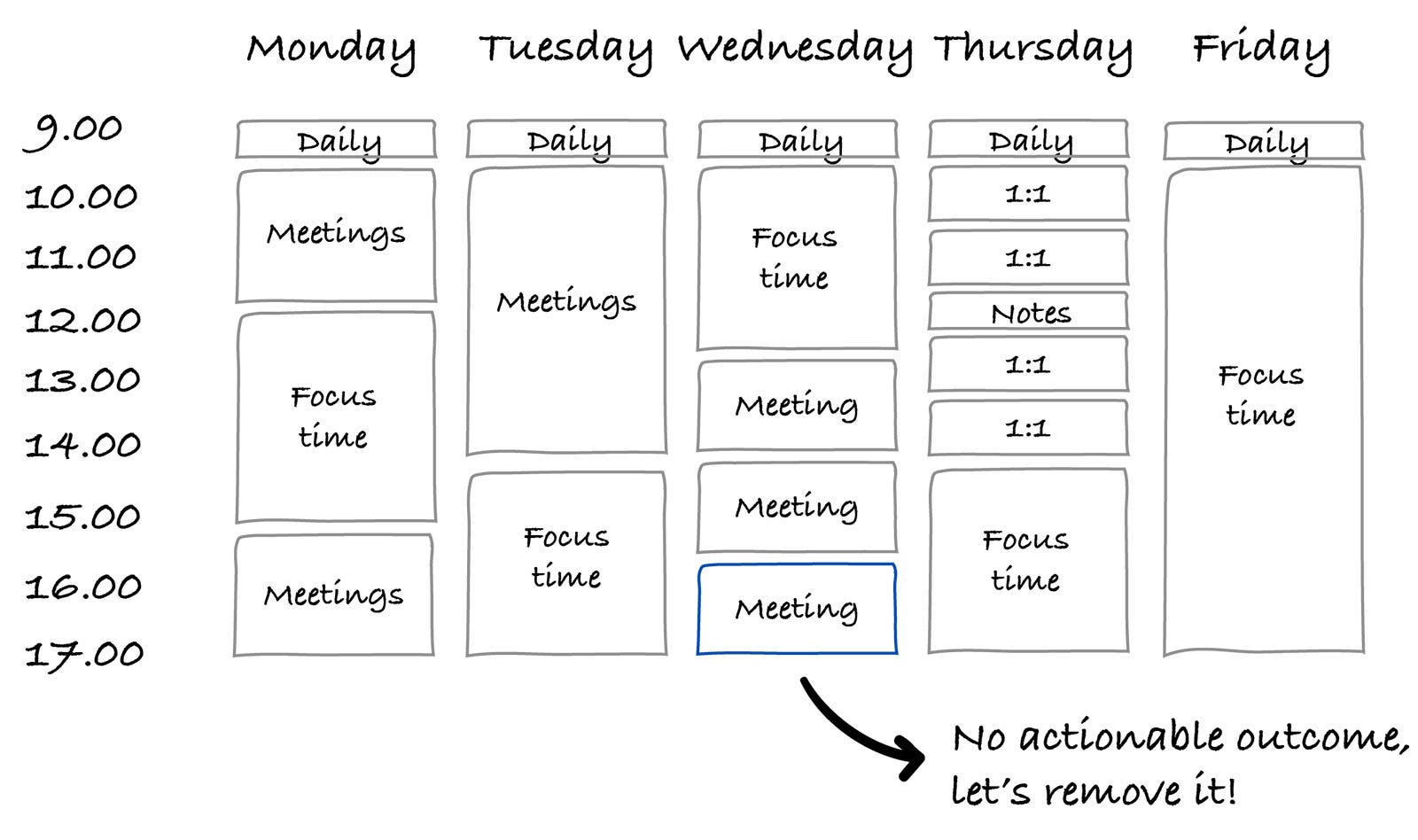
Always keep asking yourself:
Does this meeting help make a decision? Is this meeting necessary? Could this be async instead?