

Intro
“What will others think if I do this?”
I fully believe that this question is the #1 reason why many people are holding off on the next new thing that they want to pursue. Me included.
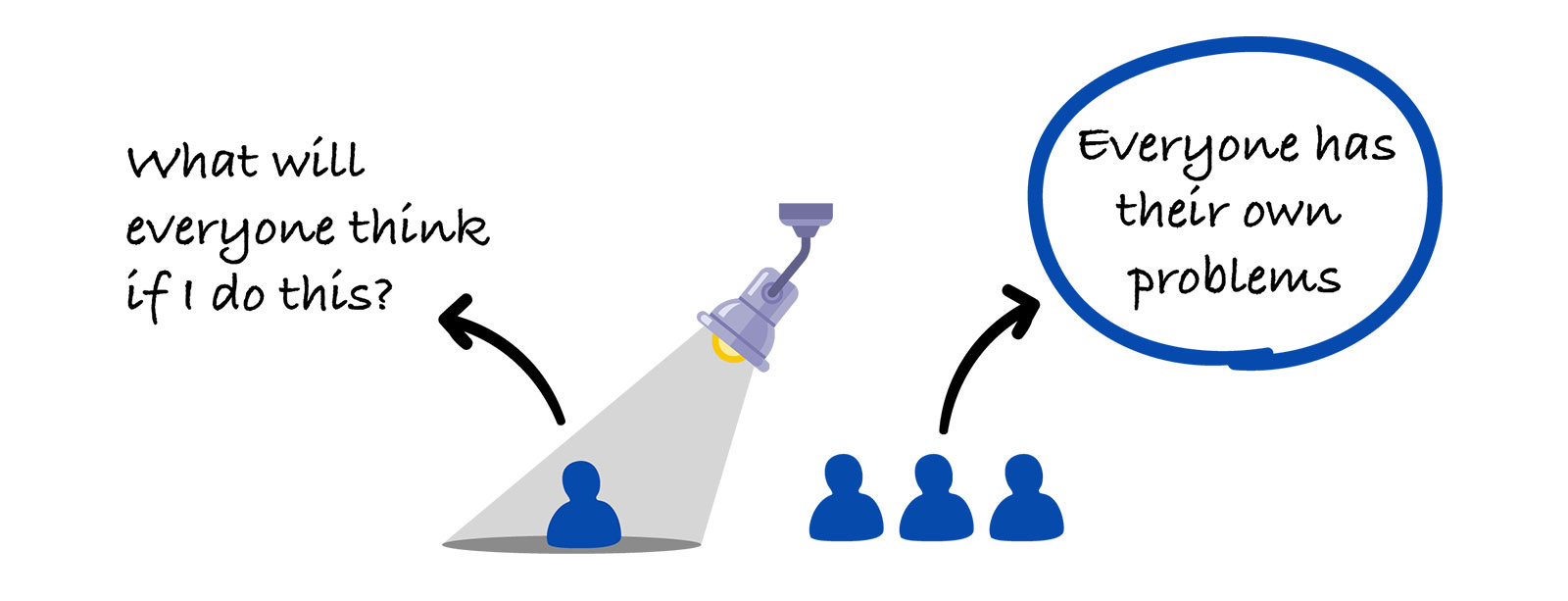
We often think too much of “what will they think if I do this”, and the funny thing is that it’s all in our heads. People are way too busy with their own lives to constantly look at what we’re doing. And they have their own problems to worry about.
And even if we make a mistake, they might think about it for a second, but then they will go straight back to worrying about their own problems.
That was a quick introduction to the spotlight effect, and in today’s article, I’ll be going through all about what a “spotlight effect” is, why it’s holding you back, and I’ll also share my personal examples throughout my career as well, how it held me back, and how I overcame it in specific cases.
If you have career aspirations (and you definitely should) as an engineer/engineering leader, it’s definitely a must-read article!
This is an article for paid subscribers, and here is the full index:
- What exactly is the Spotlight Effect?
- Practical Example From the Experiment Conducted by Thomas Gilovich in the Early 2000s
- As a Self-Taught Engineer, I Believed People Thought I Wasn’t Qualified Enough
- Similarly, I Thought People Regularly Think I Wasn’t Qualified Enough to Be a Senior Software Engineer
🔒 When I First Became a Manager, I Believed Everyone was Thinking I was too Young to Be a Manager
🔒 “What Will They Think if I Start Writing Online?”
🔒 I Understand The Effect A Lot Better Now
🔒 Don’t Let the Spotlight Effect Stop you From Doing What You Want to Do
🔒 Last Words
Let’s start!
Early Release: The Multiplier Mindset
Before we begin today’s article, I am happy to share that my book, The Multiplier Mindset: How to Move from Senior Engineer to Tech Leader in the Age of AI, is now available as an early release on the O’Reilly platform.

You can check what the book is all about here, the first 3 chapters + the planned index of the book (not final). Also the cover art is currently in progress, so this one is the generic version.
To check the 3 chapters, I have 100 one-month complementary subscriptions for the Engineering Leadership readers (each worth $49). All you need to do is just fill in this form, and you’ll automatically get the individual subscription.
You’ll also get access to all the books, including the infamous Designing Data-Intensive Applications, AI Engineering, videos, audiobooks, courses, etc.
Now, let’s dive into today’s article.
What Exactly is the Spotlight Effect?
There are many ways we could describe it, but this explanation resonates most with me:
It’s an effect where we overestimate how much other people notice us, think of us, or judge our actions. We feel like we’re standing under a spotlight on a stage. But in reality, everyone else is busy worrying about their own spotlight.
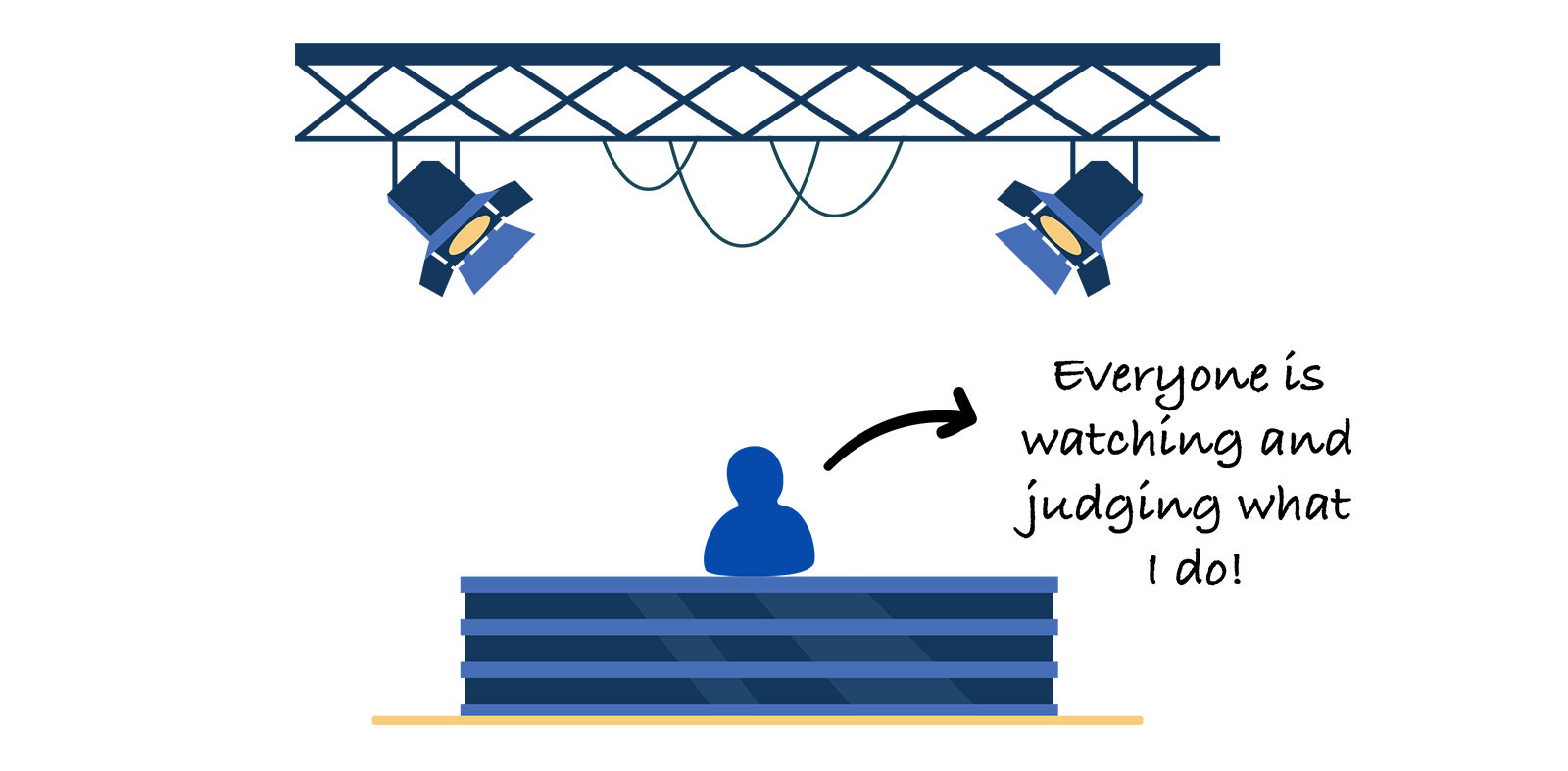
The spotlight effect comes from a natural bias in perspective (not selfishness). We are the center of our own world, so the brain automatically assumes we’re also more central in other people’s worlds than we really are.
It’s an unfortunate effect that often holds us back from doing something that we’d like to do, due to overthinking of what others will think. Let me share a practical example from an experiment next.
Practical Example From the Experiment Conducted by Thomas Gilovich in the Early 2000s
In this experiment, researchers wanted to test whether individuals really are as noticeable as they believe they are in everyday situations.
Participants, who were college students, were asked to wear an embarrassing T-shirt, most famously one featuring Barry Manilow, who at the time was considered uncool by many students.

After putting on the shirt, each participant was instructed to walk into a room where other students were already seated and working on a task, such as filling out questionnaires.
After leaving the room, the participants were asked to estimate how many people noticed the image on their T-shirt. On average, they believed that about half of the people in the room had noticed it.
However, when the researchers asked the other students in the room whether they had noticed the T-shirt, the results were very different. Only about 20 to 25 percent of the observers actually noticed what the participant was wearing.
The findings clearly demonstrated the spotlight effect: people tend to believe they are the center of attention far more than they truly are. In reality, most individuals are too focused on their own thoughts and concerns to pay close attention to others.
Now that you know and understand the spotlight effect, let me share some of my personal examples from my 12+ career in the engineering industry.
As a Self-Taught Engineer, I Believed People Thought I Wasn’t Qualified Enough
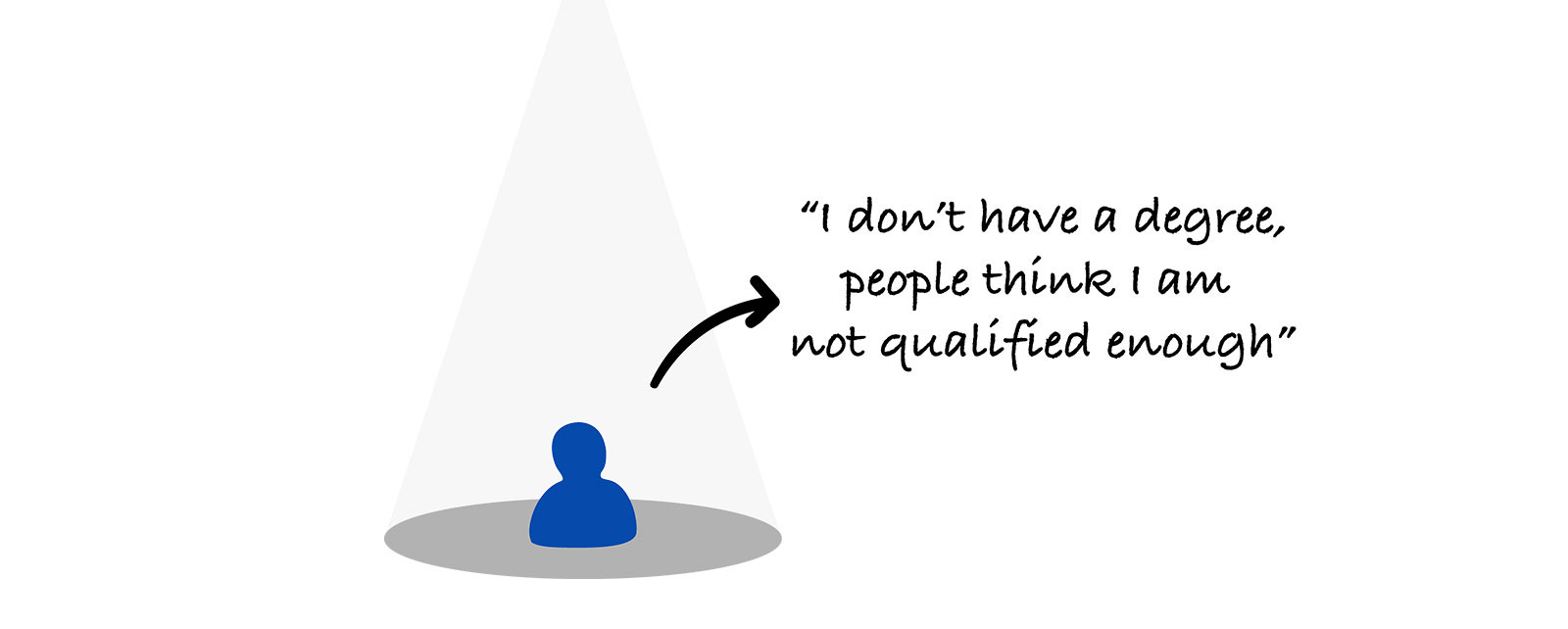
I also believed that people would judge me for not having a degree.
That was especially the case when I didn’t have a lot of confidence in my skill set yet and overall understanding of what I could really bring to the table when joining a company as an engineer.
I remember it like it was yesterday, when I hesitated applying to full-time engineering roles (I had a student job as an engineer at the time), but then I just clicked the button “Send” almost by accident.
Well, it turned out to be one of the best decisions I made, to just click the button, how funny is that!
While it’s true that I wasn’t fully qualified for some roles, much of that doubt existed more in my head than in reality.
This especially turned out to be true when I got my first full-time role as an engineer (you can read the full story of how I got it here). Even though my impostor syndrome was going through the roof, I had a lot of motivation and drive to learn, improve, and do great work.
I’ve quickly got a grasp of the codebase, the projects, and have become productive. And the reality was actually the following: The company, my manager at the time, and people I worked with, really didn’t care about me having a degree or not, they only cared if I was able to do the work needed and if I had potential to grow.
Similarly, I Thought People Regularly Think I Wasn’t Qualified Enough to Be a Senior Software Engineer
At the time I started with my first full-time role, I thought I’d never be good enough to become a Senior Software Engineer, so I always had that in the back of my head.
And even when I actually became a Senior Software Engineer, those thoughts have just become more common. “He doesn’t have a degree”, “He doesn’t have enough experience”, etc.
That’s the kind of thoughts I put in my own head, while others were too busy to think about that, as they had their own problems.
Funny enough, I still go for new things and challenges, even though I have these second thoughts in my head. And the thrill of a challenge is what has shown to prevail over the spotlight effect.
I didn’t know anything about the spotlight effect at that time. I just knew I was motivated and driven when given new challenges.
It would be much worse if my thoughts were the blocker for not actually going for the next step. A similar thing happened when I first became a manager.