

Intro
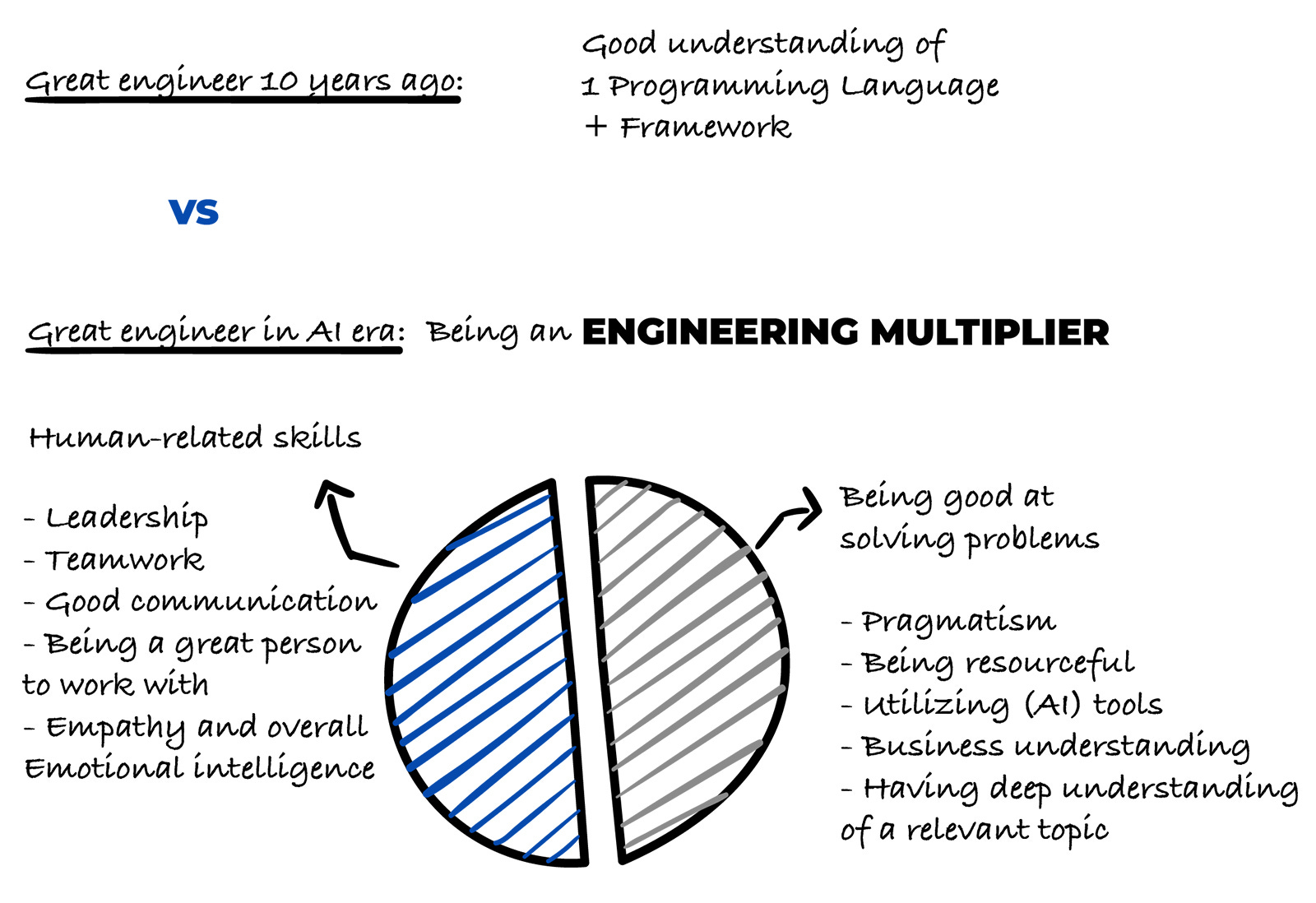
If you compare skills that make you a good engineer now versus 10 years ago, those skills are quite different.
10 years ago: You could get a job as an engineer, just by knowing HTML, CSS, JS, and one of the JS frameworks.
Now: As tools for development have gotten better, the desired skills for engineers have moved from just pure knowing programming languages and frameworks (expected) to problem-solving abilities and people skills.
It’s less about the tasks, but how big an impact you can create. And engineers who can create the biggest impact have the multiplier mindset.
It’s the mindset where you focus less on just your pure individual tasks, but you focus on how you can make things better for your whole team, organization, and, of course, the customers (users).
Let’s start by defining the difference between building Software today and in the past.
Visual/Audio Version of the Article
You can watch/listen to the video below, or you can keep reading for the complete overview and insights of today’s topic!
The Way we Build Software These Days Has Fundamentally Changed
The tools are much better, and it’s much more accessible to build Software. We can see a lot of people, even with non-technical backgrounds, doing vibe coding to build Software.
Vibe coding certainly has use cases, and I see it as a good option for quick prototypes and internal tools (non-critical and mostly presentational).
But it has issues when security, maintainability, and scalability are important → which most of the consumer-facing Software prioritizes.
And when you work in teams (2 or more engineers working on the same project together), it becomes really hard to maintain the project if you just commit AI-generated code, without having guidelines and styleguides for the project.
That’s where AI-Assisted Engineering comes into play, and it’s the best way to build Software these days, in my opinion.
AI-assisted Engineering fundamentally means that you use AI to help you, but you still keep good engineering fundamentals as a first priority.
You use AI to speed up your workflow, while you need a good understanding of engineering to ensure the things that you build are the RIGHT things, and also that they are built the RIGHT way.
Also, it is important to mention: engineers are less expected to just work based on pure requirements and clearly defined tasks these days. But the expectation is more and more for engineers to find the most impactful things to work on proactively and put their efforts into building them.
This is why.
Engineers are Already Owning the What, Why, and When in Startups
As a Fractional CTO and Advisor, I get to speak with many company leaders across the industry.
What I am hearing regularly is that increasingly, engineers are expected to take on not only the how, but also the what, why, and when.
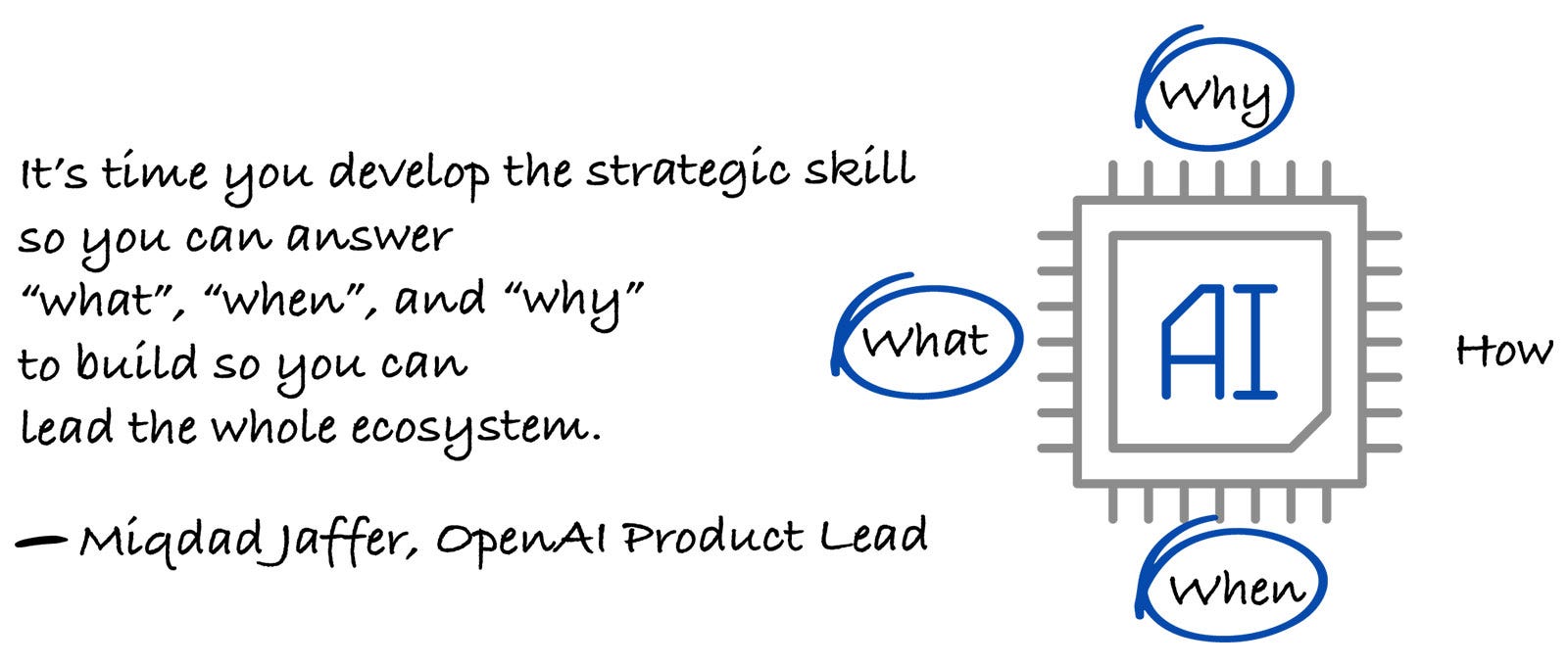
And that’s particularly the case in startups and smaller to mid-size companies.
A good example is Lovable → one of the fastest growing startups in EU. If you check their careers page. They don’t hire for Product Manager roles; instead, their engineers are taking on the PM hat as well. And each is leading their own projects.
Which basically means that every engineer acts as a Tech Lead, which is fundamentally an engineering multiplier.
And that is the trend I see happening more and more across the industry. The Product Engineer role is going to become an increasing trend across companies.
That’s why the multiplier mindset is crucial. Let’s define what that actually means.
What Does it Mean to be an Engineering Multiplier?
I like the term “Engineering Multiplier” because it’s a mix of “Engineering” and “Force Multiplier”, which fundamentally connects the two together.
Being an engineering multiplier means being someone who amplifies the productivity and effectiveness of the engineers around them, not just focusing on their own output, but elevating the entire team.
An engineering multiplier doesn’t just ask, “What can I build?”, they ask, “How can I make everyone around me more effective?”.
And this is how it looks in practice:
Improving team efficiency
You remove friction, simplify processes, and help others work better and faster. This could mean improving processes, writing better documentation, or helping your teammates so they can solve problems more efficiently.
Sharing knowledge
Instead of keeping knowledge only to yourself, you spread it. You write guides and help others understand things you know better. You focus on creating a culture of continuous learning and helping each other.
Raising the quality bar
You lead by example through quality code, system design, and good testing practices. Your influence encourages others to adopt higher standards and take pride in their work.
Enabling better decisions
You help the team make smarter technical and product choices by bringing clarity to discussions, anticipating trade-offs, and connecting the dots between engineering and business goals.
Mentoring and empowering others
You understand that relationships are one of the most important parts of your work. You invest in people. A true multiplier helps others grow into confident, capable engineers who can, in turn, multiply the impact of others.
Now, let me share why every company is looking to hire engineering multipliers, even if their job ad is not fully showcasing that.
When You See the Long List of Requirements on a Job Ad This is what it Actually Means
You’ve probably seen this meme before:
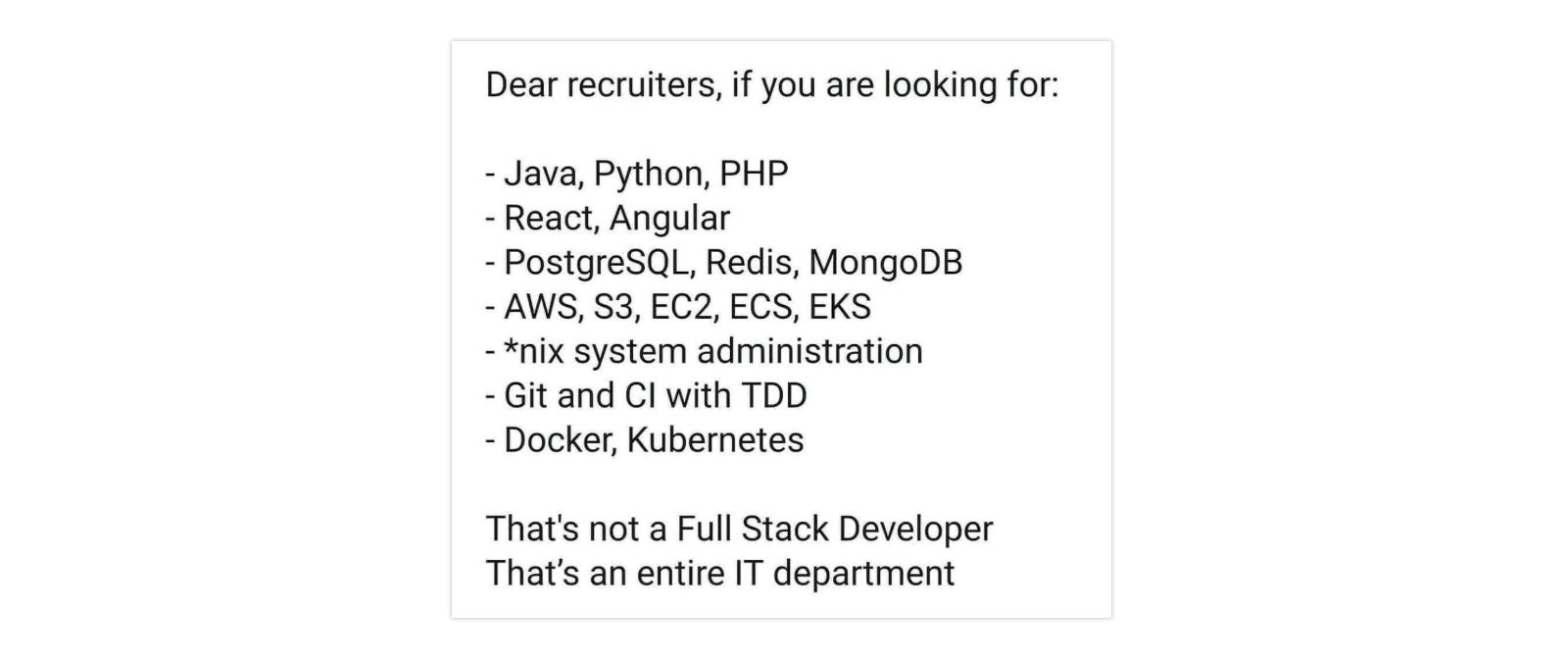
It’s becoming quite common for many companies to have increased the requirements for certain roles these days. But they do that in a completely wrong way.
It’s impossible for any individual to be an expert in all of these technologies, and, unfortunately, a lot of the companies don’t understand that.
But here is the twist. They don’t actually need a person who is an expert in all of the tech mentioned.
What they are actually looking for is an engineering multiplier. Someone who can learn a new tech if needed and is going to have good people skills + good problem-solving abilities to make an impact.
So, ultimately, my advice to companies is to get better at defining what they are looking for, but also, if you are an engineer, applying to roles → always keep in mind that you don’t need to be an expert in all of the technologies mentioned in the job ad.
Instead, you should develop as many skills as possible for you to create impact with your actions within the environment and the challenges that you face. And those are the exact skills that good engineering multipliers possess.