

Intro
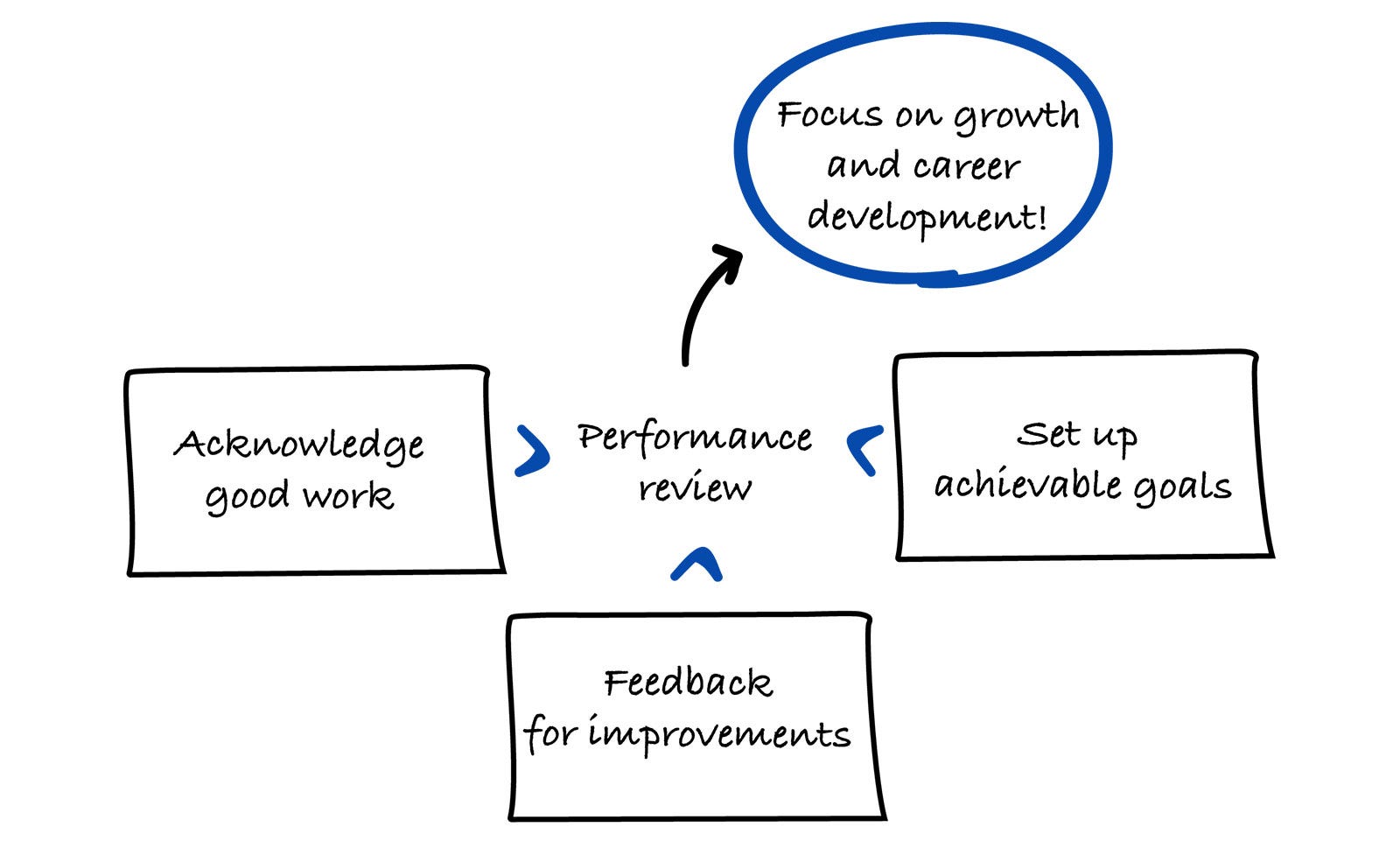
Performance reviews play an important part in any organization, and when done the right way, they help a lot with:
acknowledging the good work,
areas for improvement and
setting individual goals.
It’s important to use them the right way and not have them for the wrong reasons.
There are cases where companies use them for the wrong reasons and track metrics that don’t make sense, like lines of code delivered, AI token consumption (a popular metric these days).
The way I look at performance review meetings and the biggest benefit of them is that everyone sets goals and has clarity on where they want to grow and in which areas they can improve.
In today’s article, I’ll be breaking down what a good performance review process looks like, my advice on how to handle it, and also tips for everyone on how to implement it correctly.
This is an article for paid subscribers, and here is the full index:
- You shouldn’t wait for the performance review to give feedback
- Every company has a slightly different process regarding performance reviews
- The cadence of performance reviews
- Understanding different reviews
🔒 The tools to use
🔒 The process for setting up performance reviews
🔒 Prepare for the meeting
🔒 An important tip for writing an effective self-review: updating your brag list of wins regularly
🔒 Last words
Let’s start!
You shouldn’t wait for the performance review to give feedback
Let’s first start with a very important thought, and that is that I am a big believer in giving early and frequent feedback and especially using 1:1 meetings for that.
Therefore, I always keep in mind the following:
Any feedback for improvement you give on a performance review should not come across as a surprise.
You should already give feedback on 1:1 meetings regularly beforehand.
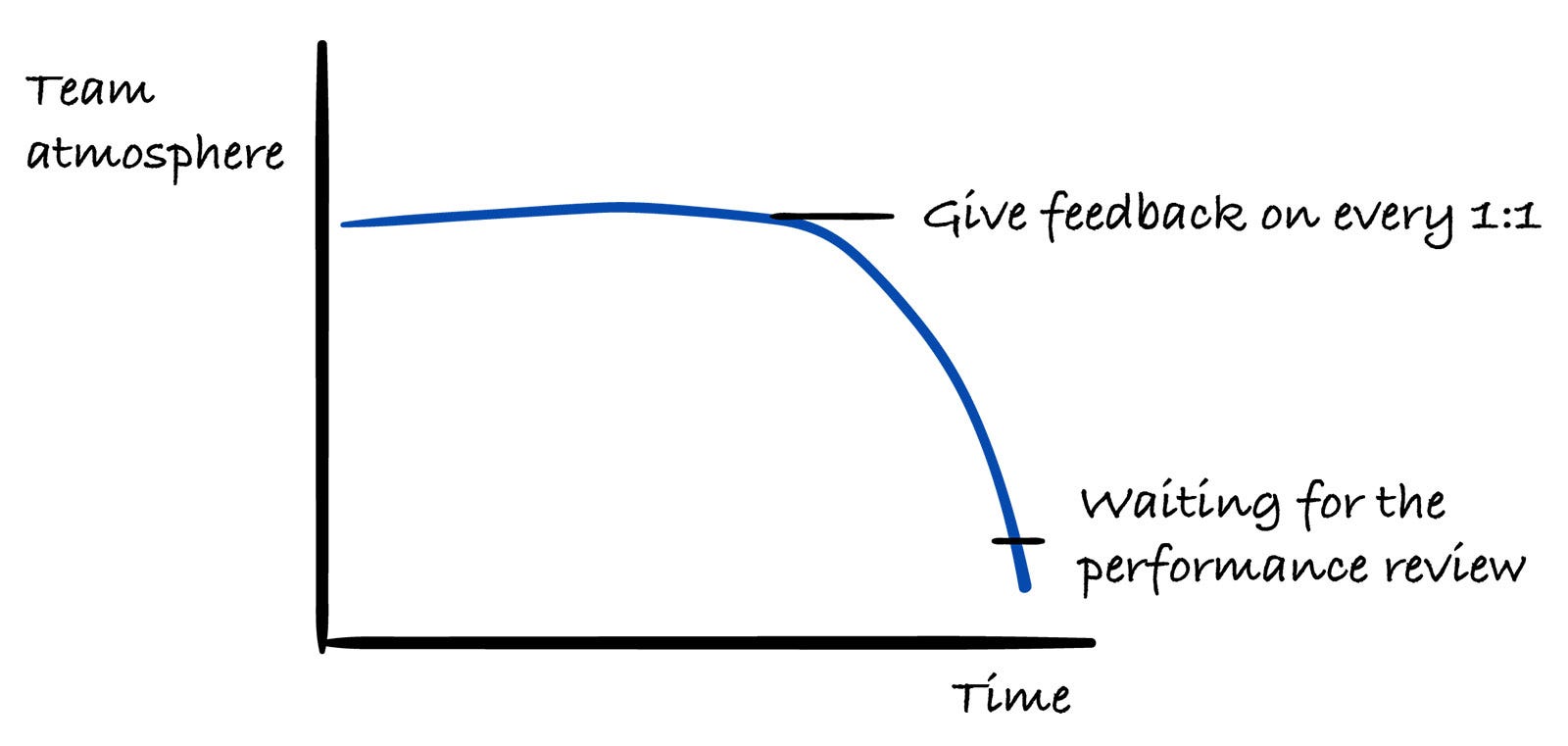
If you wait for the performance review, it’s overwhelming, and it’s impossible to accurately capture everything, especially if you do performance reviews once a year.
Timely feedback can be crucial for the success of your team and people. In my opinion, this is key if you want to lead a team successfully.
Waiting too long to give feedback is not the way to go, and I learned that the hard way as a first-time manager. Here is my story:
I thought that my timing to give feedback needed to be perfect. And because of my waiting, things got a lot worse.
I said to myself: “Maybe things will get better if I wait for a bit more time”. Well, the reality was that things didn’t. And my waiting for perfect timing made it a lot worse.
Similar to making decisions. “They need to be perfect”, I said to myself. And that got me to the place where I didn’t make the decisions fast enough, which actually blocked my team from progressing.
And I realized over time that not all the decisions will be the absolute right ones, but it’s much better to make a decision and reverse it later if needed, instead of not making it at all.
Now that we understand how important continuous feedback is, let’s focus more on how to do performance reviews.
Every company has a slightly different process regarding performance reviews
In this article, I am sharing my experience on what has worked well for me and what my recommendation is regarding the performance review process.
But it’s very important to understand that companies might have a slightly different process, the tools they use, and also the cadence.
So, make sure to check what the process at your company looks like. I’ll be writing from the perspective of a manager who is setting up the performance review process in the organization for the first time.
The cadence of performance reviews
The cadence that worked best for me is once a year, especially if you are giving regular feedback in 1:1 meetings. The specific timing doesn’t matter that much, some companies do it in the middle of the year, some in December.
I did it on both occasions, and the only important thing is alignment across the full organization.
Every 6-month cadence works as well, but then you need to communicate that on one occasion, there won’t be salary increases and promotions (unless a company makes that possible 2x per year).
I also heard that some companies do quarterly reviews as well, but in my opinion, that’s too frequent. It’s not enough time to accurately capture the goals and work through them, especially if you regularly meet in a 1:1 meeting and talk about them.
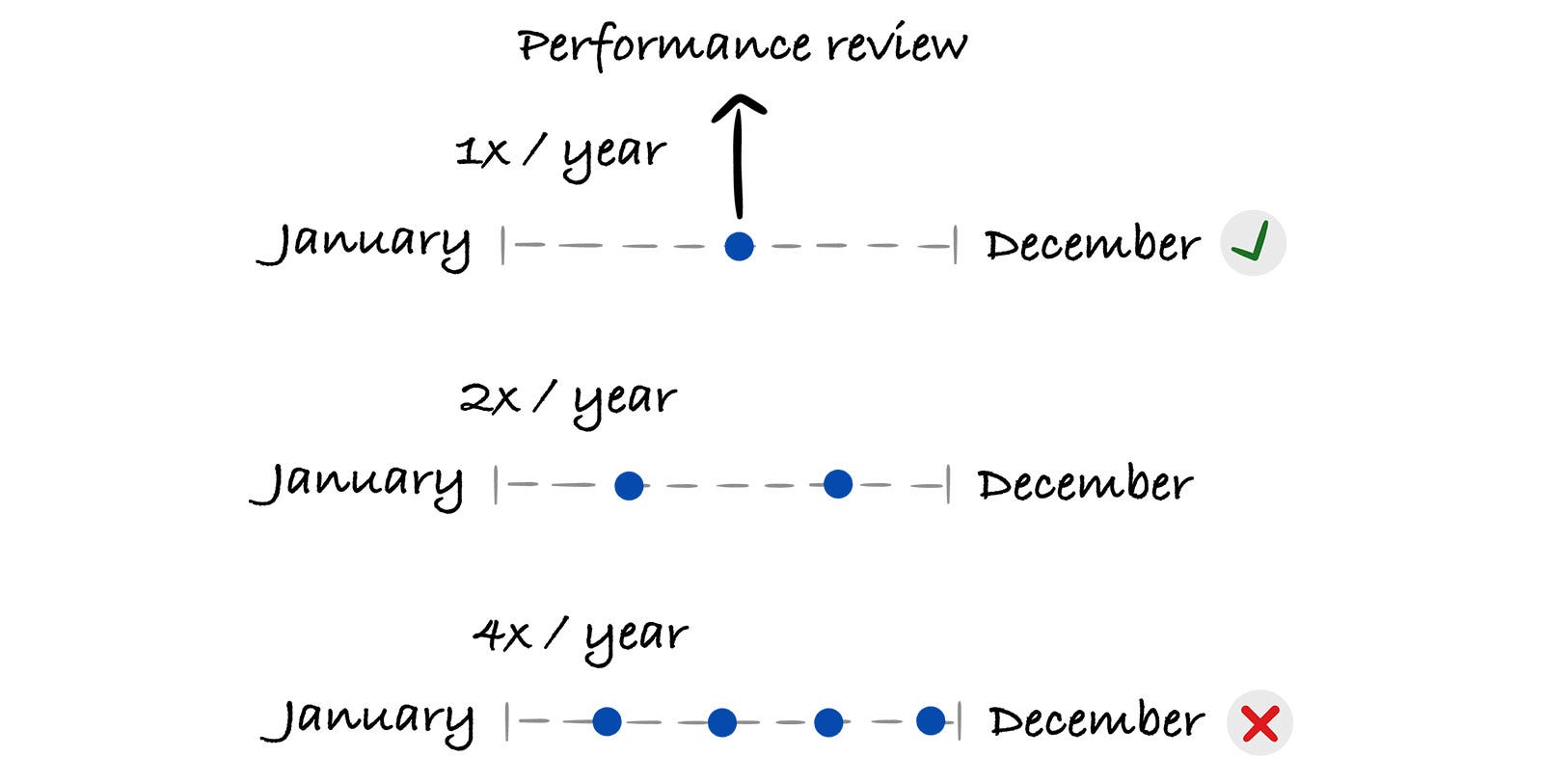
Once a year is great, because normally, companies have a policy to do promotions and salary increases once a year, and then it goes well together with the performance review, so everyone’s expectations are aligned.
As an employee, if you know when you can potentially expect your salary to be increased or get promoted, you can plan on achieving the goals that you’ve set for yourself during that time, and share the results at the performance review meeting.
That’s also the reason why keeping a brag list of wins is so important, we’ll go more into that later in the article!
Understanding different reviews
First, it’s important to know what you want to track. These are the 4 main reviews (based on priority) that you can track:
Self-review: Every individual reflects on their own wins, weaknesses, and their career development (priority 5/5)
It’s really important that this part is included, because that’s how every individual can reflect on how they are doing based on their own perspective, share all the wins, and also share their goals as well.
Manager review: Managers evaluate progress against objectives and assess the overall role effectiveness of individuals (priority 5/5)
Of course, the performance review is not an actual performance review if a manager doesn’t evaluate and assess how a certain individual is doing in their role. As mentioned in the beginning, the evaluation should not come as a surprise.
Peer review: Colleagues provide feedback on collaboration and support (priority 3/5)
This is not mandatory, but I recommend doing this because it may give a bit of a signal on how effectively the specific individual is collaborating and supporting others. These reviews should also be anonymous.
Upward review: Direct reports evaluate their manager’s effectiveness and leadership skills (priority 3/5)
This one is not mandatory as well, but it can be a good signal on how you, as a manager, are doing (or other managers). These reviews should also be anonymous.