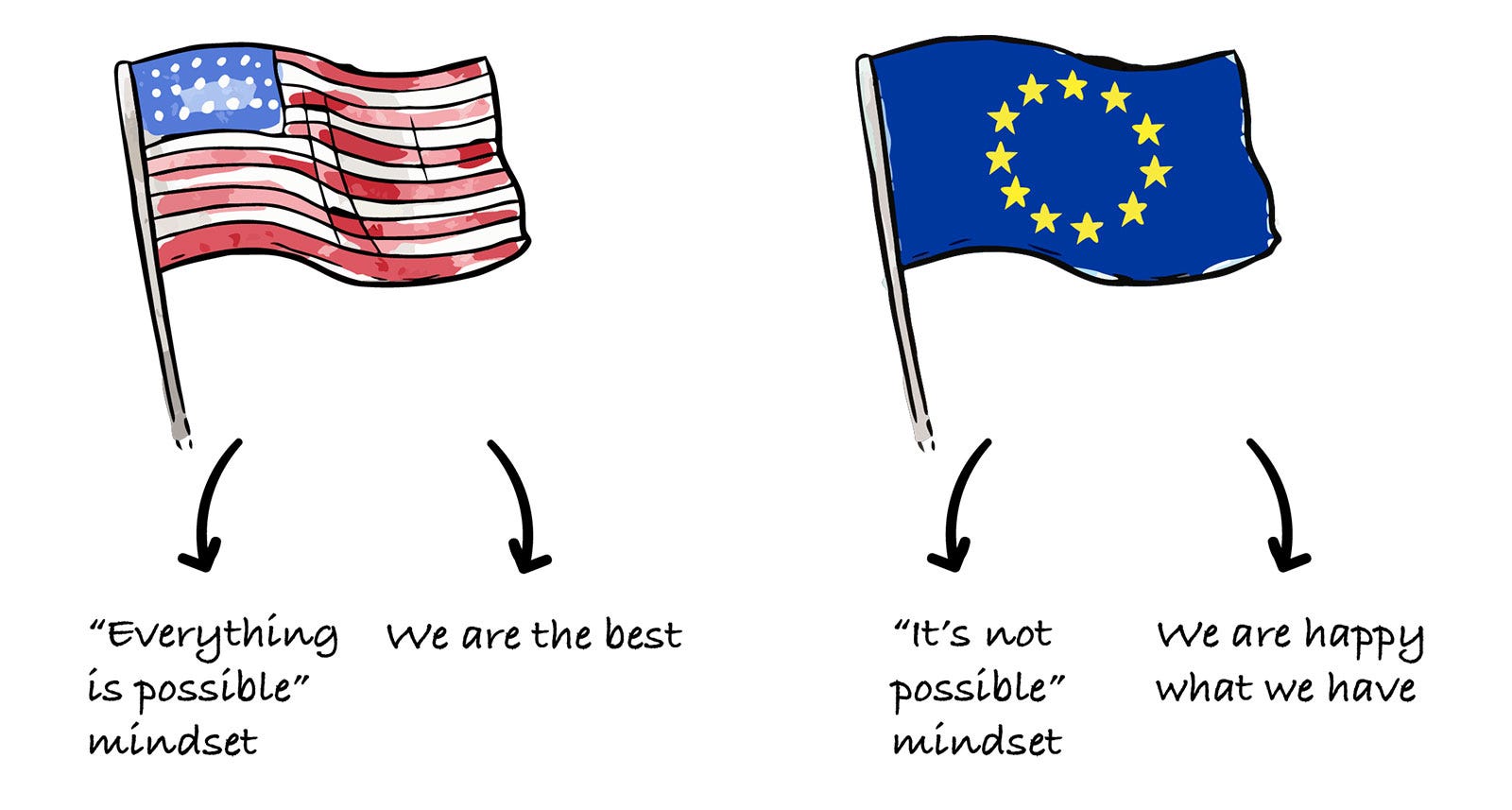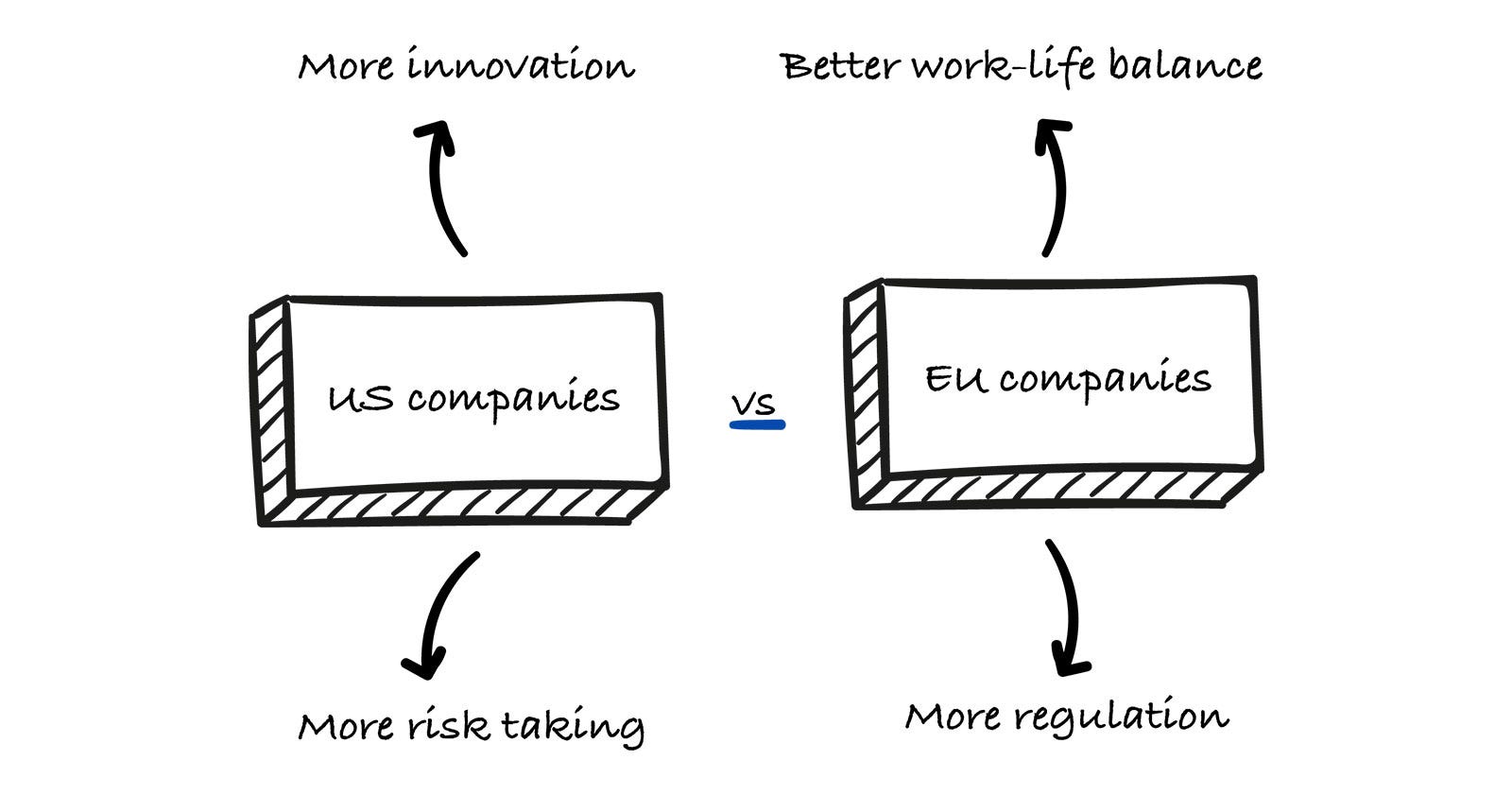
Intro
My recent trip to San Francisco and meeting with different people and companies got me thinking a lot about the differences between EU and US tech companies.
Especially the conversation we had with the Larridin team, about different markets and how US vs EU tech companies operate. Here are also some pictures from the visit:
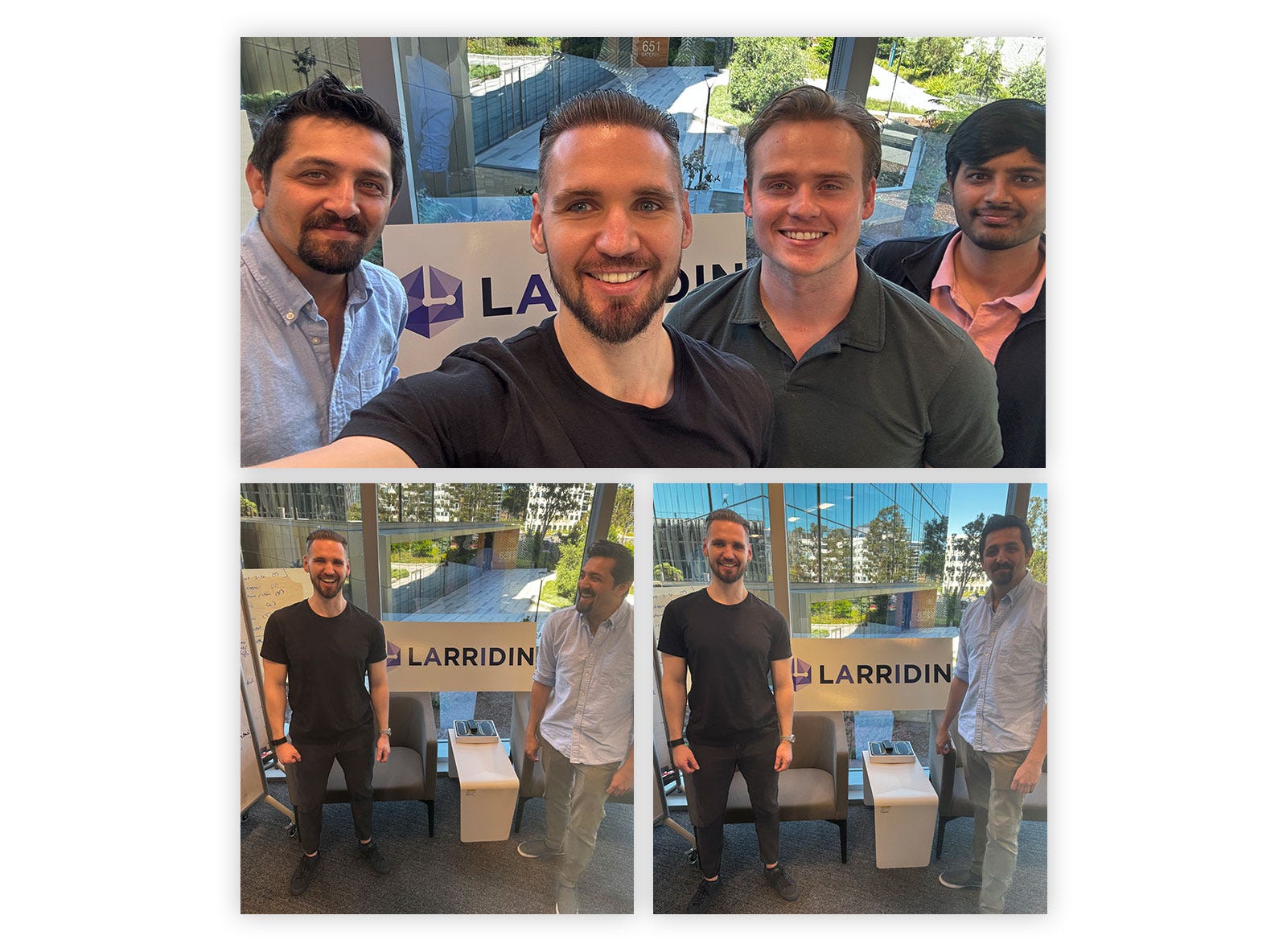
I’ll be sharing more about how they work in a future article.
In today’s article, I am sharing my thoughts about the differences between US and EU tech companies, the mindset behind them, and the pros and cons of each.
This is an article for paid subscribers, and here is the full index:
- I’ve worked with a number of EU and US companies over the course of my career
- US companies tend to innovate a lot more than EU companies
- EU companies are a lot less prone to taking risks
🔒 I see a lot less self-confidence in EU companies in comparison to US companies
🔒 Work-life balance is a lot better in EU companies
🔒 US companies tend to let go of people faster
🔒 Sales-oriented & crushing the competition mindset is prominent in US companies
🔒 EU companies are dealing with a lot more regulation
🔒 US companies raise a lot more capital a lot more quickly
🔒 Last Words
Community chat
Before we start with today’s article, a reminder. As a paid subscriber, you are able to ask any questions related to engineering/engineering leadership and get an opinion from like-minded people.
Share ideas, challenges, or get an opinion on the approach (you can start a new thread)
Connect with everyone
Special opportunities
We are just discussing the biggest challenges in our roles. Make sure to share yours as well!

Let’s start with today’s article!
I’ve worked with a number of EU and US companies over the course of my career
In my full-time roles, I worked for both EU and US companies as a (senior) software engineer, at the same time also as a manager (Team Lead, Engineering Manager, Head of Engineering, Interim CTO).
I was also a VP of Engineering and a CTO for a company based in Singapore, but we had the team in the majority in the EU.
Alongside doing full-time roles, I was also doing freelance projects. I like to say that freelance work has been my secret to the growth of my career. I finished over 100 projects for both the EU and US clients, while most of the clients were from the EU.
At the same time, I did (and still do) advising and consulting for both US and EU companies, and I also do coaching and mentoring, having the pleasure to work with different people across the world.
And of course, I also had the pleasure to attend many different events, speak at conferences, both in the US and the EU, and meet many different people, both in person and online. I also regularly talk with engineers and engineering leaders across the world.
So, my perspective on how tech companies operate comes from a lot of different angles, and I’ll share my view on what I see.
Let’s start with the first difference and the one that I felt the most, especially during my latest visit.
US companies tend to innovate a lot more than EU companies
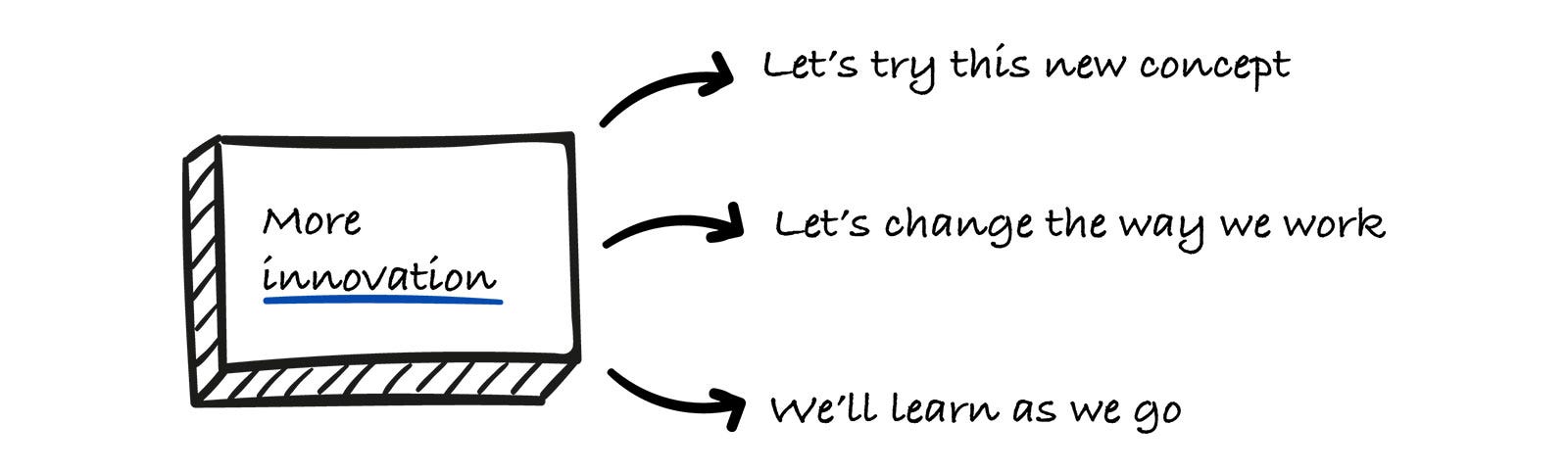
From my experience and what I am seeing across companies in the US, especially in San Francisco, is that they are all constantly evolving and trying new things. While in the EU, there’s a lot more fear of change, therefore, less innovation.
US companies tend to try new things faster, learning as they go, making mistakes. Change is something they actively look for. There’s a bias to take action, even when no one knows exactly how it’ll turn out.
A good example of that mindset is the company that I recently had the pleasure of getting to know, the company called Weave, and I wrote about how they work in this article.
In the EU, the mindset is often different. There’s a lot more focus on stability, predictability, and getting things “right” before moving forward. While this can be the right move for some companies, it slows down innovation.
There are definitely exceptions on both sides, and SF does not represent the whole US, but that’s the difference I see in the majority of the companies.
Neither approach is inherently wrong. One optimizes for speed and innovation, the other for precision and reliability.
But in a world that’s moving faster than ever (especially because of AI), I think speed and innovation are what’ll make a big difference in the upcoming years.
Let’s go to the next one.
EU companies are a lot less prone to taking risks
From what I’ve seen working with and observing companies across Europe, there’s generally a much stronger urge to minimize risk. Decisions are made more carefully, plans are more detailed, and there’s often a clear desire to avoid unnecessary uncertainty.
Risk-averse is the right phrasing for many of the companies in the EU, and change is something that many people tend to avoid. And from my experience, change is something that a lot of people in the EU are not looking forward to, and it takes a decent amount of time for the change to be accepted.
While in the US, my feeling is that changes get accepted a lot quicker, where it feels like decisions get made overnight.
In the EU, before launching a new product, entering a new market, or making a big strategic decision, there’s usually a lot of validation, alignment, and internal consensus needed. Things need to make sense not just in theory, but also in terms of long-term sustainability.
While working with US companies, I felt many times that some of the decisions were rushed, but people have been comfortable taking them, even though the results have not been guaranteed.
“Go big or go home” mindset is something that I’ve seen in many companies in the US. Especially in SF.
Some of the examples that I saw in US companies, that I haven’t seen in the EU:
Completely changing the direction overnight through an email, without explanation
Letting go of half of the engineering department and shutting down access completely
Setting extremely aggressive, a lot of times unrealistic targets (revenue, growth, product timelines) and committing to them publicly
Of course, there are exceptions in both US and EU companies, and it depends a lot on the industry as well.
Now, the next one is related to both of the points I’ve mentioned before, but it’s extremely important to understand why I believe that is the case.
I see a lot less self-confidence in EU companies in comparison to US companies