This week’s newsletter is sponsored by Postman.

Their recent POST/CON 25 keynote had some serious updates → two in particular stood out:
Agent Mode: A conversational AI teammate built right into Postman. It can send requests, write tests, fix broken workflows, and help your team move faster with fewer handoffs.
Postman Insights (Open Beta): Real-time visibility into how your APIs are used. Think faster debugging, fewer fire drills, and better decisions backed by actual behavior data.
If your team is scaling APIs, or just tired of wasting time and money on debugging mysteries, this keynote recap is well worth a look.
Thanks to Postman for sponsoring this newsletter, let’s get back to this week’s thought!
Intro
60% of engineering leaders believe that AI has not significantly boosted their team’s productivity. This has been an interesting insight from the 2025 Engineering Leadership report done by LeadDev, that I’ve closely looked at.
Some other interesting numbers:
50% worry there are fewer jobs available
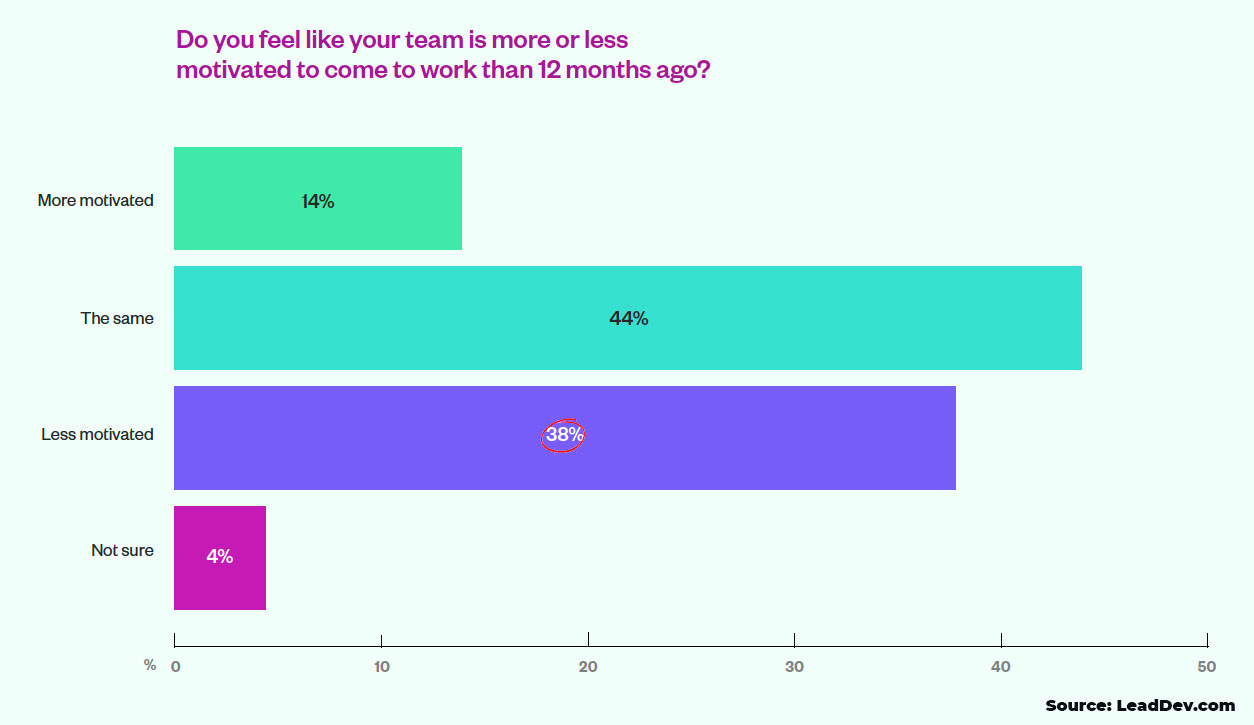
40% believe their team is less motivated to come to work than they were 12 months ago
65% of respondents are worried about the recession
In this article, you can expect to read insights from 600+ engineering leaders, who shared how their roles are evolving:
How engineering organizations are changing
What it's like being an engineering leader in 2025
The impact of AI on engineering leadership
I am sharing the most interesting insights from the report and my thoughts on the data.
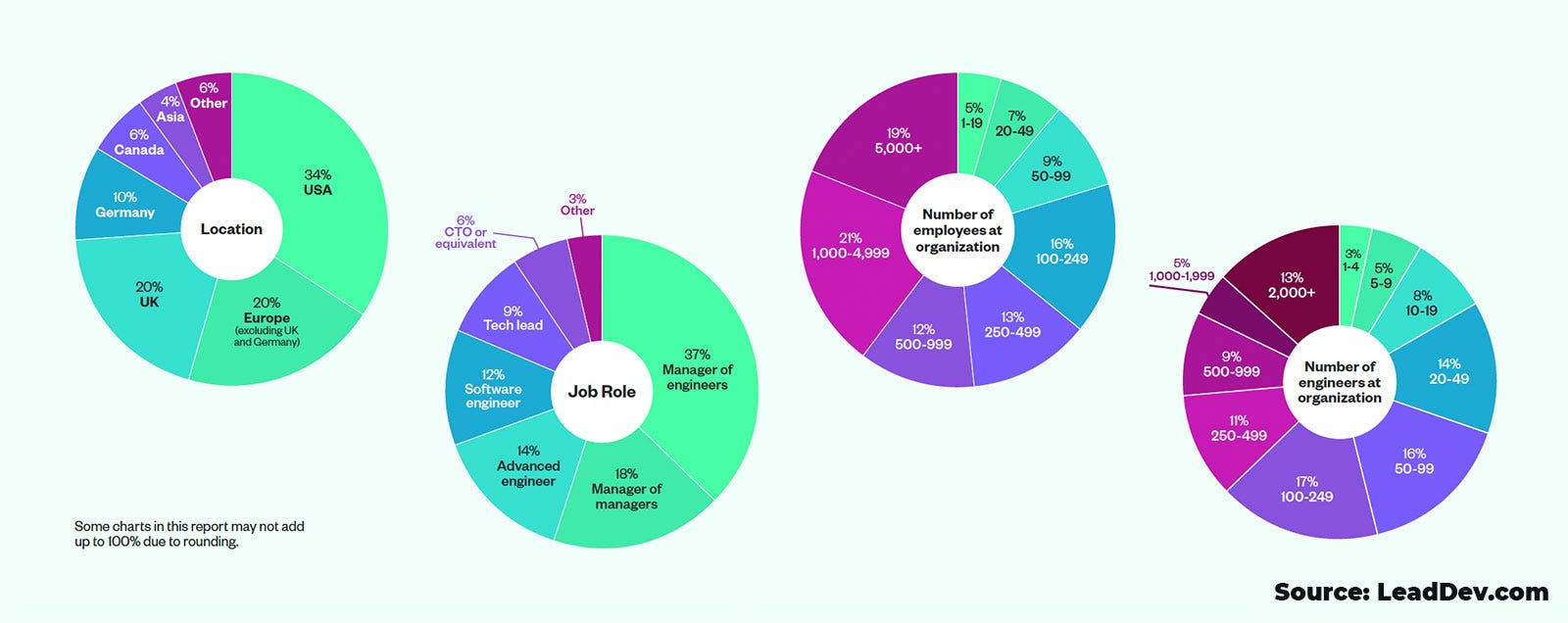
The survey was conducted between 14–27 March 2025 and is based on 617 respondents
Here are the full demographics:
Now, let’s get to specific insights.
1. How engineering organizations are changing
1.1 Improved hiring and layoffs while a decrease in hybrid/remote work
2024 has been a year that we will remember for its numerous layoffs and hiring freezes. Based on the data we can see that this has improved quite a bit in 2025.
The hiring freeze went from 50% to 35% and Layoffs went from 44% to 34%.
These are both signs that the state of engineering organizations is improving. Less uncertainty and increase in hiring.
Also, an important trend that we recently broke down is the decrease of entry tech roles, while we saw an increase in mid+ level roles.
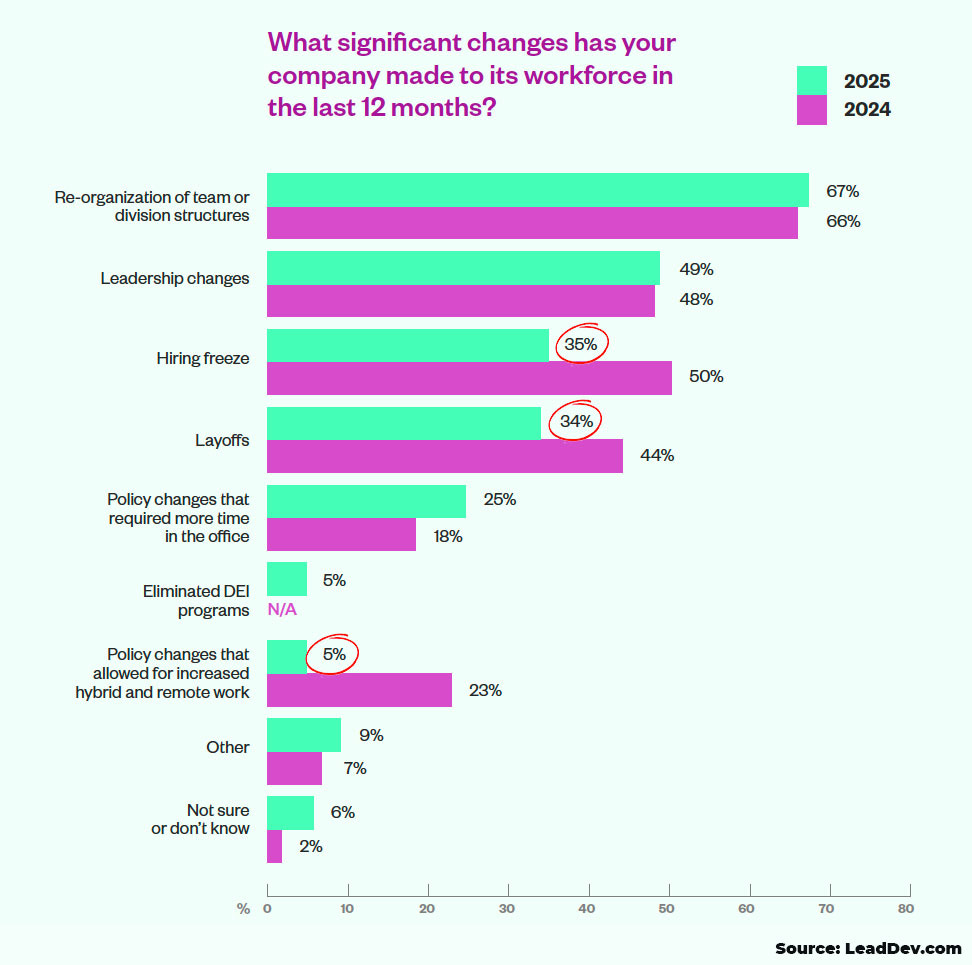
What is also interesting to see is that remote or hybrid work has seen a decrease in 2025 in comparison to 2024.
1.2 Line managers (Engineering Manager, Team Lead) impacted the most → both positively and negatively
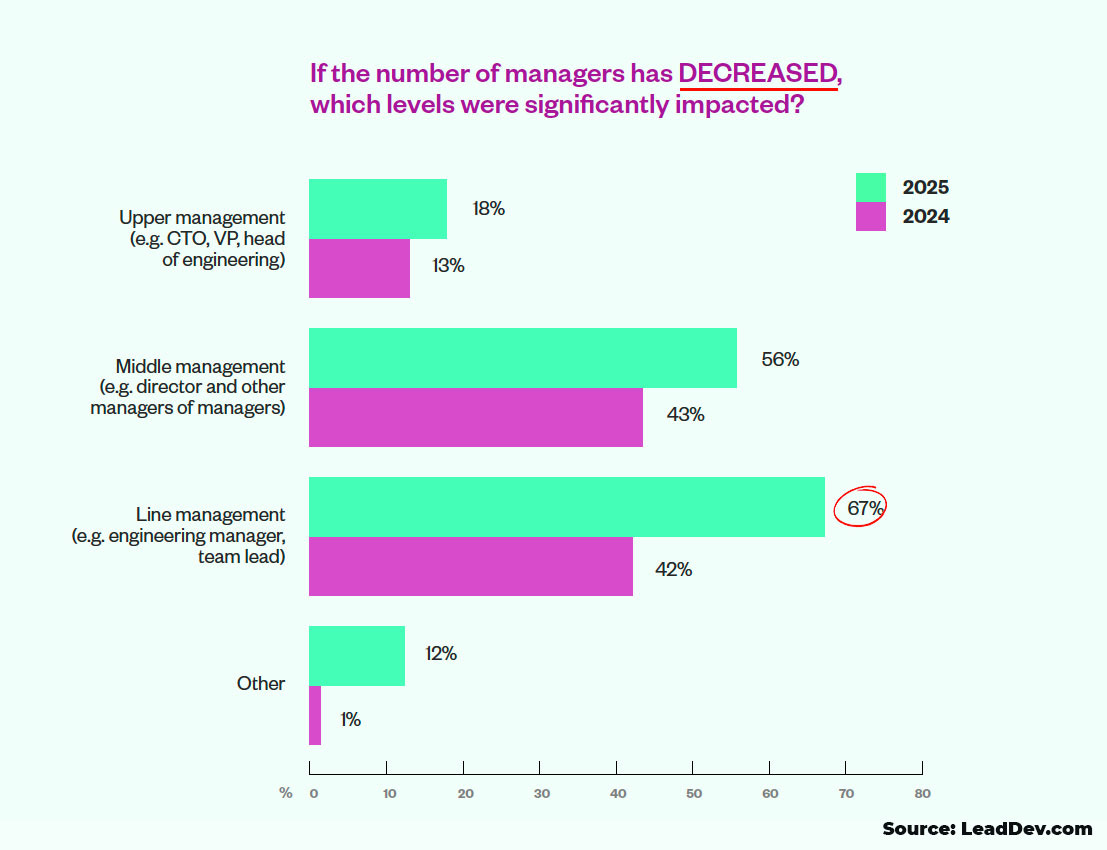
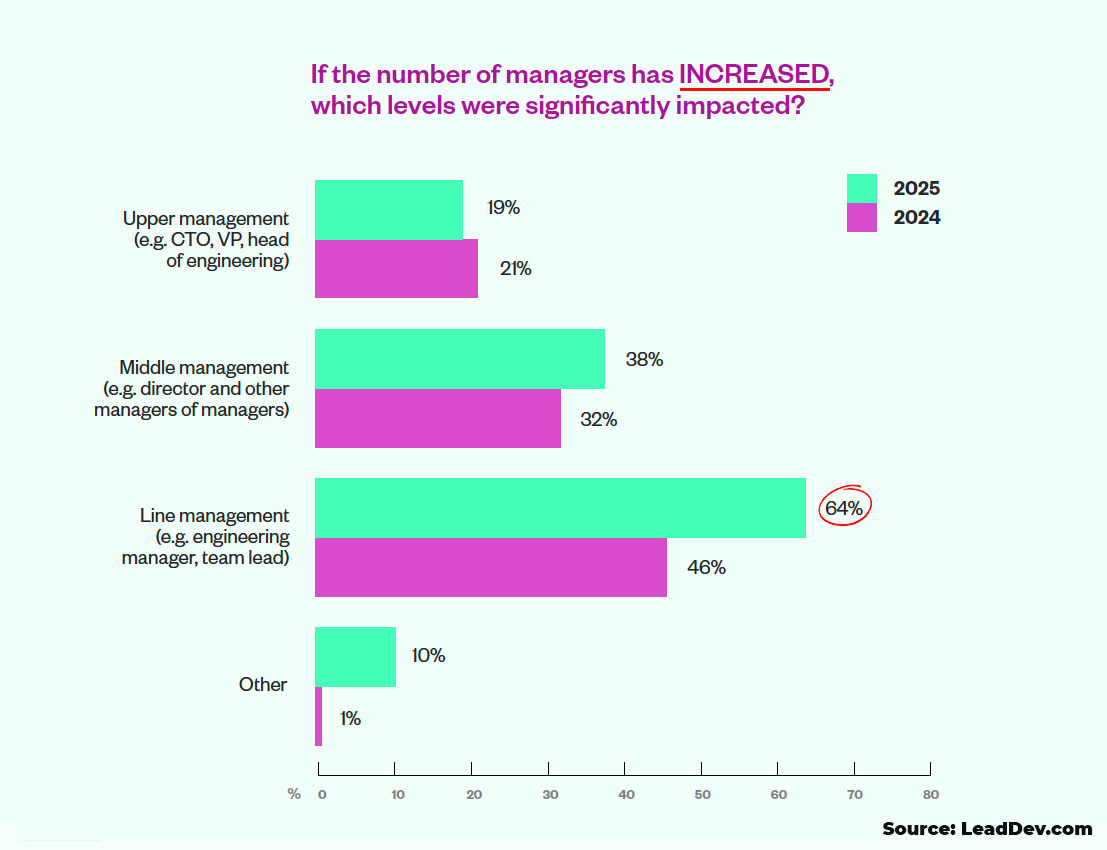
We saw a continuous trend of companies trying to flatten their organization in 2024, but an interesting insight here is that a lot of companies are actually looking to increase their managerial roles.
22% of all engineering leaders reported an increase in managerial roles, while 28 reported the decrease.
And both decrease and increase are the most associated with line managers, which is very interesting.
1.3 51% of engineering leaders believe that AI is impacting the industry negatively
We can see an increase in engineering leaders believing Gen AI is impacting the industry negatively, from 42% (2024) to 51% (2025).
I think the reason is just too many unknowns. These two articles help to give more insights on how to use AI effectively both as an engineering leader and also in teams:


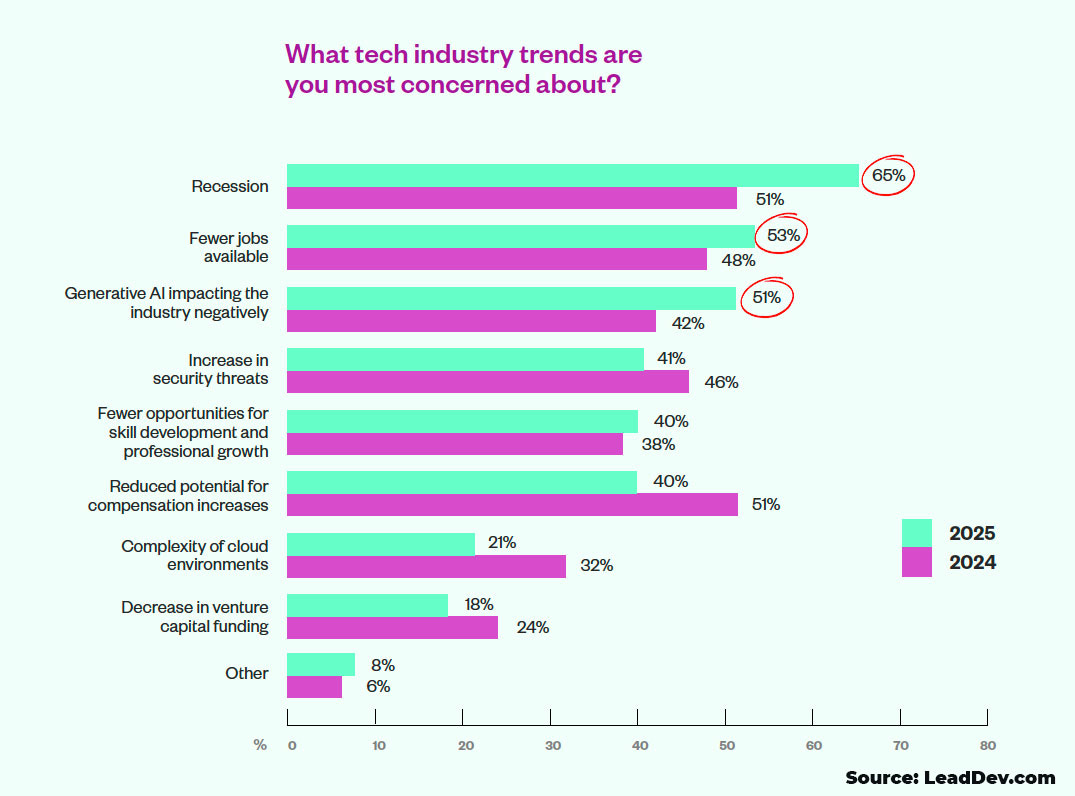
And also the two interesting insights here are that a lot of people believe the recession might be coming soon (65%) and also an increase in Fewer jobs available from 48% (2024) to 53% (2025).
1.4 The biggest hiring challenge is to find suitable candidates on time
This is a bit ironic, as many people are looking for roles, but a lot of engineering leaders report that it’s a challenge to find suitable candidates within a certain timeframe.
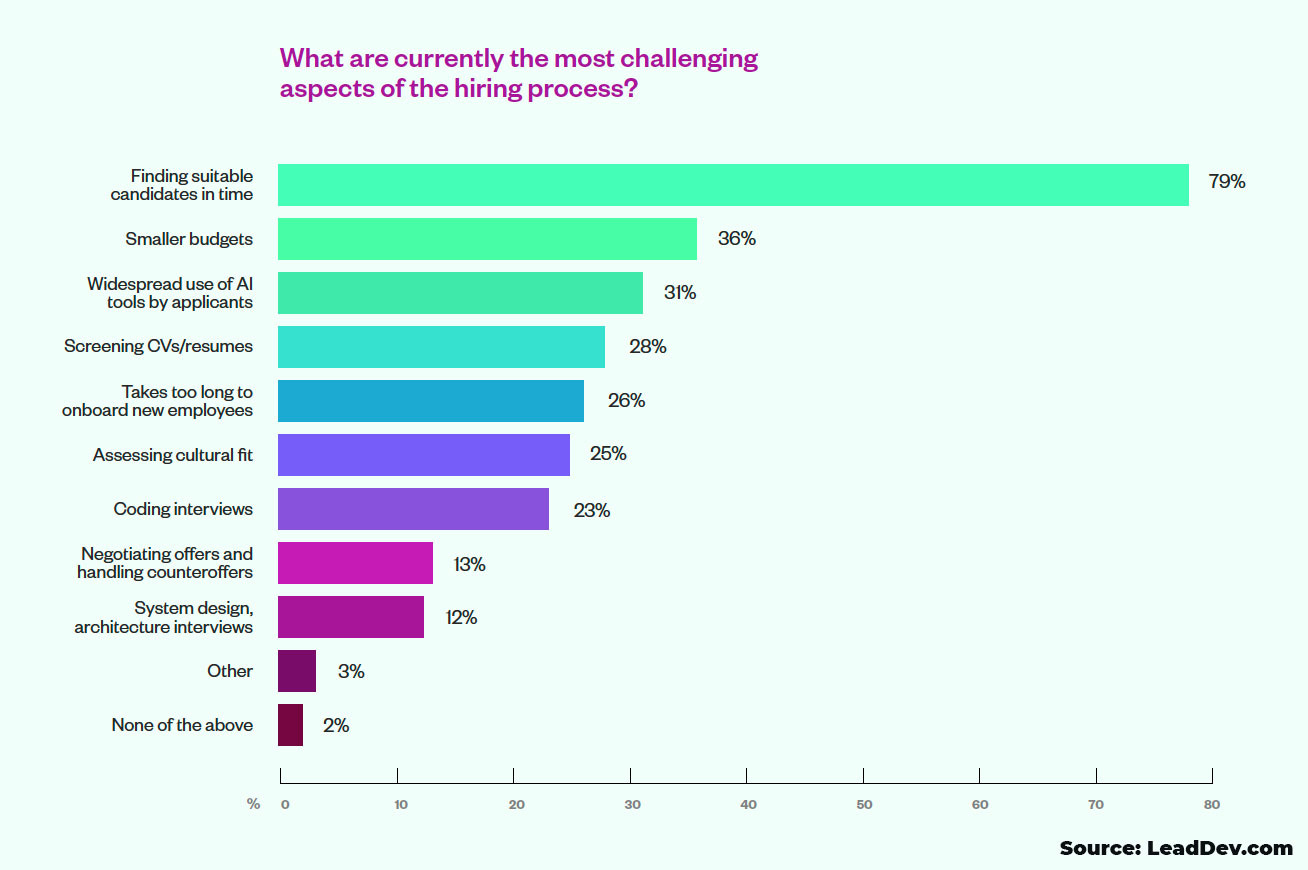
I believe one of the issues for this is the increase of the expectations for candidates with a combination of smaller budgets.
2. What it's like being an engineering leader in 2025
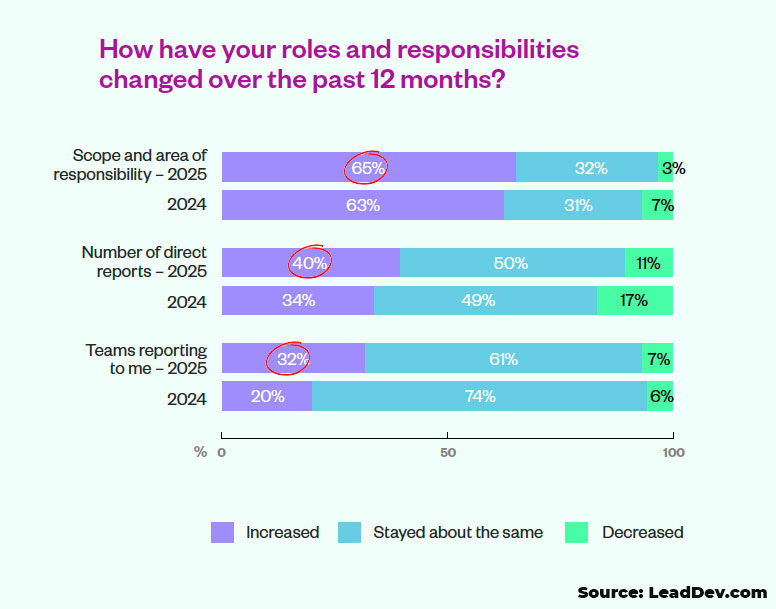
2.1 Increase of responsibilities, number of direct reports and teams
We can see the increase in all 3 areas, especially prominent in having more teams reporting to an engineering leader and also an increase in the number of direct reports.
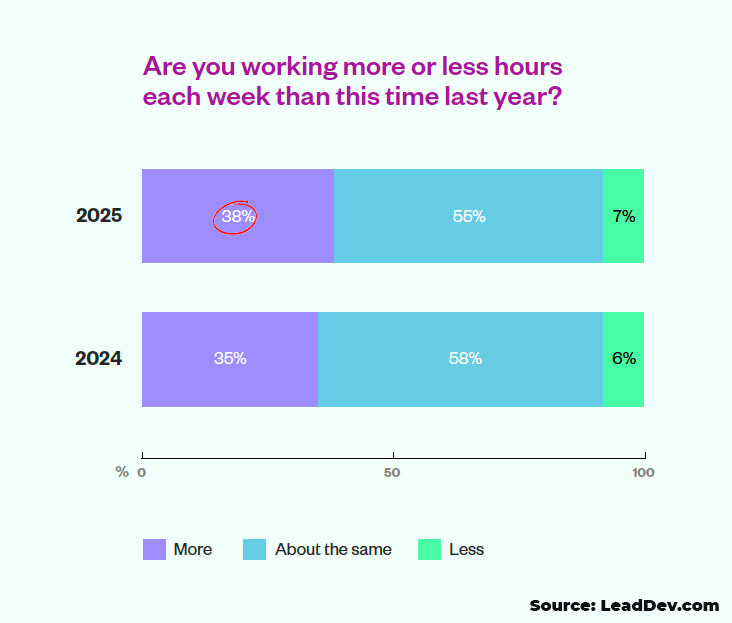
2.2 Engineering leaders are working longer hours than ever
Since the scope and number of direct reports have increased, it makes sense that people reported also longer hours as well.
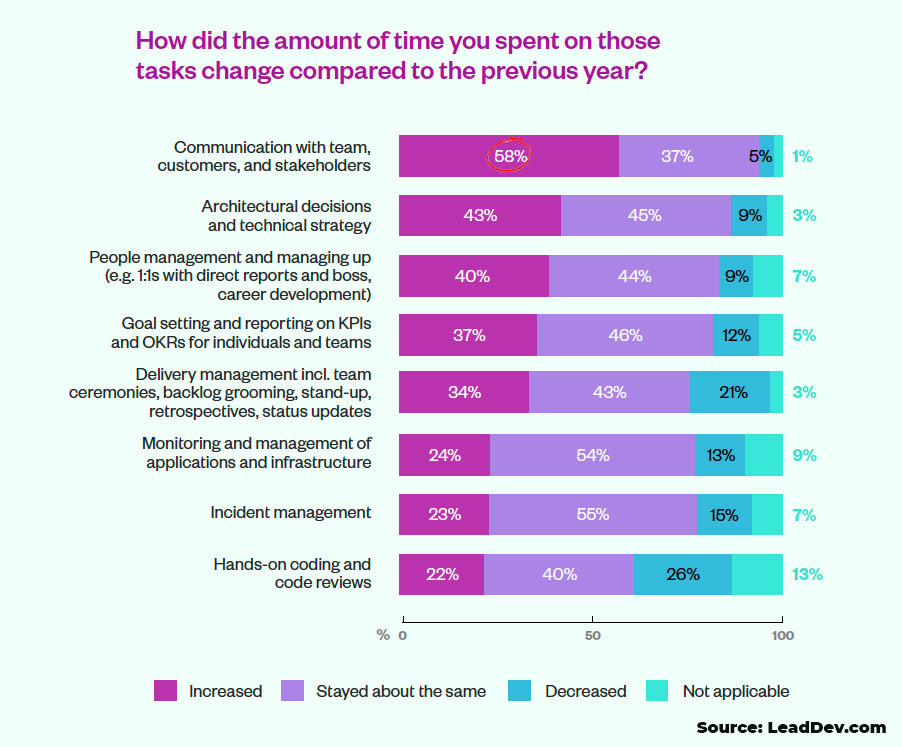
2.3 Good communication is one of the most important skills for engineering leaders
We can see that this is true from the data below. There has been an increase in the need for good communication in 2025. We have predicted that in the article:

Definitely recommend reading the article above to ensure you focus on the right set of skills to be successful as an engineering leader in 2025 and beyond.
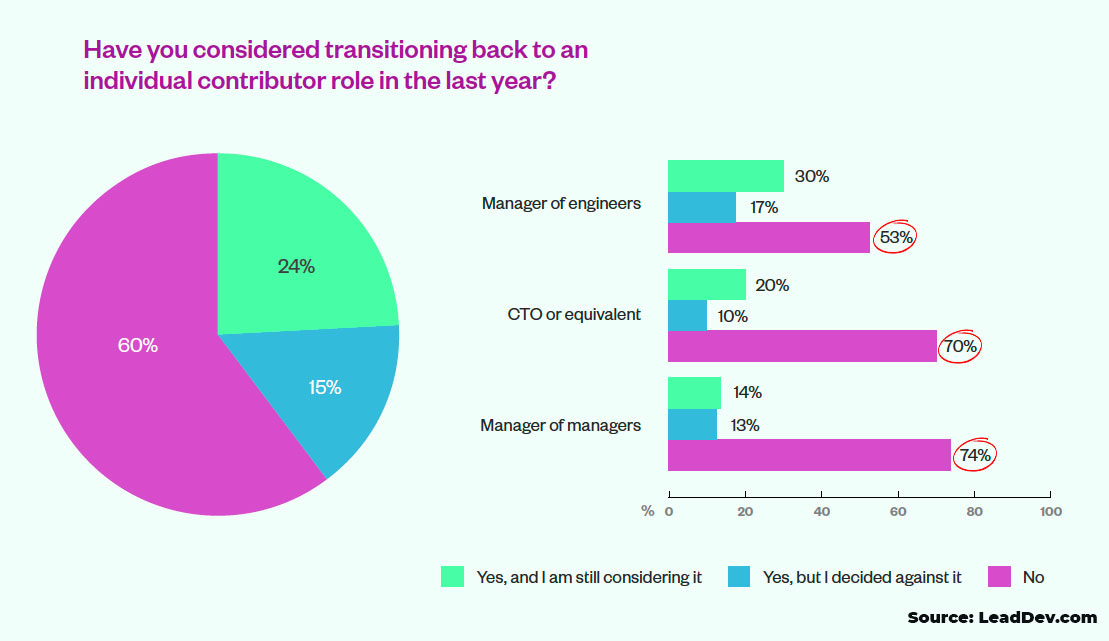
2.4 Most engineering leaders are not considering going back to being individual contributors
Especially as the more they grow in their roles, the less it’s being considered. I definitely recommend staying technical though, as it’s important in order to be able to do the engineering leadership role effectively.
2.5 Maintaining motivation in teams is becoming a bigger challenge
I think one of the biggest issues for this is that there are so many unknowns on how AI is going to change the engineering landscape. Also, everyone in Big Tech giving bold predictions doesn’t help with that.
We’ve debunked some of the false promises given by some of the bigger companies here:


2.6 Burnout is rising among engineering leaders
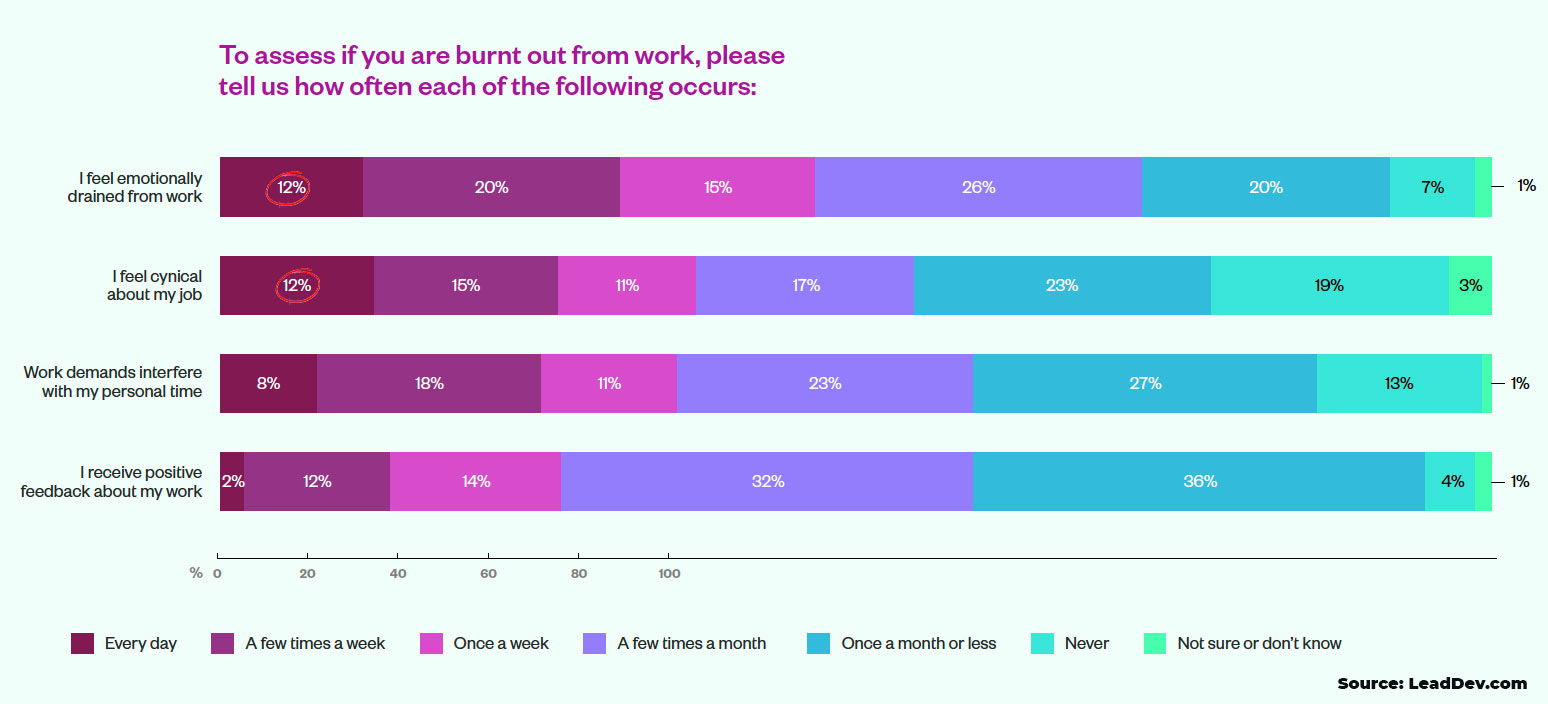
This is a bit concerning as I see 12% of engineering leaders mentioning being emotionally drained from work every day following up with 20% mentioning a few times a week.
I believe the reason is the same as what we mentioned above being the issue with motivating teams. It’s just too many unknowns on what engineering is going to look like in the near future.