

Before we start with today’s article, there’s a special announcement.
🎁 Engineering Leadership Community Chat

As a paid subscriber, you are now able to ask any questions related to engineering/engineering leadership and get an opinion from like-minded people.
Share ideas, challenges, or get an opinion on the approach (you can start a new thread)
Connect with everyone
Special opportunities
This chat is available to 1700+ engineering leaders, who are paid subscribers from companies such as Meta, Google, OpenAI, and 500+ others.
Think of it as StackOverflow for Engineering Leadership, except no toxic behavior :)
I’ll also use this chat to provide special updates regarding the newsletter, new products, videos, early releases, and also provide special opportunities.
For example:
I’ll be looking for tech reviewers for my new book, which I am working on with O’Reilly, The Multiplier Mindset, and paid subscribers will have a bit of an edge :) (credibility always comes first, though). I’ll also announce when the book will be ready for the tech review in the chat as well.
In the book, I am also sharing 8 case studies of successful multipliers, and I am currently looking for 2 Tech Leads, 1 Staff+ Engineer, and 1 Architect to share their case studies in the book. I have just shared that in the chat:

Companies also regularly reach out to me if I know someone for a specific role, or they share special discounts / free tickets to events or conferences. I’ll be sharing such opportunities in the chat as well.
You can access the chat here:

Let’s get back to this week’s thought!
Intro
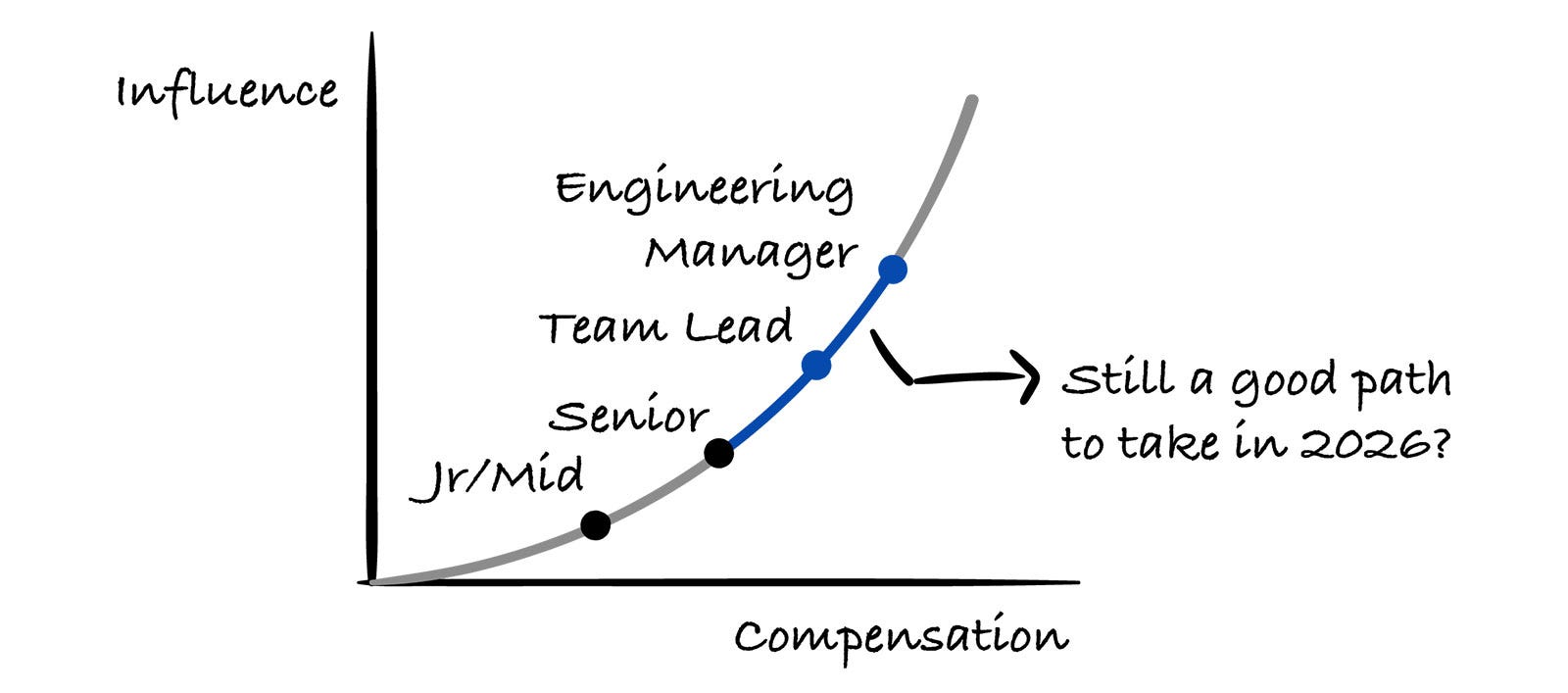
With the rise of AI-assisted engineering, changing team structures, and increasing expectations on leaders, many people are asking themselves this question:
Is becoming an engineering manager still worth it in 2026?
In today’s article, I am sharing my thoughts on this, and I’ll go back in time to 2020 when I first became a manager and compare it to today’s time -> If I were a senior software engineer looking to take the next step.
This is an article for paid subscribers, and here is the full index:
- I Became a Manager in 2020
- The Difference Between Then and Now
- Middle Management Was Always Hard, But It Became Even Harder These Days
🔒If I Were a Senior Software Engineer Looking to Progress to the Next Step in 2026, Would I Still Go the Manager Route?
🔒The reason I had a hunch that the management path was the right path for me
🔒Those were the exact traits that made me a good manager
🔒🎁 Notion template: Decide your career path
🔒 Last Words
Let’s start!
I Became a Manager in 2020
I started my career as an engineer in 2013 and in 2020, I was a Senior Software Engineer for some time and felt a bit stuck, as I didn’t know exactly what the next step would be for me.
“Should I go into management, become an architect, or grow in the IC track?” That question was always on my mind, and I couldn’t make a decision on which direction I should pursue.
And because I didn’t know which direction to pursue, I wasn’t convincing my manager in 1:1 meetings that a certain “next step” would fit me best. So, when I eventually got offered a Team Lead position, the manager was actually surprised that I was for it, as they thought that I wouldn’t be.
It’s really important that you at least have some idea of what the next step would be, as then people will automatically know that when a certain role opens: “I know Gregor would be a good fit, as they are already working toward progressing to that role”.
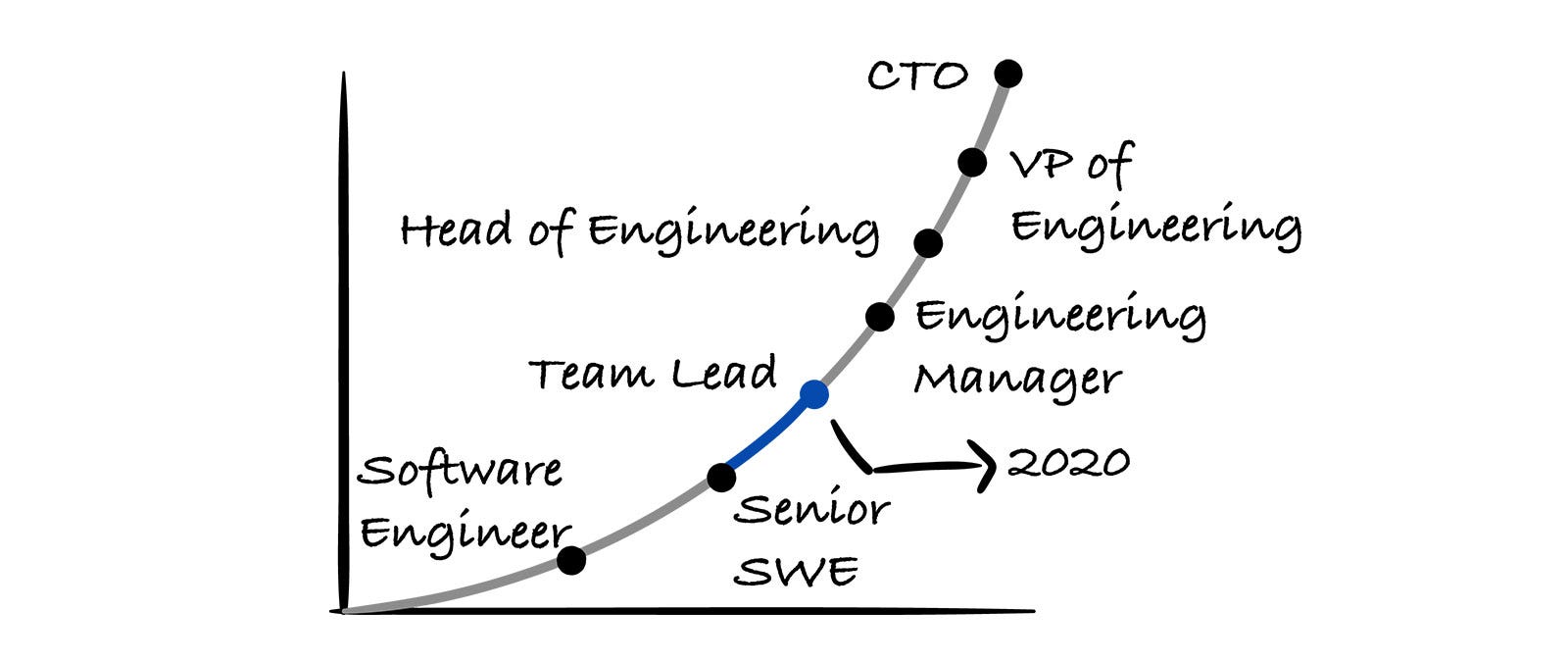
So, after I became a Team Lead, I started managing a cross-functional team, and I’ve made many mistakes -> what made me a good engineer didn’t make me a good manager. You can read about my mistakes in this article.
Over the course of a few months, I persevered and started to get the hang of the new role. Things have started to look better.
After about six months in the role, my manager left the company. Following a discussion with my skip-level manager, I became the new engineering manager and started leading three teams.
That was also the time when I started to realize that the management path was the right choice for me, as my set of skills and overall personality have been a good fit for it.
Things have progressed very fast after that.
After about a year, I became a Head of Engineering at a different company, then Interim CTO at that company, and later VP of Engineering at a different company and was shortly promoted to the CTO role.
You can read my full career progression here: How I Grew From Engineer to CTO.
Now, let’s go through the difference between becoming a manager in 2020 and today, in 2026.
The Difference Between Then and Now
There has been quite a big shift in the industry, and roles have changed quite a bit. The IC path became a lot more standardized and also normalized, which is really great.
In 2020, there were some Staff/Principal/Distinguished level roles, but not a lot of companies had them. The overall mindset was “You need to become a manager in order to grow in your career”, but shortly after that, the IC path gained a lot more popularity.
Still, to a certain extent, if you wish to grow to a CTO role someday, you need management experience. That hasn’t changed.
Maybe you can get away with not having a lot of experience with management if you are a startup CTO, but for sure, if you are a CTO for a scale-up or a mid+ sized company, that’s when you need to become a good manager.
And that’s something that it’s a lot harder to learn in the IC track, as there it’s all about leadership and influence without having direct authority.
Another key difference is that salaries have become quite similar regarding the IC track versus the management track, so just pure salary is less of a motivating factor today, as it was in the past, when the only way to make more was to become a manager.
Today, we can even see that some of the IC roles are even paid more; for example, Meta has recently been offering huge salaries to people who are extremely good in the ML space.
There are also 2 big shifts that have started happening recently:
Amazon’s increase in the manager-to-IC ratio
After Amazon raised the manager-to-IC ratio by at least 15%, a lot of other companies did a similar thing.
Architect, EM, and Staff Engineer roles became a lot closer
A lot of the people reported taking on additional responsibilities as part of their current responsibilities. I’ve seen Tech Leads taking the manager role as well, while also potentially being architects, and the same goes for EMs and architects, expecting to take on the 2 other roles if needed.
A similar shift has happened in engineering and PM roles, where the product engineer role has become increasingly popular. Companies like OpenAI, Anthropic, Lovable, etc., are all looking for engineers who can also wear a product hat and own their projects end-to-end.
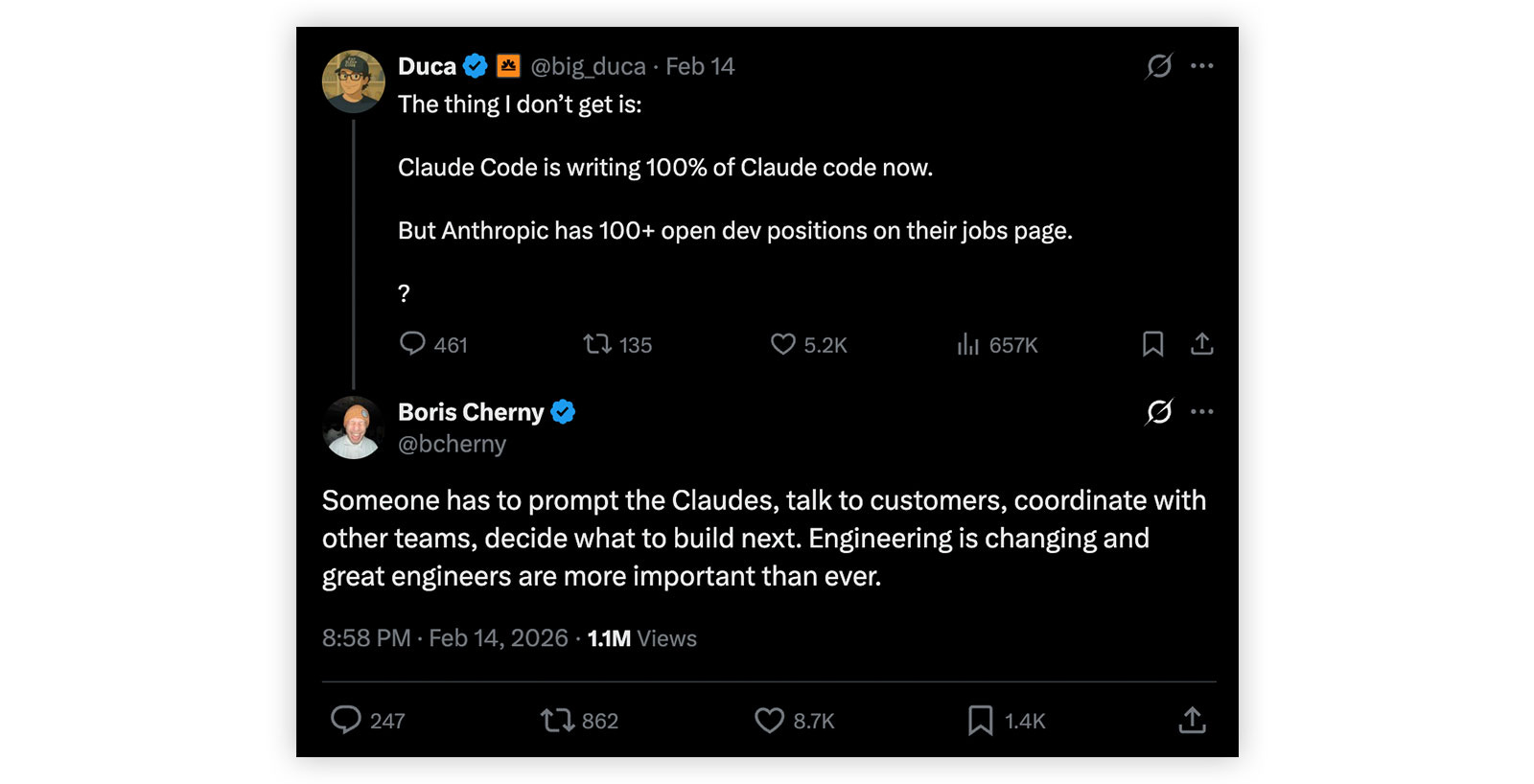
So, overall, roles have come a lot closer together, and I fully believe that these days (and in the future) it’s less about the title and more about what impact a certain individual can bring to the organization. That’s what is most important for the companies.
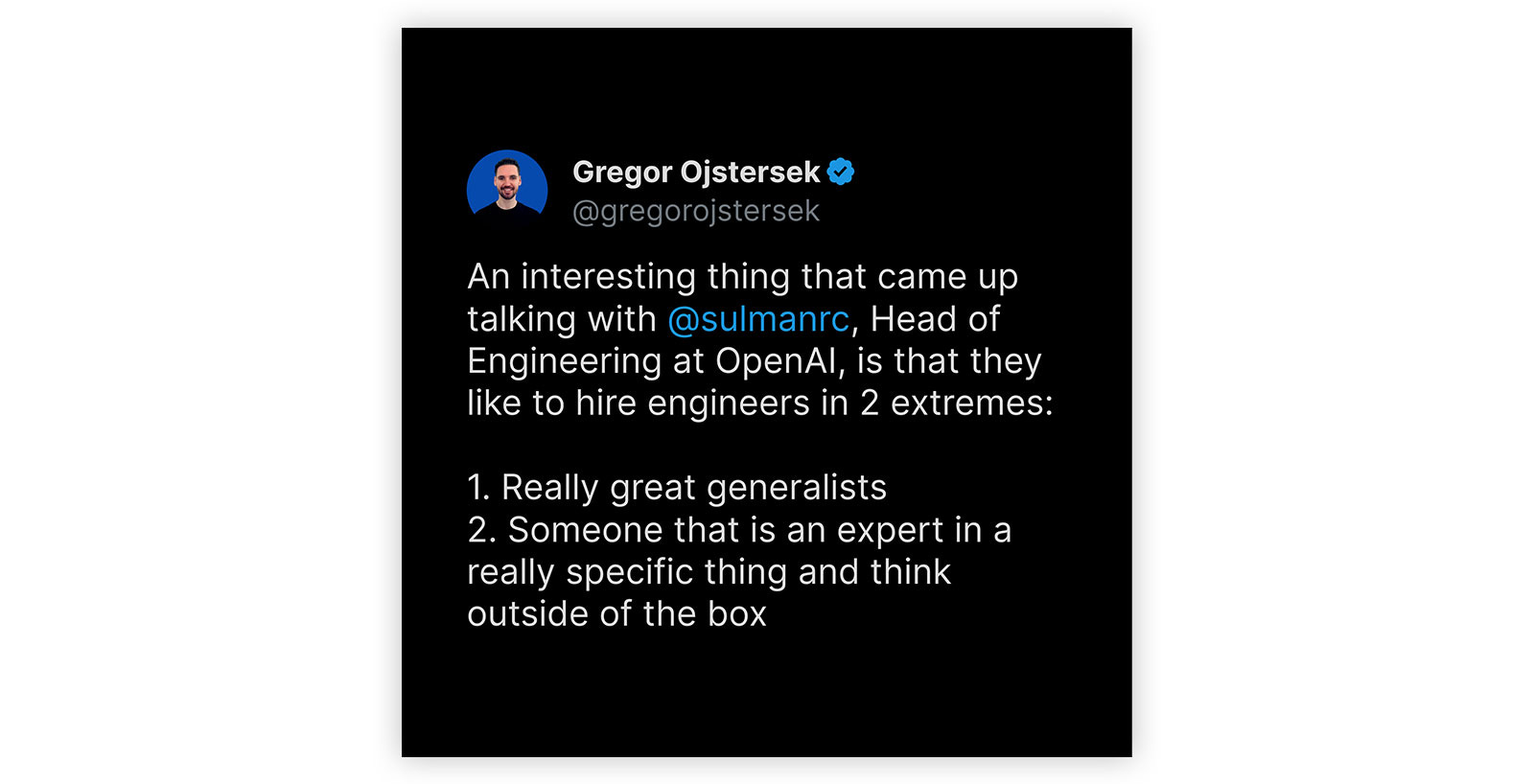
And I’ve also seen this repeating trend in different companies now, which I first got introduced to by speaking with Sulman Choudhry, Head of Engineering, ChatGPT. They like to hire engineers at two extremes.
Let me also share an important difference between then and now, next!
Middle Management Was Always Hard, But It Became Even Harder These Days
I like to say that one of the toughest roles in tech is being a middle manager, as you need to be really good at managing up (leadership, stakeholders, your manager), sideways (peers), and also downwards (your team(s)).
You need to be great at understanding both tech and the business, as you act as a translator for both parts, and good communication is crucial. You need to be a really great generalist in order to do well in the role.
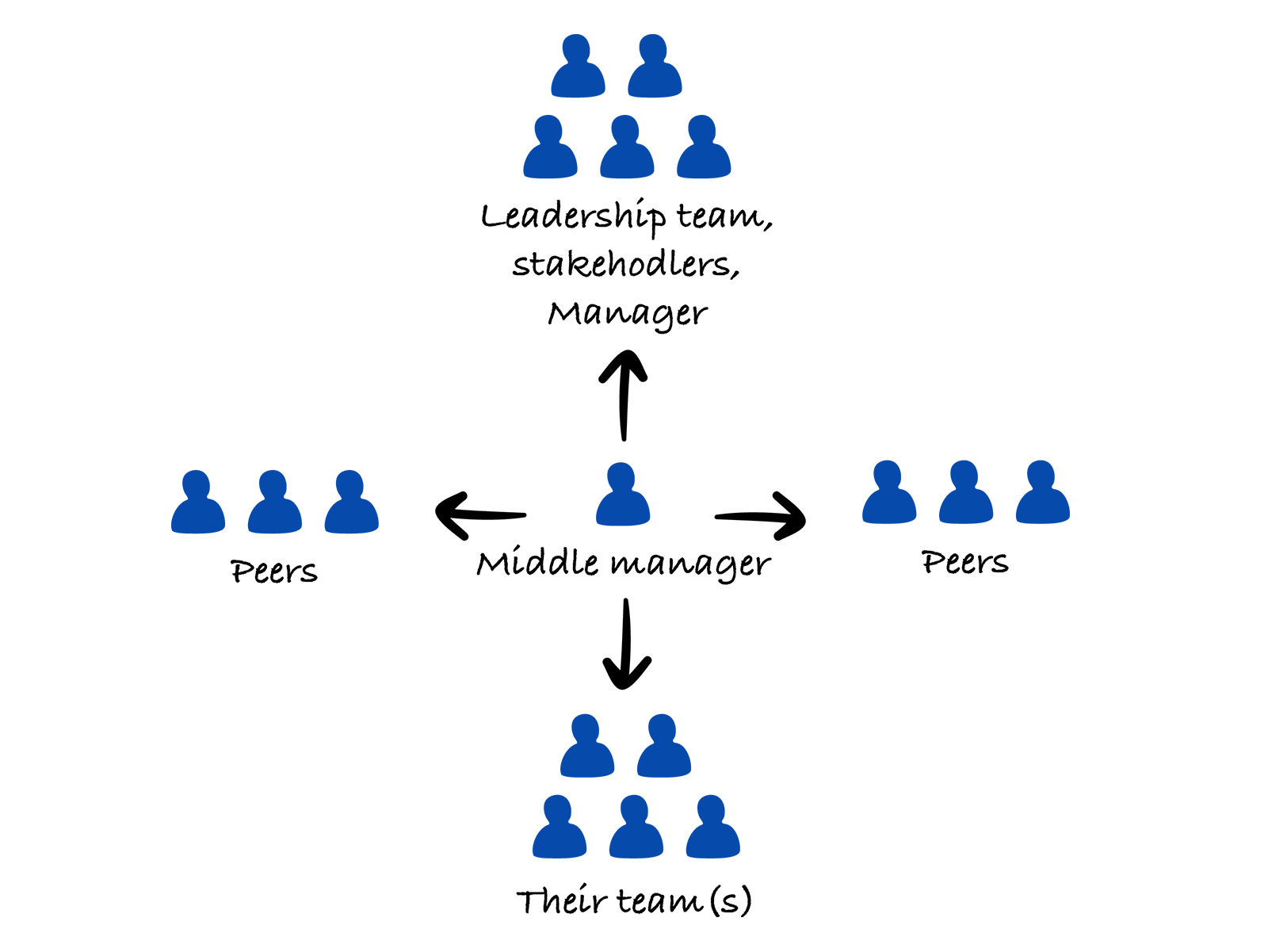
And especially in current times, there tends to be a lot more unrealistic expectations from the leadership team and other stakeholders, which is caused by FOMO (fear of missing out) thinking that a certain AI tool should provide an immense impact to the business.
That’s why the role has become even harder, as there are a lot more managing such expectations, and it can be really problematic for less experienced EMs, who haven’t yet built good credibility inside and/or outside of the company.
Even experienced EMs can struggle with this. I’ve seen cases where EMs just gave up on really pushing back.
Another reason is that, as you are less involved in the fine details of building, you may miss out on using the latest tools, but the plus side is that building has become even more accessible for managers, as with AI tools and good overall engineering understanding, you can ramp up on a certain codebase and become productive a lot quicker.
Now that we understand the differences in detail, let me share my answer if I would still go for the management route in 2026, next!