

Intro
Software engineering is changing.
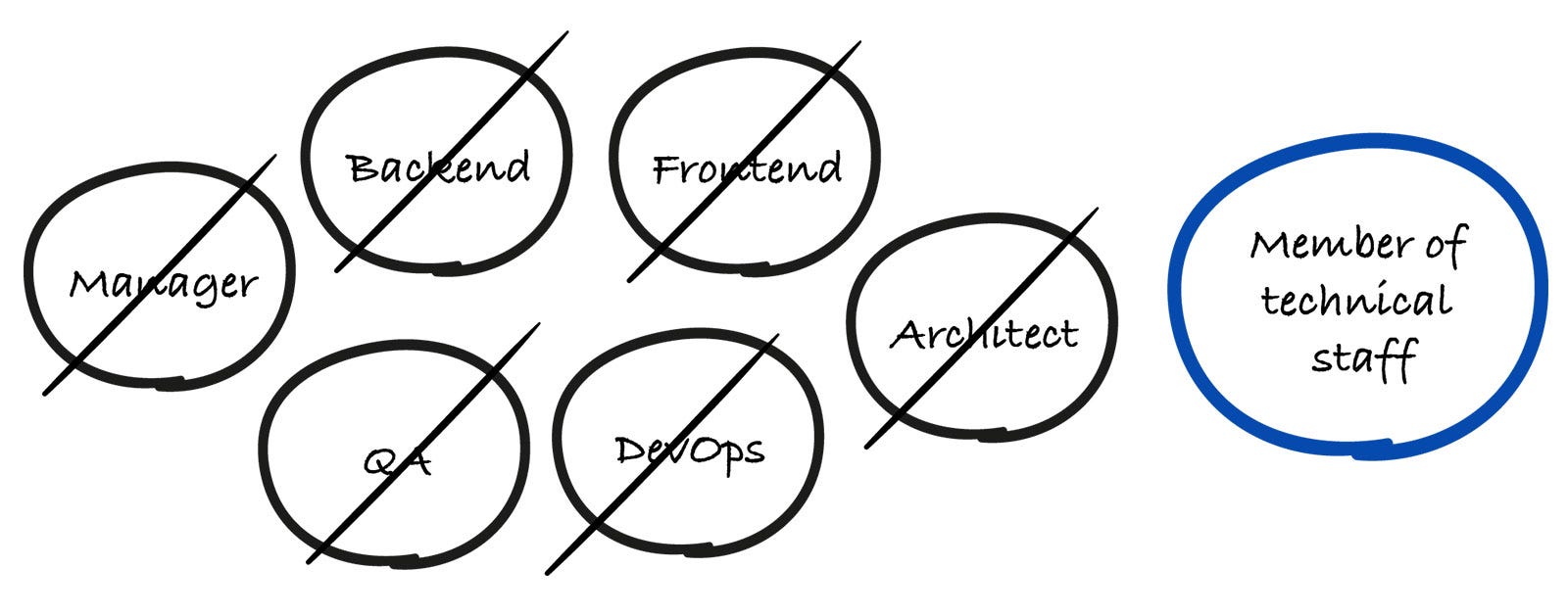
For years, our industry relied on clearly defined roles: frontend, backend, QA, DevOps, manager, and architect. Titles were clear, and responsibilities (depending on the company) have been decently defined.
But that clarity is now fading.
Today, companies care less about your title and more about your impact. Engineers are expected to think about the product and business. Managers are expected to be more hands-on. The boundaries are blurring more and more.
With better tools, AI-assisted engineering, and smaller teams, versatility is becoming more and more expected. Software engineering is becoming position-less → and that shift is changing what it means to be valuable.
In today’s article, I am sharing what makes you a valuable engineer/engineering leader at this time, and also what you should do to be successful and have many opportunities moving forward!
This is an article for paid subscribers, and here is the full index:
- The trend of position-less basketball
- The trend of position-less software engineering
- We can already see this shift happening with the engineering roles getting closer together
- This trend is just going to be more and more popular
🔒 Both really great generalists and specialists are multipliers
🔒 With specialists, the focus is a lot more on a deep understanding of a relevant topic
🔒 Both are valid paths to take
🔒 Last words
Let’s start!
The trend of position-less basketball
I am a big fan of basketball and have been since I was a child. I also played a lot of basketball over the years, and I have always enjoyed watching games, both national team games, European, and NBA games as well.
Last year in April, together with my family, we went to see the Lakers game in LA and also the Warriors game in San Francisco. We had a great time.
I’ve been watching basketball now for close to 30 years, and I’ve seen how the game has changed over the years. In the 1990s and 2000’s, there was a big focus on Centers, where every team was looking to get a great center, and the focus was a lot more on the post game + mid-range shots.
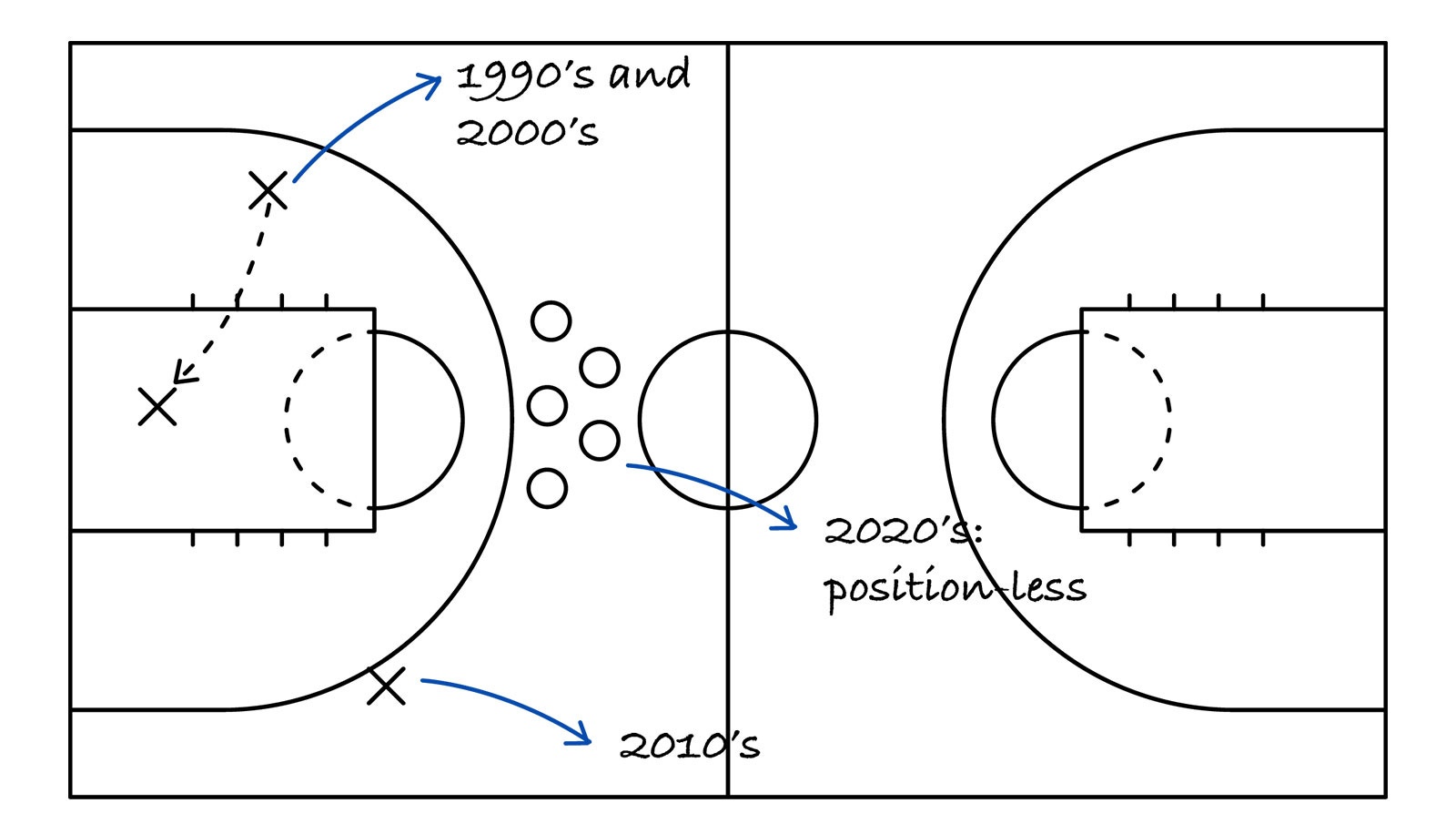
At the beginning of the 2010s, the game became a lot more focused on 3-point shots and layups, where teams started to avoid mid-range shots, and players got penalized by coaches if they attempted them.
And now in 2020’s, the game has become a lot more position-less. There’s a trend of having great “generalists” on the basketball team, who can do everything on the floor, from rebounding, scoring 3-point shots, handling the ball, and passing on a high level as well.
While at the same time, specialists are very important. Players who can score 3-point shots on a very high percentage and also play defense on a very high level. Because they have special assignments that contribute to the team’s success.
Now that we understand the basketball side better, I promise, I’ll make the analogy to software engineering quickly!
The trend of position-less software engineering
Here’s how the evolution applies to software engineering.
In the 1990s and early 2000’s, there weren’t a lot of different positions as we have today, there were more or less testers, analysts, and programmers. And in many cases, programmers did everything, as mostly Desktop GUIs (Windows, Mac, UNIX) and command-line interfaces were built.
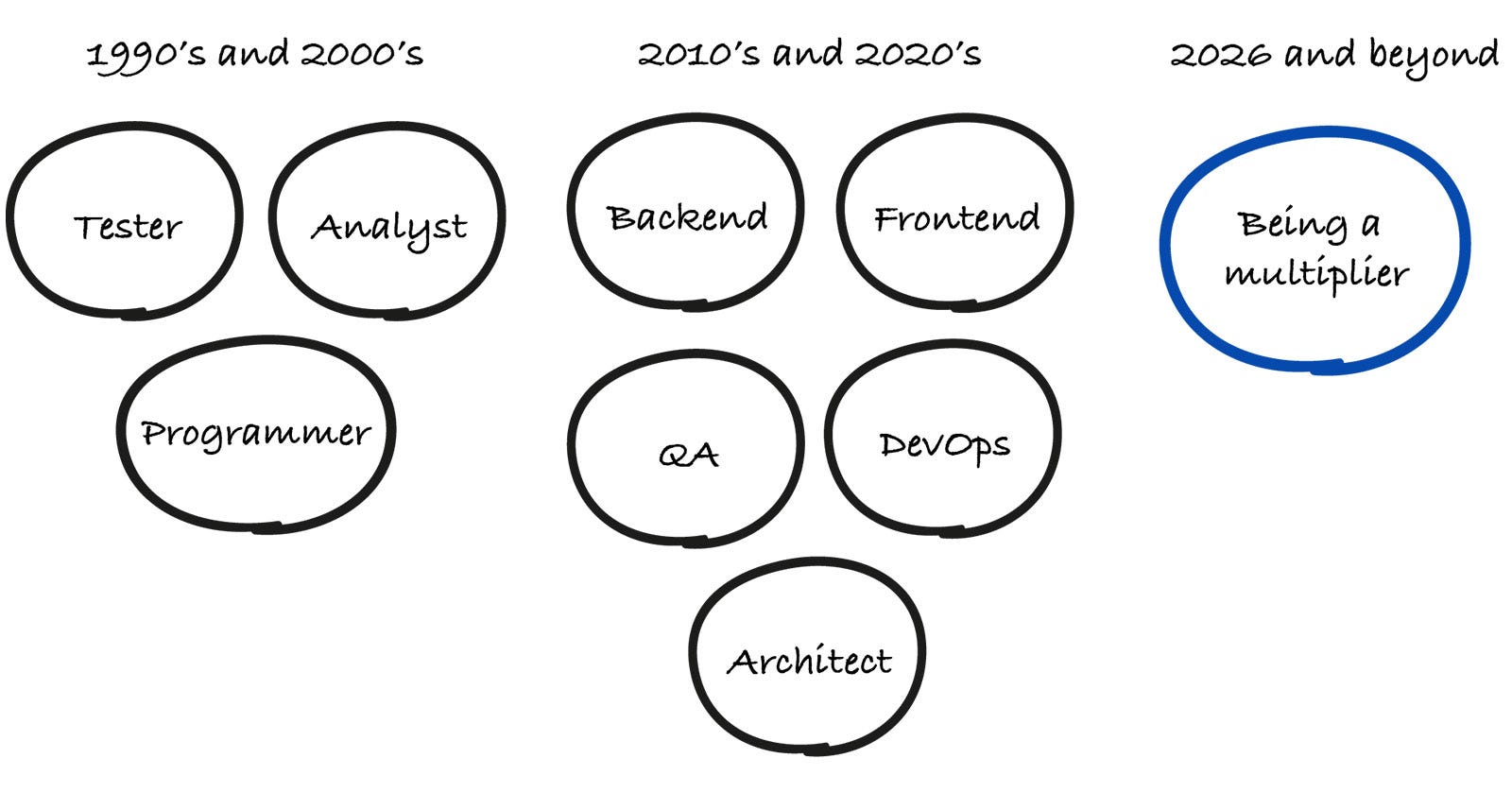
In the late 2000’s and early 2010’s, we’ve seen a big change in how software is built, especially when web applications became a lot more popular. And with the invention of AngularJS in 2010, there was a huge need for engineers to be more proficient in JavaScript, and so the frontend and backend separation became a lot clearer.
QA engineers gain popularity as well, and automated testing started to get traction, as before, there were more or less just manual testing.
Then of course, agile methodologies became popular, so the roles such as Scrum Master, Delivery Manager, and also engineers specialised a lot more in different technologies and languages.
And now, with the tools getting better and better for developing software, and of course, AI being more and more popular, and AI-assisted engineering being the best way to build software, we can see the shift in software development changing.
Companies are looking for multipliers who can provide impact, instead of just engineers knowing a particular programming language (already expected).
Similar to basketball, engineers are expected to be good at many different things. I like to call such engineers generalists, and then there is also a need for people with specific knowledge, who can also think outside of the box.
But the way I see it is that companies need the majority of the engineers to be really great generalists, while in a minority to be extreme specialists, who think outside of the box.
So, for this reason, positions are becoming less and less clear, as generalists can do so many things well, and with tools getting better and better. And then, of course, specialists working on special assignments and providing their unique point of view.
We can already see this shift happening with the engineering roles getting closer together
For middle managers, e.g., (Sr.) Engineering Managers, it’s becoming more and more common to be expected to take on Staff Engineer roles if needed, and Staff+ Engineers taking on manager hats if needed.
And the same for Architects as well → taking on a Staff Engineer role or manager role if needed.

This has shown to be very true, especially when Amazon started its initiative of increasing the ratio of managers to individual contributors by 15%.
And when a Big Tech company does something, we often see an effect where a lot of other companies are doing a similar thing. So, many other companies have done a similar thing, which ultimately added more expectations and “multiple hats”.
So, that’s why we are seeing a lot of managers taking more of a hands-on work and also Staff Engineers and architects taking, in some cases, also a manager role as well.
And also a similar trend for PMs and Engineers.
The role “Product Engineer” is getting more and more popular, and being product/business-minded is just going to be more and more important for all engineering roles.

I am seeing a lot of startups and mid-size companies hiring for product engineers. A good example is Lovable, one of the fastest-growing startups in the EU, which is hiring product engineers who own the why, what, when, and also the how.
And only recently, they have started to look for their first product managers.
And very similarly goes for OpenAI as well, their engineers are owning projects from idea to execution and focusing on things such as distribution and user testing.
The OpenAI’s Codex team has only 1 product manager and 2 designers, while everyone else is an engineer in the 40-person team. Engineers are automatically expected to have the product/business mindset.
This trend is just going to be more and more popular
We can already see that some of the popular AI companies are using titles like “Member of technical staff” for engineers, leads, researchers, etc. It matters less and less about the title, but all about the impact.
And also, I recently had the pleasure of talking with Sulman Choudhry, Head of Engineering, ChatGPT. He mentioned that OpenAI likes to hire engineers in 2 extremes:
Really great generalists
Experts in a really specific thing who think outside of the box

Which is exactly what we are talking about today.
Similar to basketball, the same is being the case with software engineers. Position-less software engineering with the focus on great generalists and specialists is becoming the norm, in my opinion.