

Intro
A question that came up frequently on the Engineering Leadership LIVE event in San Francisco that I hosted together with my friends from Augment Code was:
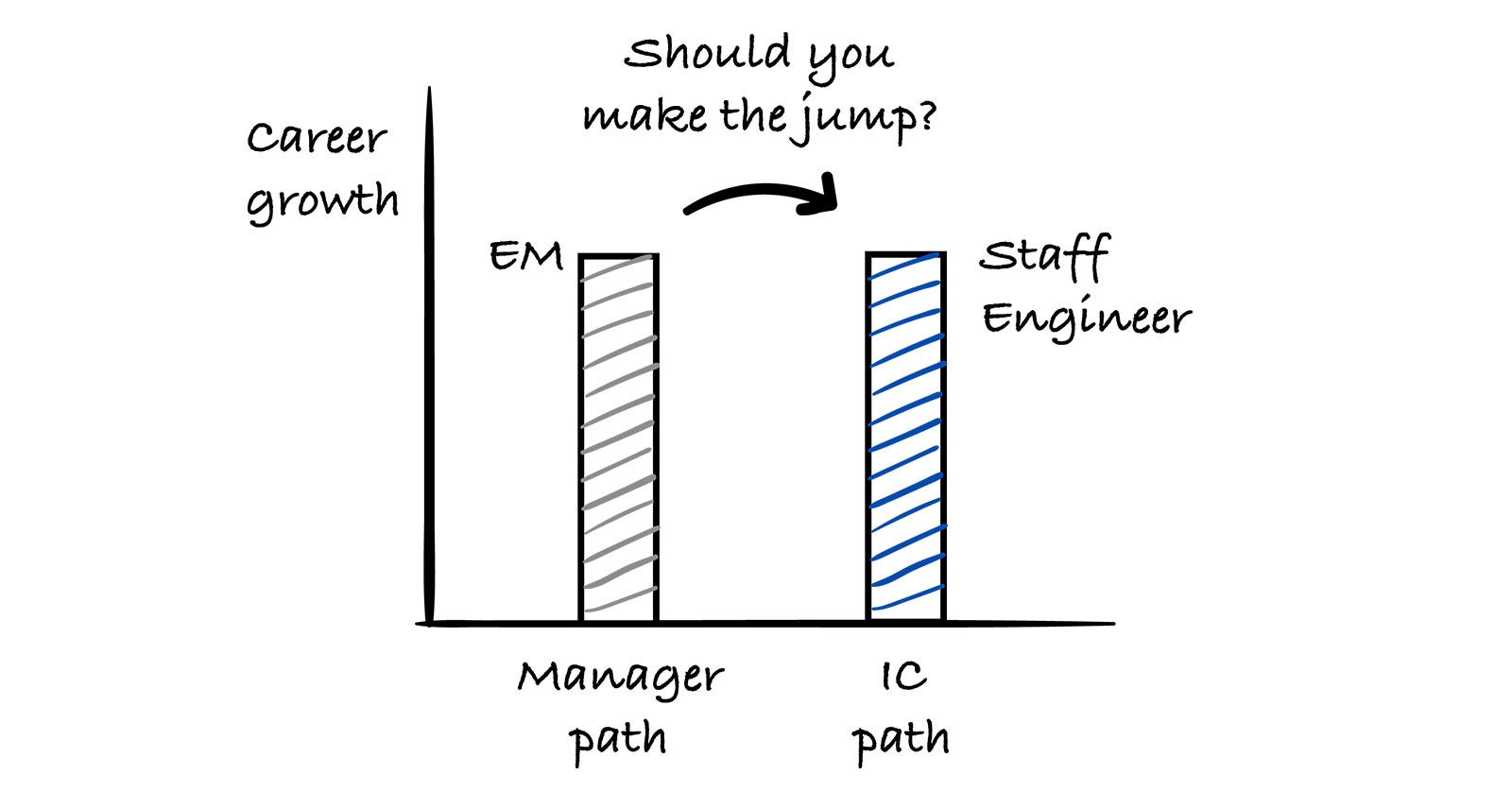
Should I go back to being an IC or stay being an Engineering Manager?
Here are also some of the pictures from the event:

It’s a very important question to ask, because there are changes in our industry, and it’s crucial that you understand what’s happening so you can make the best decision for yourself.
There are different trends that many companies are following these days, and there’s also a bit of a change in how I think about moving to Director or VP roles (executive). So, if you are an engineering manager, asking yourself this question, it’s a must-read article for you!
In today’s article, I am sharing my advice on what you should do, what has changed, some of the insights are based on my discussions we had at the event, and of course, what I am seeing and hearing from many other engineers and engineering leaders across the industry.
This is an article for paid subscribers, and here is the full index:
- How are engineering leadership roles changing?
- Engineering leadership skills are more important than ever
- Managers, more desired than ever to become ICs
🔒 Should you go back to being an IC as an EM?
🔒 1. If your company decides to move you from an engineering manager to an equivalent position in the IC path (Staff or Principal Engineer)
🔒 2. If you are an EM right now and are thinking of making a move back to being an IC (Staff or Principal Engineer)
🔒 3. If you are an EM looking for a new role
🔒 Both paths can be a very viable choice
🔒 Last words
Let’s start!
How are engineering leadership roles changing?
This is something I have already mentioned in the article: AI-Native Engineering Leadership, but I believe it’s really important that we go through it here as well, because it’s crucial that you understand what’s happening in the industry.
I’ve always looked at engineering leadership roles as the following:
IC path: Staff Engineer, Tech Lead, Lead Engineer or higher (Principal, Distinguished)
Management path: Team Lead, Engineering Manager, or higher (Director, VP, CTO)
Architect path: (Software) Architect or any kind of other architect (Solutions, Distributed, etc.) or higher (Staff, Principal)
Here is the overview of the engineering leadership roles 2 years ago:
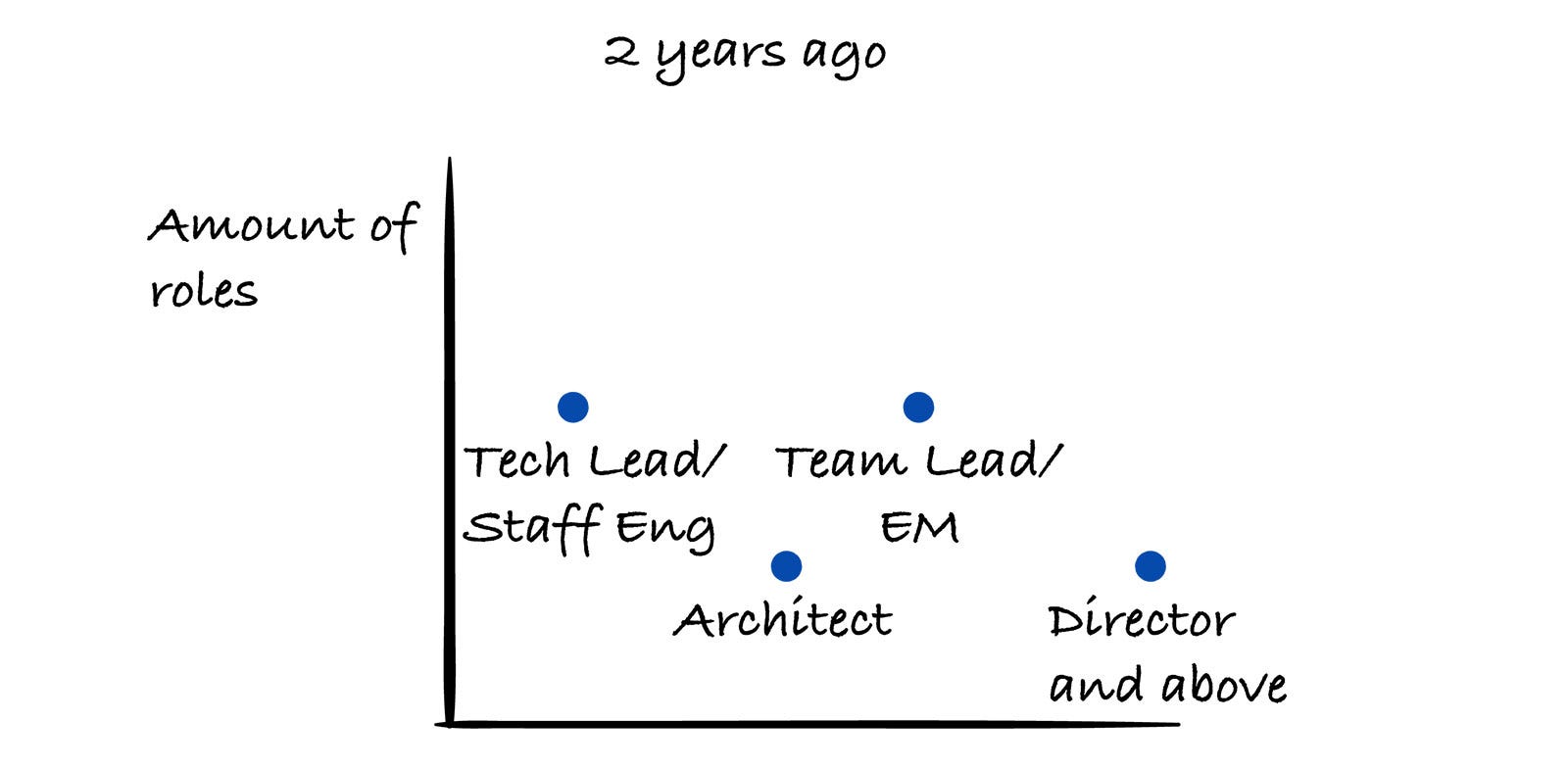
Now, today, there are a lot more tech leads, as a lot of engineers are expected to be one, and also, there are fewer middle managers. Director-level or above roles stay the same as they were.
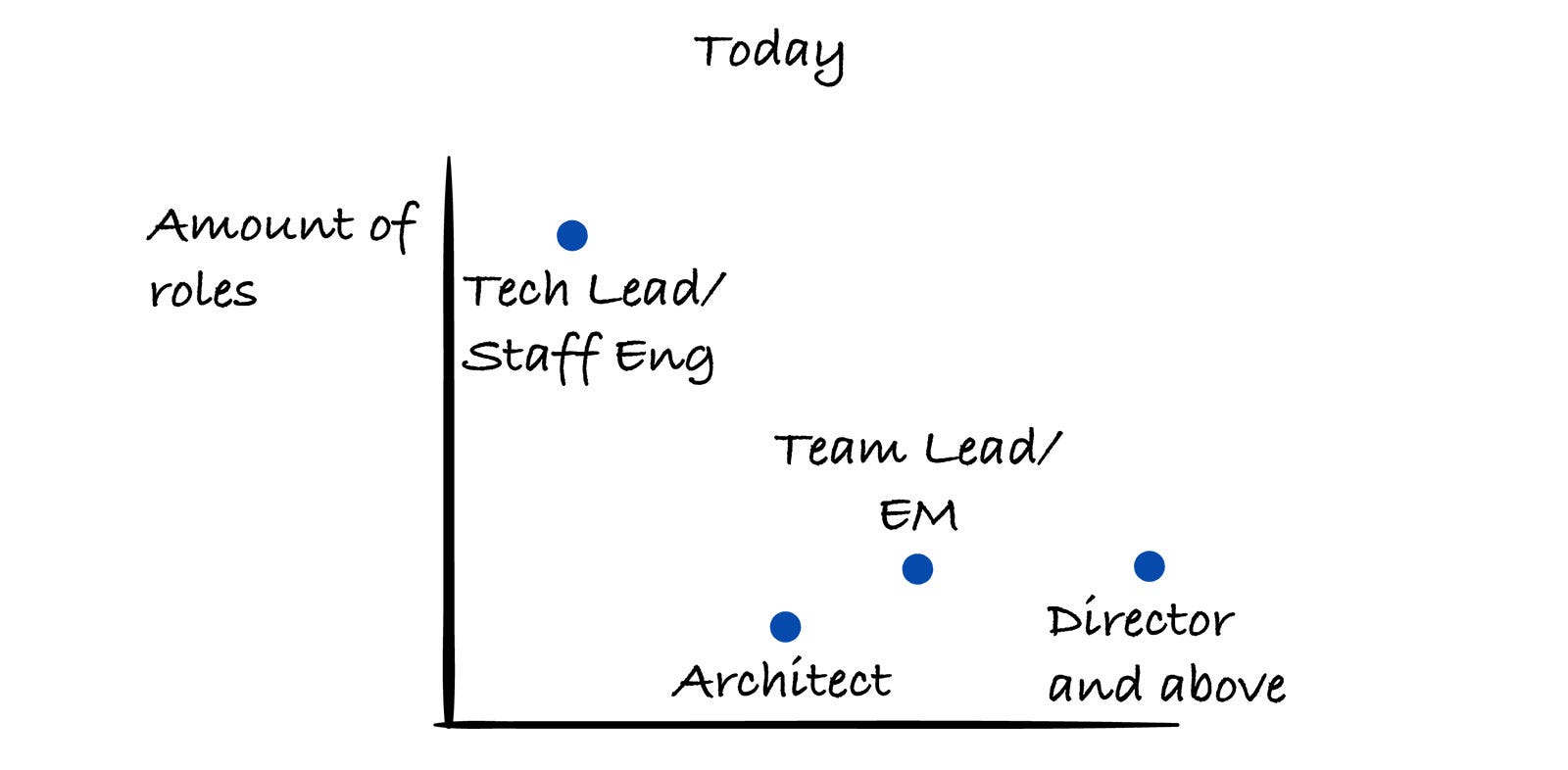
For middle managers, e.g., (Sr.) Engineering Managers, it’s becoming more and more common to be expected to take on Staff Engineer roles if needed, and Staff+ Engineers taking on manager hats if needed. Most commonly, EMs taking the Staff role.
And the same for Architects as well → taking on a Staff Engineer role or manager role if needed.

This has shown to be very true, especially when Amazon started its initiative of increasing the ratio of managers to individual contributors by 15%, and many of the companies followed the approach. And now we’re seeing this trend in many other companies, as well.
So, that’s why we are seeing a lot of managers taking more of a hands-on work and also Staff Engineers and architects taking, in some cases, also a manager role as well.
Engineering leadership skills are more important than ever
Speaking with engineers and engineering leaders from companies like OpenAI, Anthropic, Big Tech & startups, and many other people across the industry. One thing is clear, and it’s becoming more and more common.
There’s a lot more individual ownership of projects than there used to be.
As an engineer, in the past, you might work on a project as part of the team, but now, where I see the trend is heading, is that a team is working on many different projects simultaneously at the same time.
Therefore, almost everyone is expected to have tech lead-like skills. Good communication, being a leader, working well with cross-functional people and stakeholders, while being able to start and finish projects successfully, either by yourself or by delegating work to others.
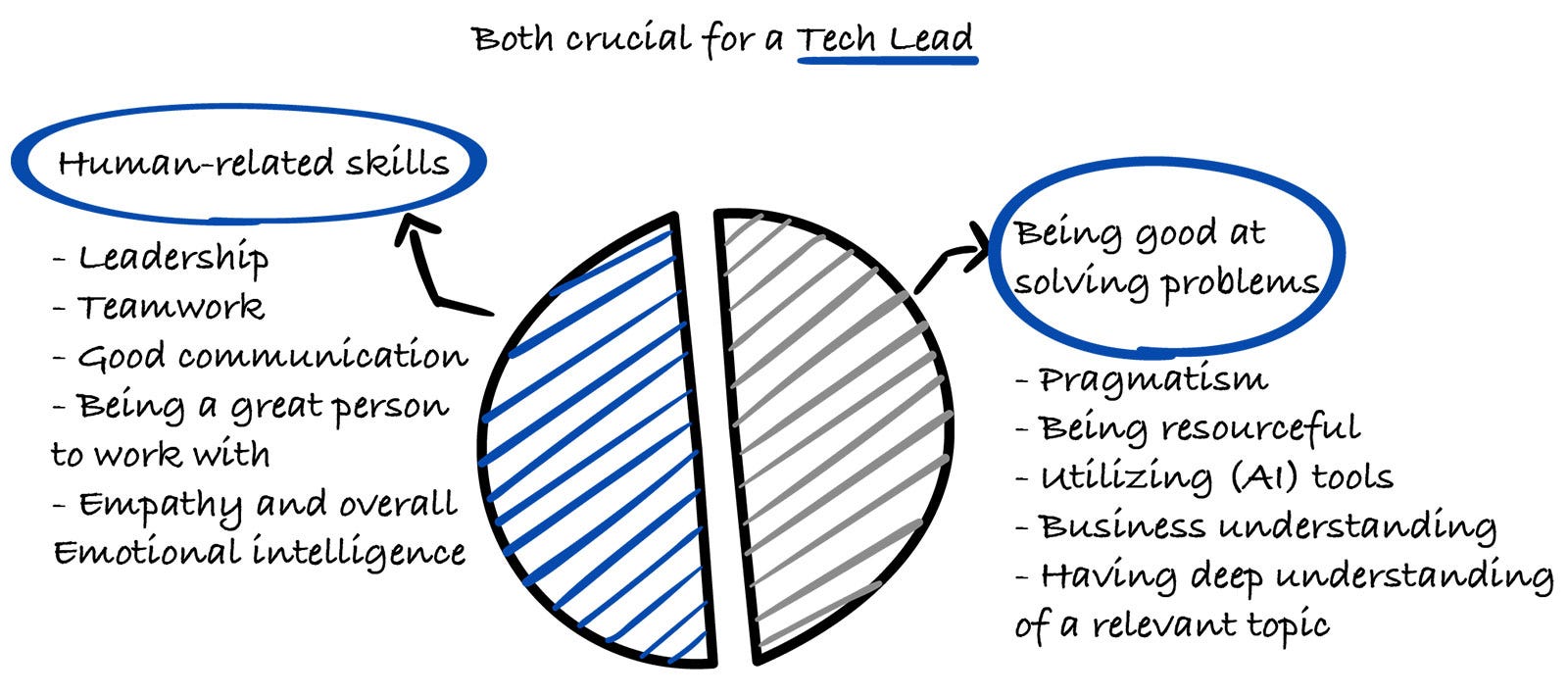
If you don’t have such skills, or you don’t wish to develop them (you definitely should, though!), the way to stand out is to be an extreme specialist in a certain area that is rare and valuable. Having a superpower in a specific area that is very valuable to the organization also brings significant value.
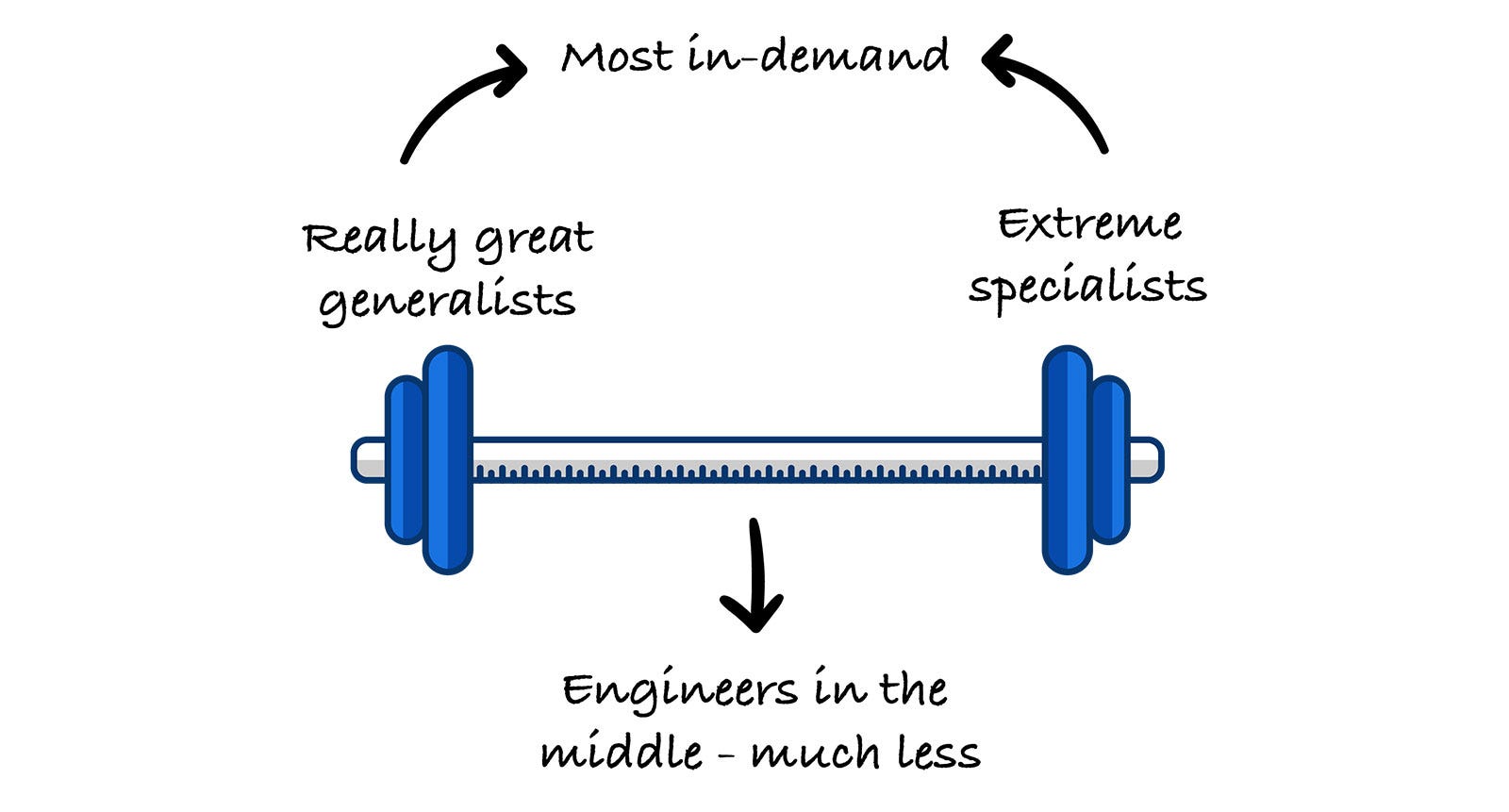
Because engineering leadership skills are more important than ever, that’s the reason why many managers are very desired to become ICs again. Let’s get to that next.
Managers, more desired than ever to become ICs
Being a successful manager means that you have developed good human-related skills, which are extremely desired in IC roles these days.
In addition, you also have a good context of the business/product and really understand the challenges and motivations from stakeholders, because you have been a stakeholder for a while as a manager.
With coding becoming a lot more accessible, a lot of managers can be extremely productive and provide a huge impact. The skills that you learn as a manager are the same skills needed when you are doing AI-assisted engineering.
You need to know what and how to delegate correctly, dissect bigger tasks into smaller, manageable pieces, be good at giving feedback and providing instructions, give clear explanations, refine and improve based on the output, and also have patience as well.
All very important skills to thrive as an IC.
And especially if, as a manager, you stayed hands-on and have a good grasp of engineering fundamentals. This is a big plus if you potentially want to target the Staff+ roles as an engineering manager, which I’ll share my thoughts and recommendations next!